Overview
For clinics, consistency is an operational requirement, not a nice-to-have. When patients return for follow-ups, adjustments, or repeat pairs of custom orthotics, they expect the same fit, function, and comfort every time. Yet many variations in orthotic insoles are not caused by diagnosis or prescription, but by how devices are manufactured inside the orthotics laboratory. Yet many variations in orthotic insoles are not caused by diagnosis or prescription, but by how devices are manufactured inside the orthotics laboratory. Modern manufacturing platforms like Orion were designed specifically to address this challenge by embedding consistency directly into the production process, reducing variability introduced by manual fabrication and technician-dependent workflows.
As 3D printed orthotics become more common, clinics are no longer asking if digital manufacturing belongs in orthotics. They are asking how to identify production partners that can deliver repeatable clinical outcomes without increasing risk or operational complexity.
What Ensures Consistency in 3D Printed Orthotics?
Consistent 3D printed orthotics depend on four core factors:
- Standardized, automated production workflows that reduce technician-dependent variability
- Clinically validated materials with predictable mechanical behavior
- Digitally traceable scan-to-print workflows linking design and production records
- Minimal manual forming and finishing, which is a major source of variation in traditional labs
- Purpose-built orthotics manufacturing systems that automate production and preserve prescription intent from scan to finished device
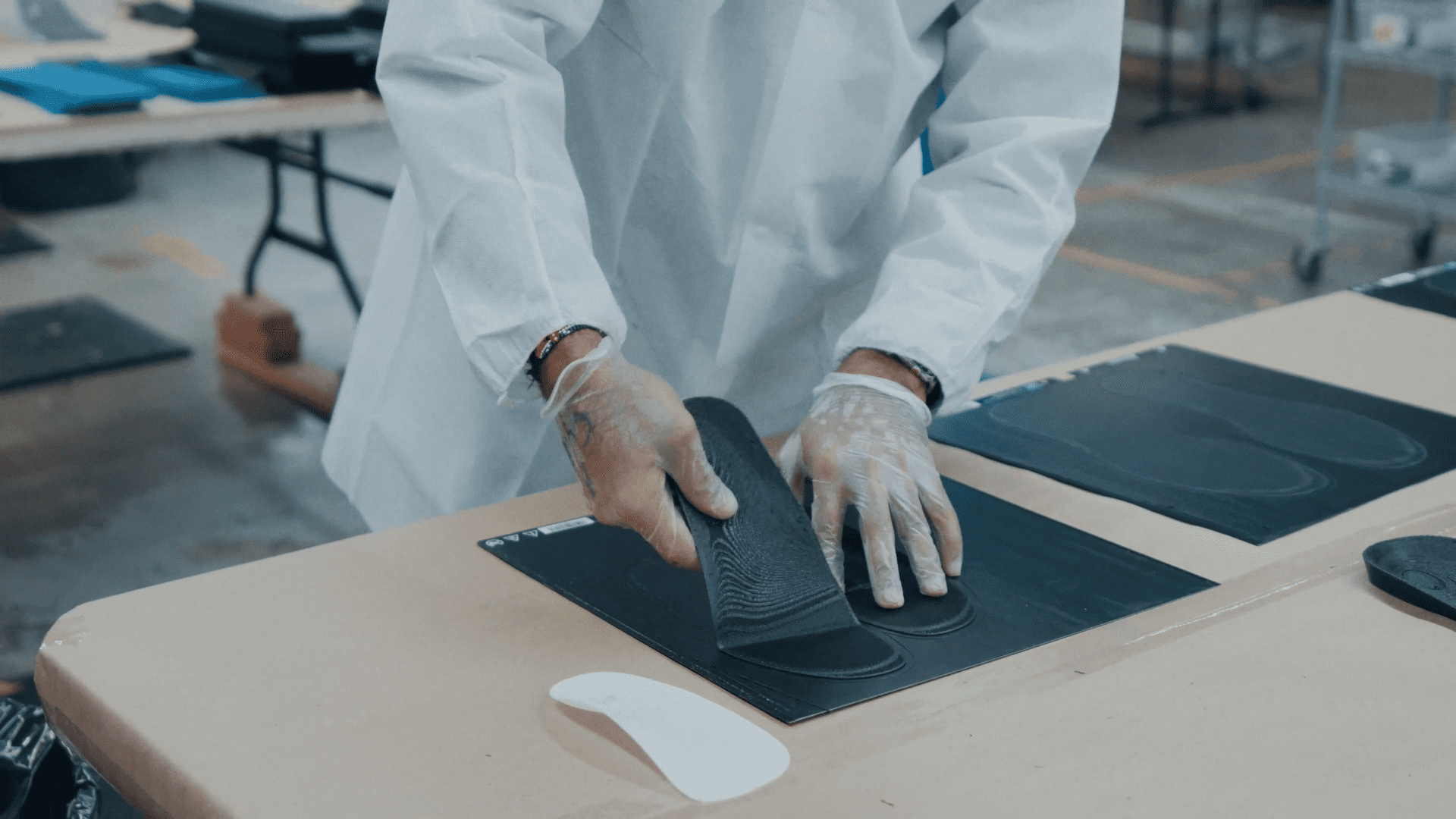
When these elements work together, clinics receive orthotic insoles that can be reproduced reliably, across technicians, time, and patient reorders. Orion combines automation, digital workflow integration, and validated orthotics materials to create a repeatable manufacturing environment where device quality is driven by process control rather than technician intervention.
What Causes Inconsistency in Custom Orthotics?
Many clinics rely on external orthotics labs for fabrication, gaining access to specialized equipment and production capacity. But when those labs depend on traditional, hands-on or batch-oriented processes instead of connected digital workflows, , variability can be introduced at multiple stages:
- Different technicians may interpret the same prescription slightly differently
- Manual forming, grinding, and finishing can vary by shift, workload, and experience
- Material behavior may change based on temperature, thickness, and handling
- Batching and labor constraints can affect turnaround and quality consistency
As documented in Mosaic’s clinical comparison of traditional vs. 3D printed orthotics workflows, these variables are a leading driver of remakes, minor adjustments, and unpredictable patient experiences.
Even when outcomes are “clinically acceptable,” inconsistency can quietly erode patient trust and increase follow-up burden.
How Do Digital Orthotics Improve Clinical Repeatability?
Digital orthotics are not defined by 3D printing alone. Repeatability comes from process control. Systems like Orion extend digital workflows beyond design by connecting scan data, patient-specific designs, materials, and manufacturing into a single production process. This helps ensure orthotics are produced consistently regardless of technician, shift, or production volume.
Standardized Production, Not Just 3D Printing
True digital orthotics rely on repeatable, automated production parameters, including:
- Digitally controlled temperature and print profiles
- Version-controlled design files tied to patient records
- Consistent layer height and structural geometry
- Automated manufacturing workflows that reduce technician intervention throughout production
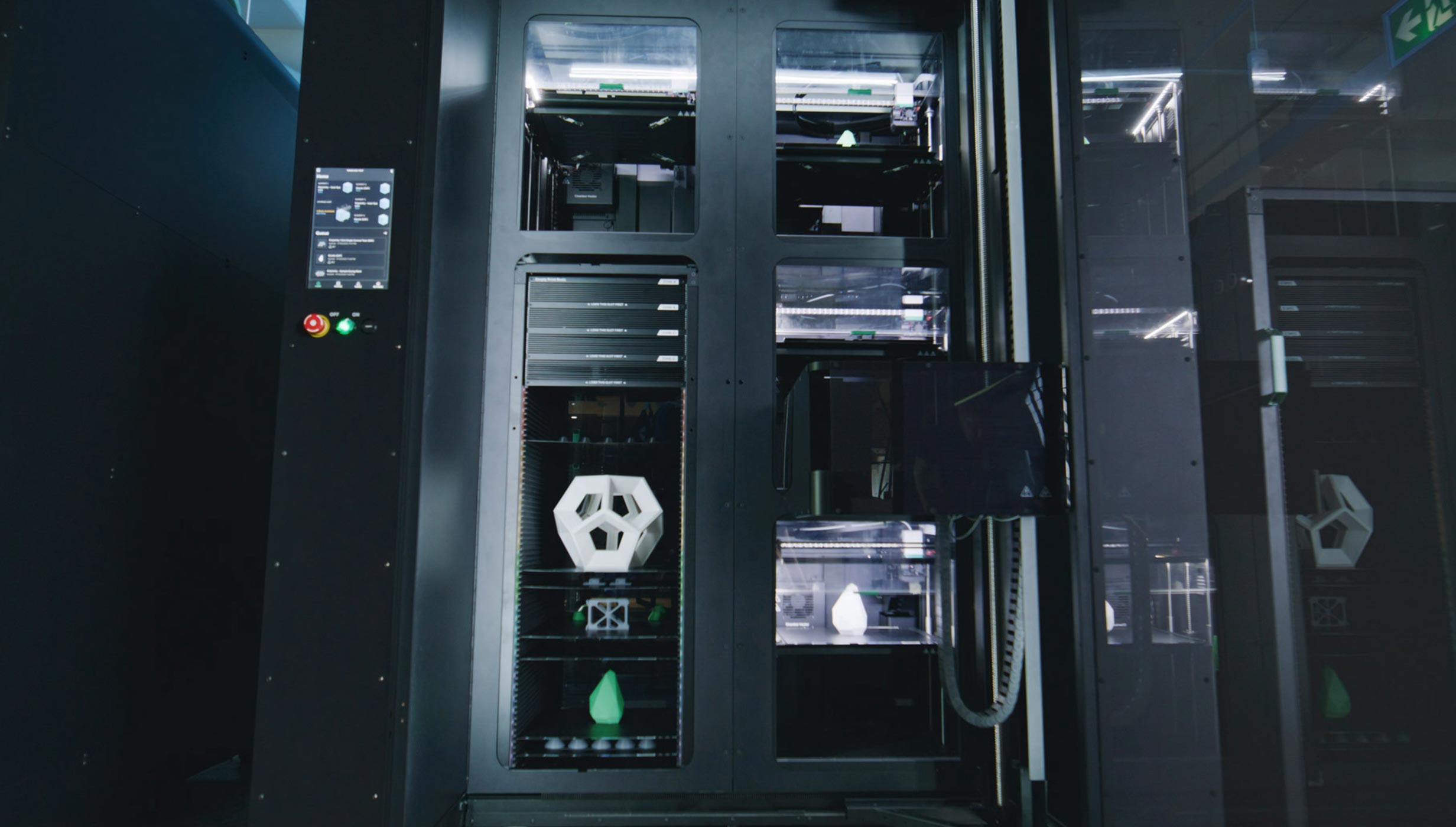
Orion was specifically designed to automate orthotics manufacturing while delivering repeatable device quality. By reducing labor-dependent steps and embedding quality controls into production, labs can produce more consistent devices at scale.
Traceable Scan-to-Print Workflows
In a scan-to-print workflow, foot scans, prescriptions, designs, and production parameters are stored digitally. This allows identical orthotic insoles to be reproduced months or years later using the same validated process.
Digital traceability also supports documentation and reimbursement workflows. When design files, prescriptions, and production parameters are stored and version-controlled, clinics have clearer records to support insurance claims, repeat authorizations, and medical necessity documentation. Consistent device reproduction tied to digital records reduces ambiguity when justifying orthotic insoles as true custom medical devices rather than “library” products.
Within the Stryde ecosystem, patient scans captured through Stryde Scan move into Stryde Design and production management workflows before being manufactured on Orion. Every stage of the process remains digitally connected, creating a complete production record that supports repeatability, documentation, and long-term patient care.
The 3 Pillars of Clinical Consistency in Digital Orthotics
- Process Control
- Automated production through Orion reduces technician-dependent variability and maintains consistent manufacturing conditions across every device.
- Material Predictability
- Validated materials like Aero and Form deliver repeatable mechanical performance and support consistent clinical outcomes.
- Digital Traceability
- The Stryde ecosystem links scans, prescriptions, designs, and production records into a single digital workflow that supports repeatability and documentation.
What Should Clinics Look for in a 3D Orthotics Manufacturing Partner?
Clinics do not need to evaluate machine specifications or become experts in 3D printing orthotics. Instead, the most useful questions focus on outcomes:
- Can the lab reproduce the same device reliably months later?
- Are materials clinically validated and used consistently?
- Is the workflow standardized end-to-end, not technician-dependent?
- Does the system reduce remakes and follow-up adjustments?
How Automated Manufacturing Reduces Orthotic Remakes
Many remakes are not caused by clinical factors but by inconsistencies introduced during manufacturing. Orion was designed specifically to reduce these variables through automated production and standardized process controls.
Orion helps reduce remakes by:
- Digitally controlling production parameters
- Reducing technician-dependent finishing steps
- Producing finished orthotics with minimal-to-zero post-processing
- Preserving prescription intent throughout manufacturing
- Delivering consistent device quality across technicians and shifts
For clinics, this means fewer adjustments, fewer remakes, and greater confidence that repeat orders will perform as expected.
Why Material Validation Matters in 3D Printed Orthotics
Materials determine whether digital consistency translates into clinical reliability.
Clinics should not be asked to manage production floors. By partnering with labs using automated scan-to-print workflows, validated materials, and standardized platforms, clinics gain the benefits of 3D printed orthotics, without operational burden.
Form is Mosaic’s polypropylene-class material for functional custom orthotics, delivering predictable stiffness and controlled flex for consistent biomechanical correction at scale.
→ Learn more about Form and functional orthotics
Aero is Mosaic’s EVA-style material for accommodative and comfort-focused orthotic insoles, enabling digitally controlled cushioning and offloading without the variability of traditional EVA fabrication.
→ Learn more about Aero and EVA-style orthotics
Consistency Builds Clinical Trust
Digital orthotics are not about novelty. They are about control, predictability, and trust. When custom orthotics are produced through standardized digital systems, clinics deliver better patient experiences while reducing downstream friction.
To learn how Mosaic supports consistent, scalable orthotics laboratory production, explore our resources or contact our team at sales@mosaicmanufacturing.com.
- The Stryde ecosystem links scans, prescriptions, designs, and production records into a single digital workflow that supports repeatability and documentation.