Overview
For clinician-led practices, including podiatrists, chiropodists, and foot care practitioners, turnaround time is no longer a secondary consideration. Patients increasingly expect custom orthotics to arrive quickly, fit correctly the first time, and require minimal follow-up. When delivery stretches into weeks, satisfaction drops, trust erodes, and clinics absorb hidden operational costs.
The challenge for clinics is not whether faster turnaround is possible, but how to achieve it without becoming a manufacturing operation or taking on clinical risk.
The answer lies in how orthotic insoles are produced inside the orthotics laboratory, and in choosing lab partners that use modern, end-to-end digital workflows designed for both speed and consistency.
What Actually Reduces Orthotics Turnaround Time?
Faster orthotics delivery depends on four interconnected factors:
- End-to-end digital scan-to-print workflows
- Materials engineered for predictable digital behaviour
- Minimal post-processing and finishing requirements
- Reduced dependence on skilled manual labor
When these elements are aligned, clinics do not have to trade quality for speed. Digital production allows orthotics laboratories to increase responsiveness while maintaining consistent mechanical performance, fit, and finish.
Why Traditional Outsourcing Creates Long Wait Times
Most clinics outsource manufacturing to orthotics laboratories, which can provide valuable production expertise and capacity. However, if the partner labs’ production models still rely heavily on manual or batch-based fabrication rather than digitally integrated workflows, delays can accumulate at several stages:
- Orders wait in lab queues before production begins
- Batching prioritizes efficiency over responsiveness
- Shipping adds time and uncertainty
- Any adjustment restarts the entire cycle
From a patient’s perspective, this often means waiting two to three weeks for custom orthotic insoles, even when prescriptions are straightforward. For clinics, these delays are difficult to control and even harder to explain.
Why Faster Orthotics Require More Than Better Materials
Historically, one of the biggest constraints on faster orthotics delivery has been material behaviour. Many materials used in orthotics manufacturing were never designed for repeatable, digital production. As a result, speed often came at the expense of consistency.
As documented in Mosaic’s clinical comparison of traditional and 3D printed orthotics, digital workflows only deliver real value when materials, software, and production systems are designed together.
Form is Mosaic’s polypropylene-class material for functional custom orthotics, delivering predictable stiffness and controlled flex for consistent biomechanical correction at scale.
→ Learn more about Form and functional orthotics
Aero is Mosaic’s EVA-style material for accommodative and comfort-focused orthotic insoles, enabling digitally controlled cushioning and offloading without the variability of traditional EVA fabrication.
→ Learn more about Aero and EVA-style orthotics
Case Study Highlight: Faster Turnaround at Scale
The impact of automation and digital materials is not theoretical.
Premier Orthotics Lab (POL), a high-volume orthotics laboratory in Ontario, transitioned from traditional milling and manual finishing to a fully digital, scan-to-print workflow powered by Mosaic.
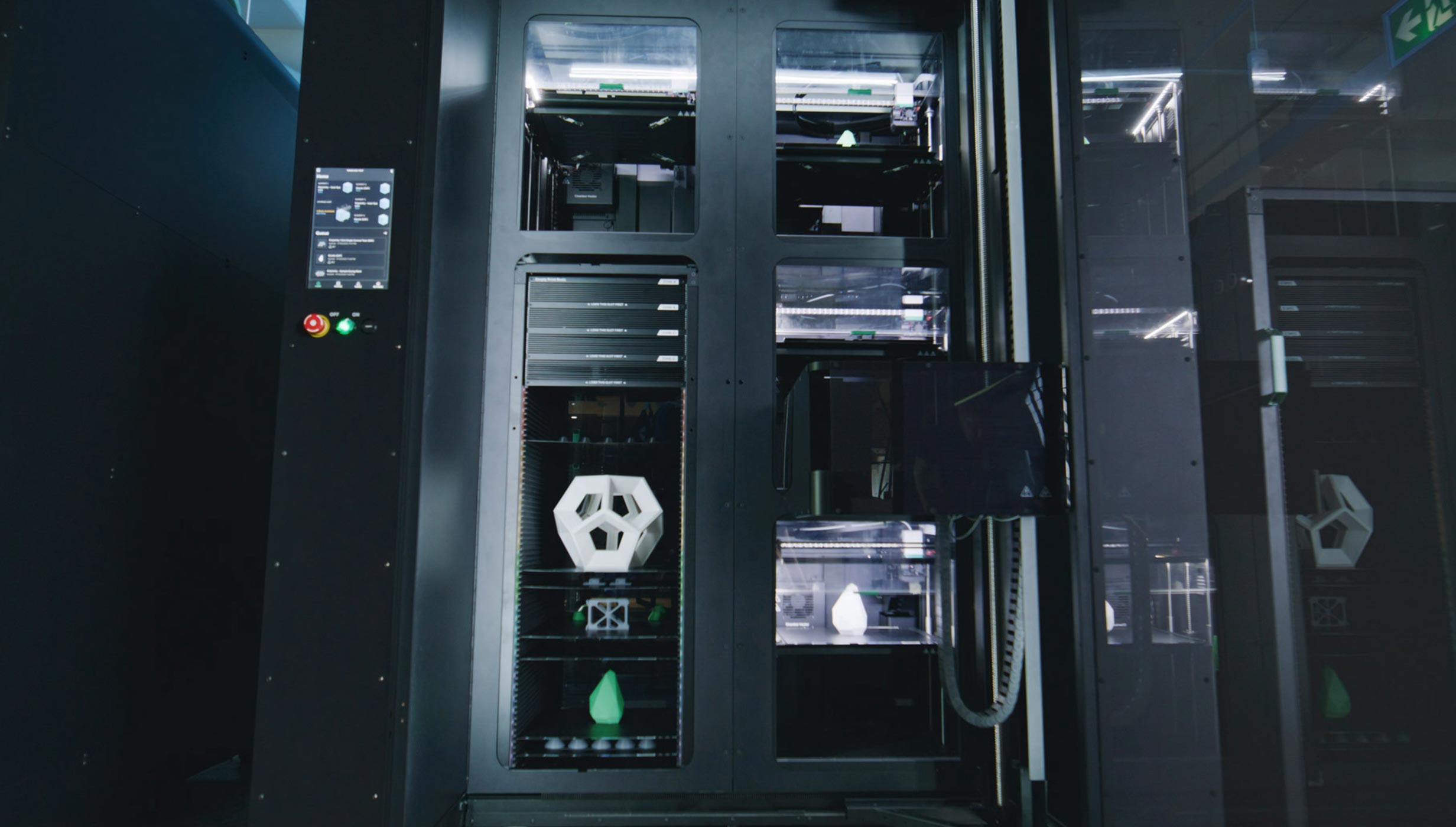
By adopting Mosaic’s Element and later the automated Array platform, POL streamlined production scheduling and reduced reliance on manual, technician-led steps, allowing orthotic insoles to be produced more efficiently without increasing skilled labor and supported shorter turnaround times for the clinicians they serve.
→ Read the full Premier Orthotics Lab case study
End-to-End Digital Workflows Reduce Hand-Off Delays
Scan-to-print workflows eliminate manual handoffs between prescription, design, and manufacturing. Digital foot scans flow directly into version-controlled design files and automated production.
This integration:
- Reduces interpretation errors
- Eliminates rework caused by incomplete information
- Allows identical orthotics to be reproduced quickly when needed
For clinics, this means fewer status updates, fewer surprises, and faster delivery of custom orthotics.
Less Post-Processing, Faster Delivery
Manual finishing is one of the most time-consuming steps in traditional orthotics production. Grinding, layering, bonding, and shaping all introduce variability and delay.
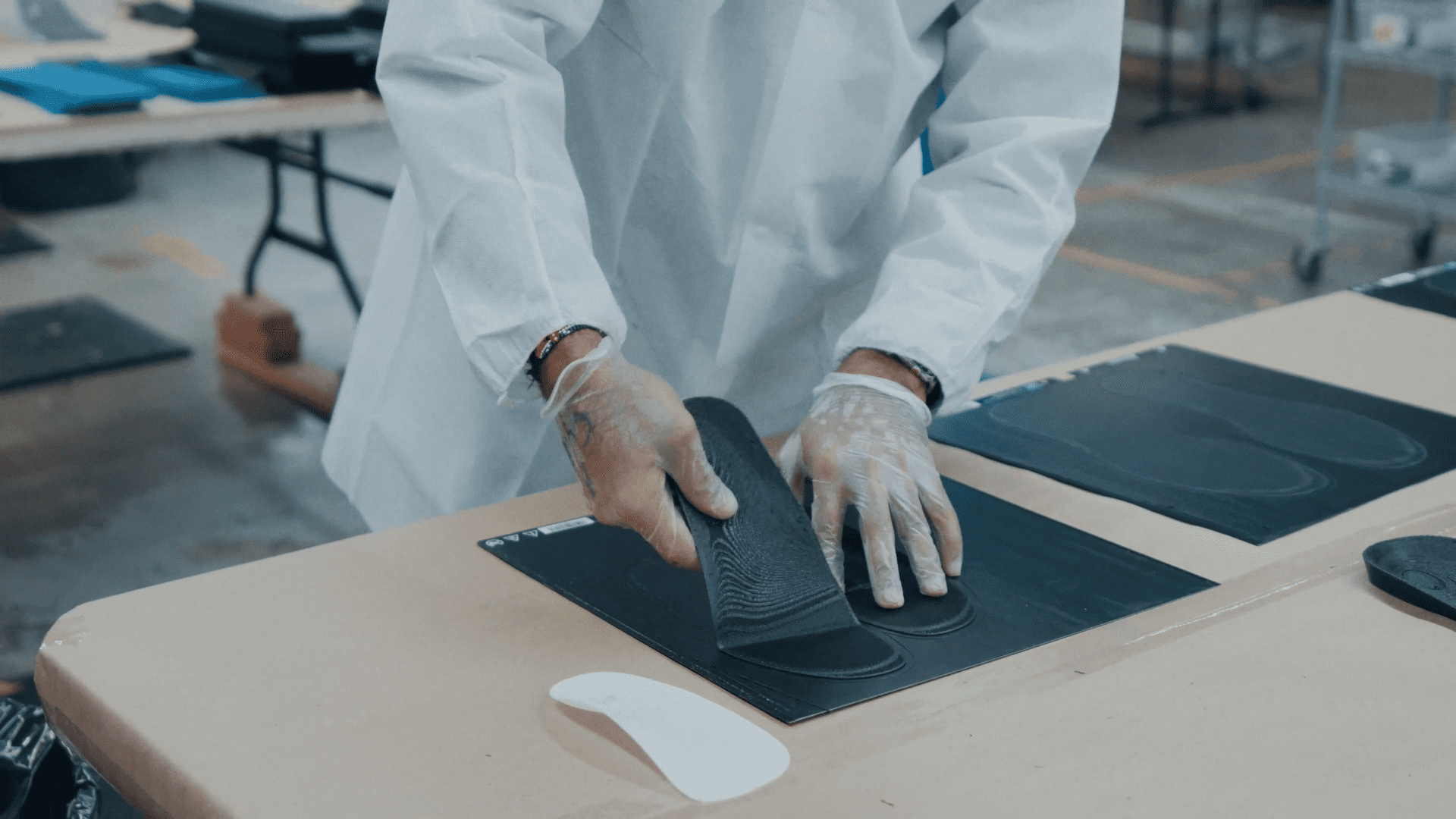
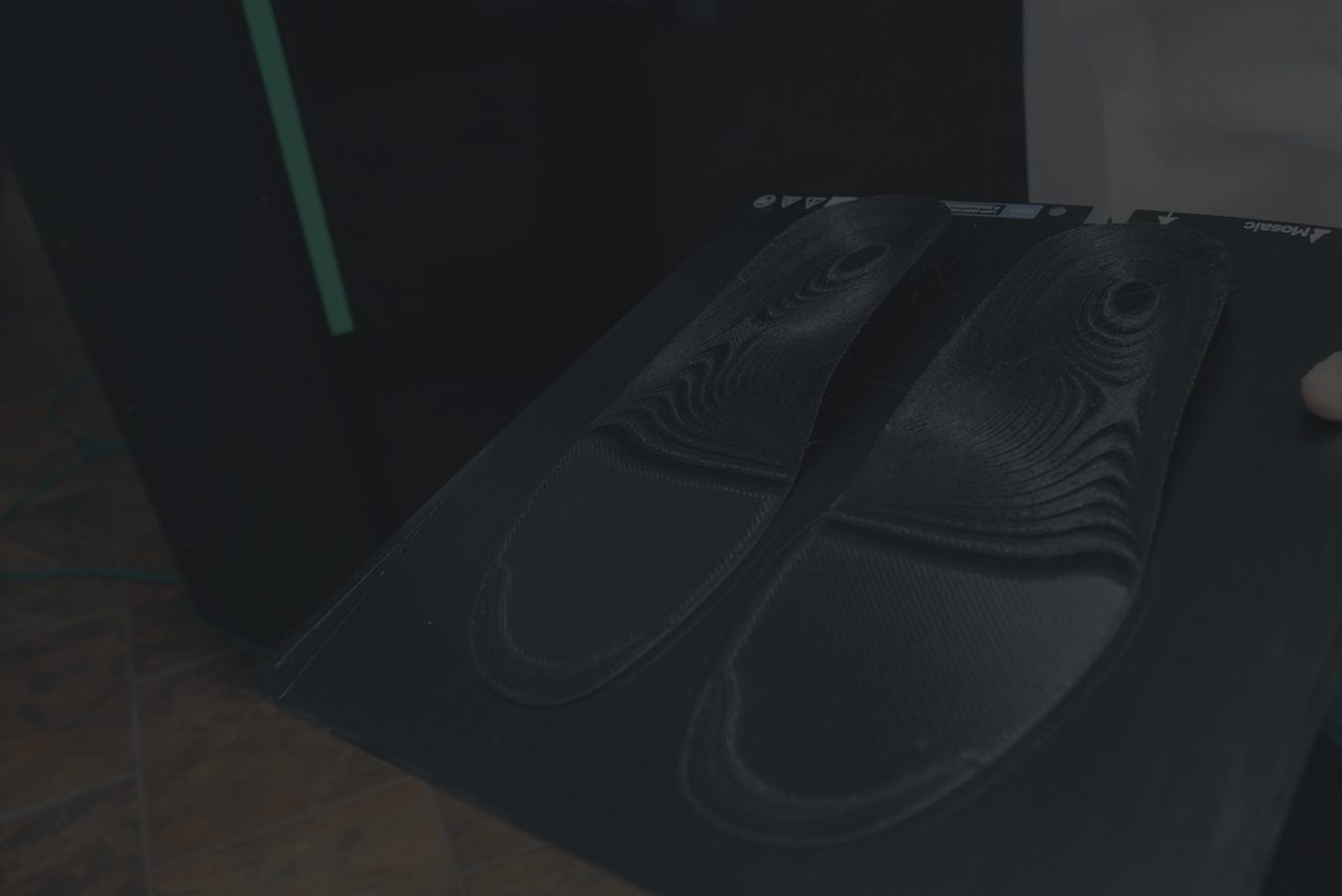
Digitally produced orthotic insoles are printed directly to final geometry, dramatically reducing post-processing requirements. Fewer manual steps mean:
- Shorter production cycles
- Lower labor dependency
- Fewer opportunities for error
System-Level Speed: Materials + Automation
Material performance alone does not reduce wait times at scale. When Aero and Form are produced on Mosaic’s automated Array platform, labs operate a fully integrated scan-to-print workflow.
Automation removes batching delays, reduces manual handling, and enables predictable, on-demand production across technicians, shifts, and locations.
Together, Mosaic’s materials and platform eliminate one of the most persistent causes of long orthotics lead times: variability across people, processes, and materials.
What Faster Turnaround Really Delivers for Clinics
By partnering with labs that operate automated, scan-to-print 3D printing orthotics workflows, and use validated materials like Aero and Form, clinics can deliver 3D printed orthotic insoles faster, more predictably, and with fewer downstream issues.
To learn how Mosaic supports faster, more reliable orthotics laboratory production, explore our resources or contact our team at sales@mosaicmanufacturing.com.