
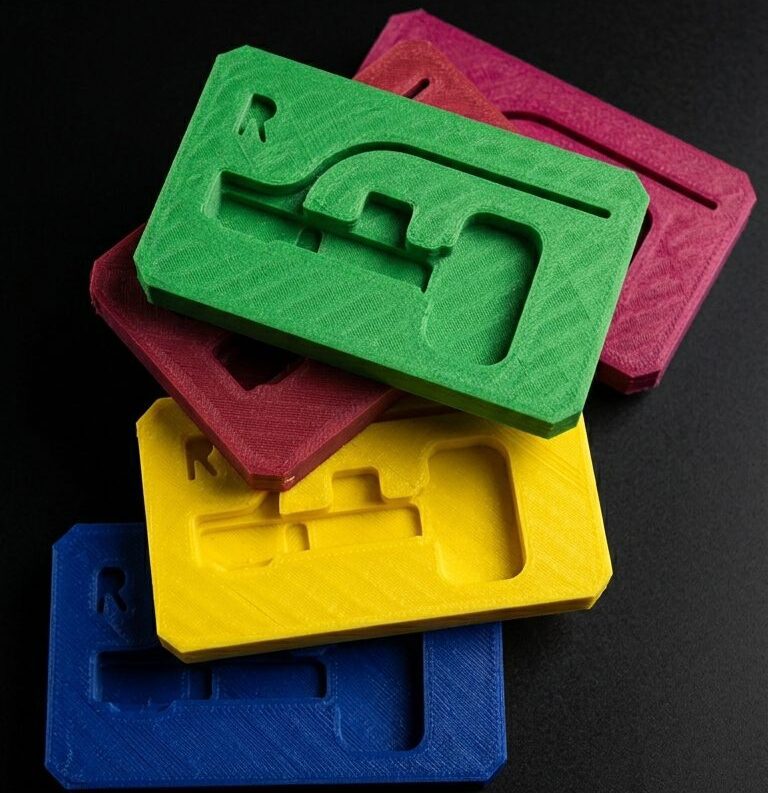
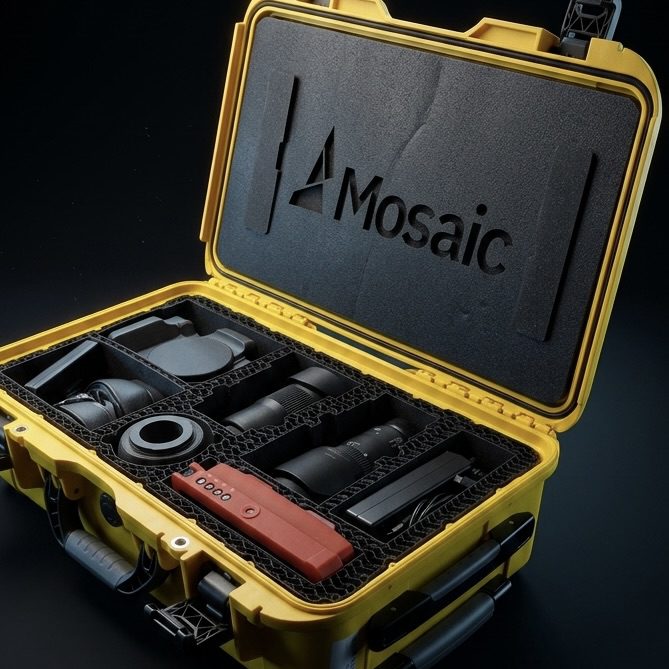
Foam Manufacturing, Made Easy
Traditional foam manufacturing relies on cutting, bonding, assembly, and supplier-driven workflows that add cost, complexity, and lead time.
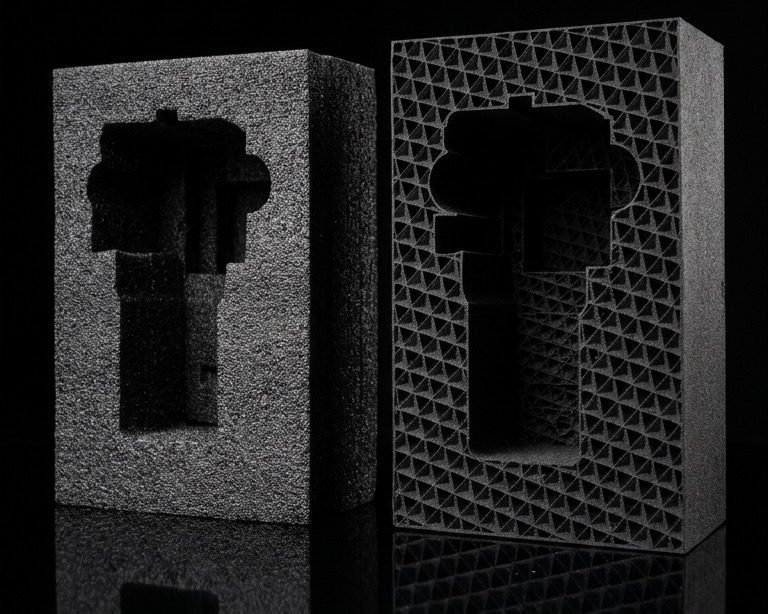
Mosaic replaces this with a fully digital process that enables manufacturers to produce finished 3D printed foam parts in a single step. No tooling. No assembly. No minimum order quantities.








Engineered as a Direct Replacement for PE, XLPE, and EVA Foams
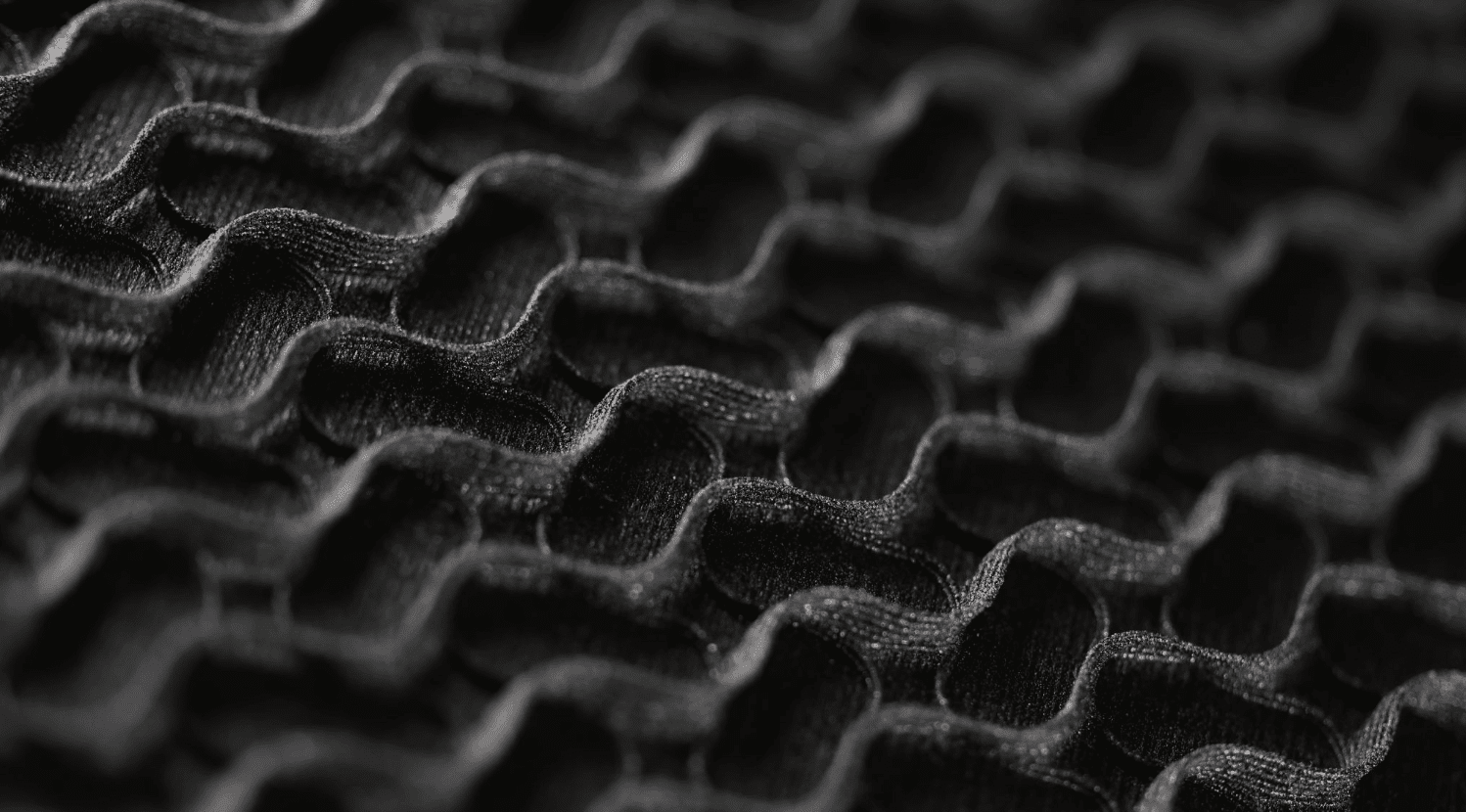
Mosaic Stitch is a proprietary material that combines the proven performance of traditional foamed elastomers with the advantages of digital manufacturing, enabling tunable density, monolithic construction, precision repeatability, and on-site production without tooling or post-processing.
Custom Foam Solutions for Industrial Applications
Whether you’re protecting products, organizing tools, improving ergonomics, or reducing vibration and impact, Mosaic enables 3D printed foam solutions tailored to your application without the constraints of traditional fabrication.
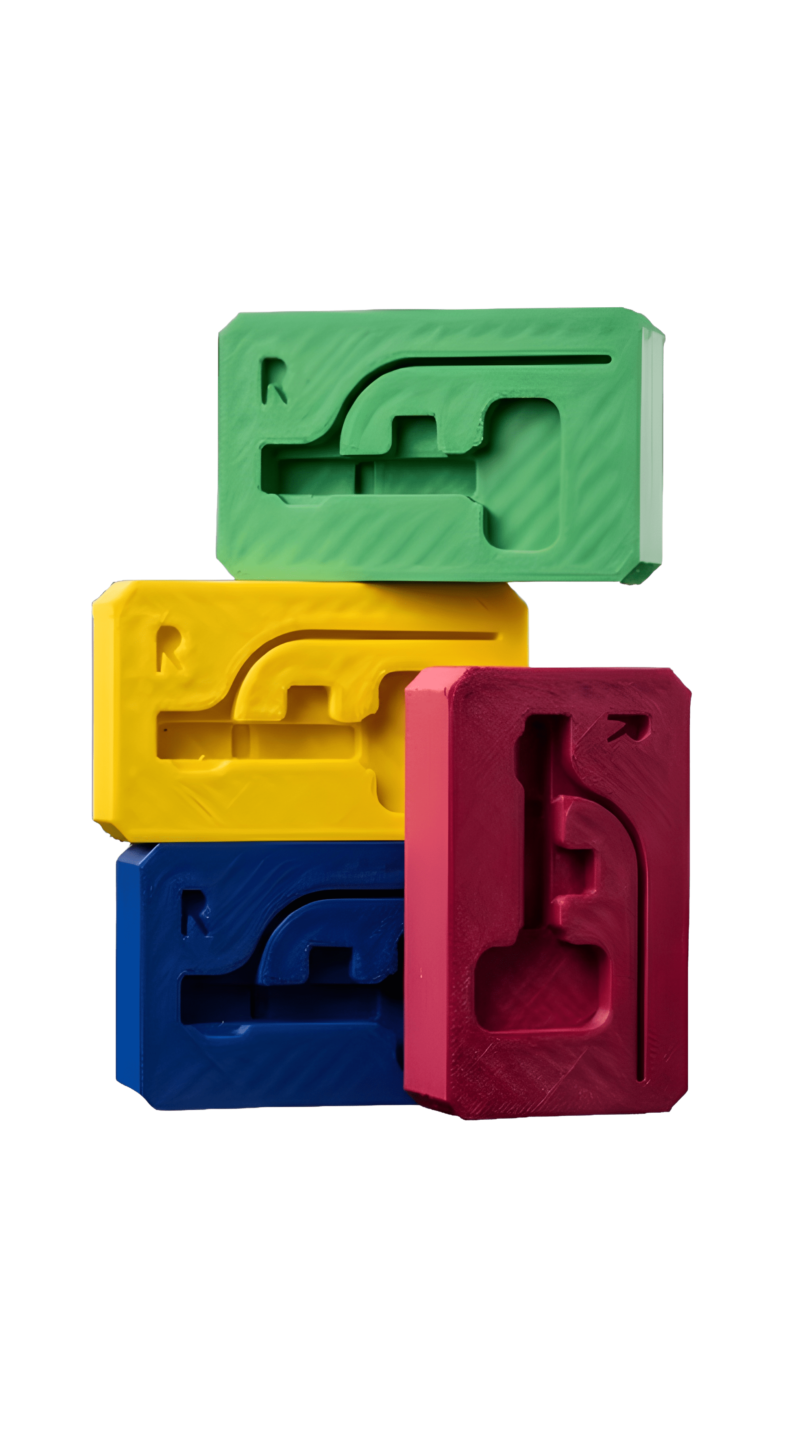
Let’s Explore Your Foam Application
From one-off custom inserts to production-scale 3D printed foam components, our team can help you assess feasibility, material performance, and manufacturing economics.

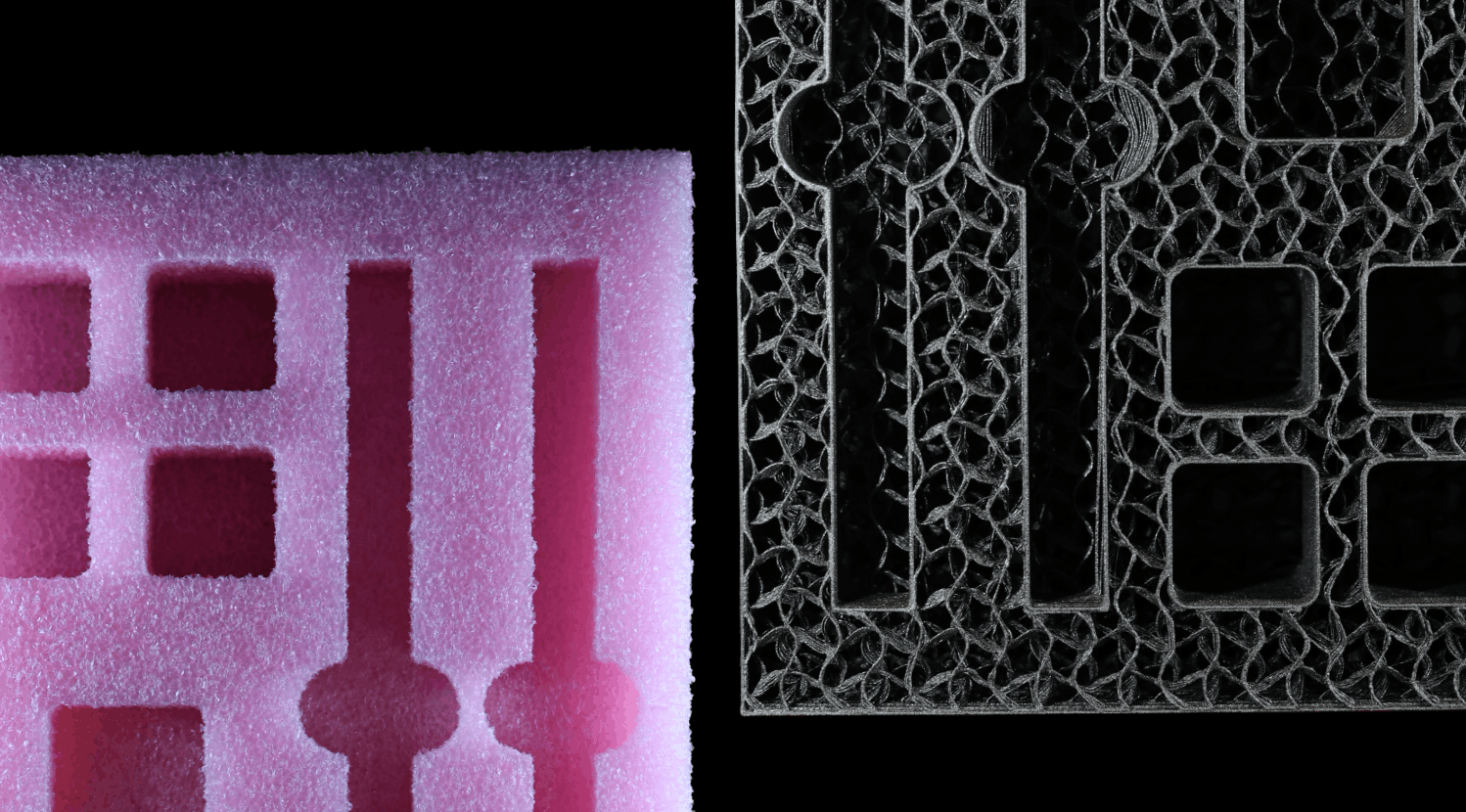
Digital Manufacturing
Manufacture exactly what you need, when you need it, without tooling, minimum order quantities, or excess inventory.
Reduce reliance on suppliers, lead times, and logistics by producing foam components closer to the point of use.
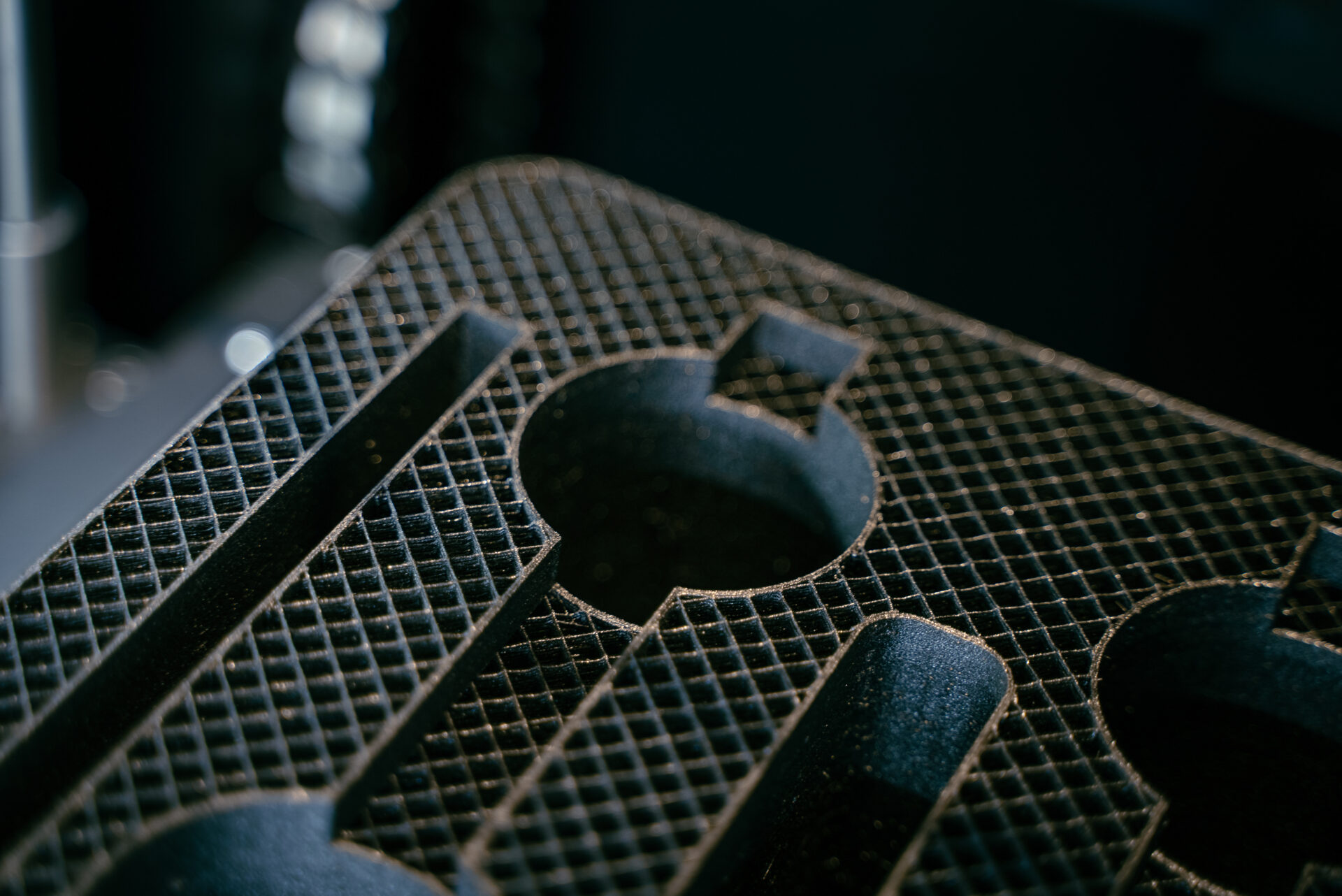
Design Freedom
Produce intricate internal structures, integrated features, and application-specific designs without additional manufacturing steps, or cost penalties.
Control density, compression, cushioning, and impact absorption within a single part to meet specific application requirements.
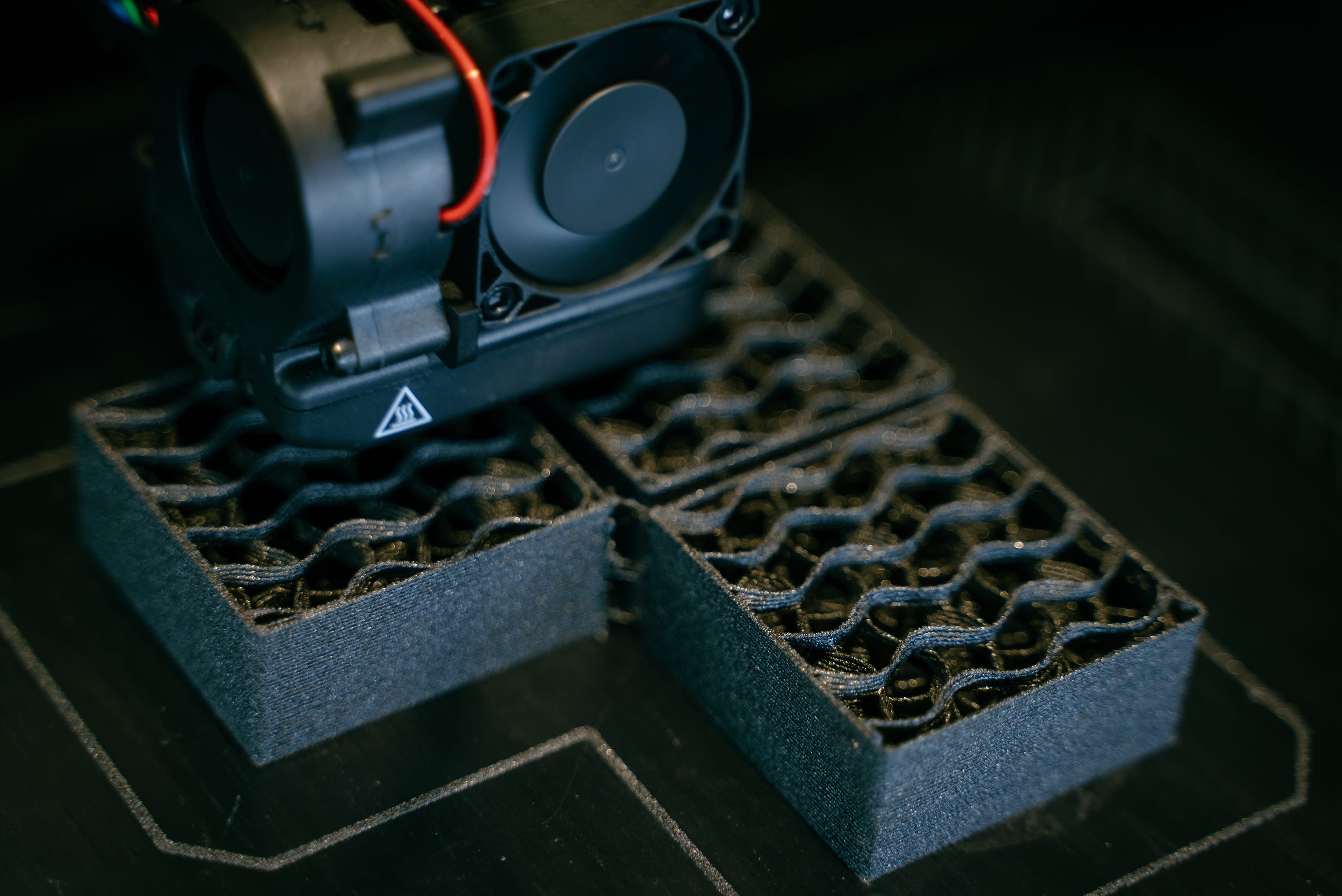
Operational Efficiency
Eliminate cutting, skiving, bonding, gluing, and assembly with parts that come off the printer ready to use.
Digitally controlled production delivers consistent 3D printed foam parts with repeatable geometry and performance across batches and locations.
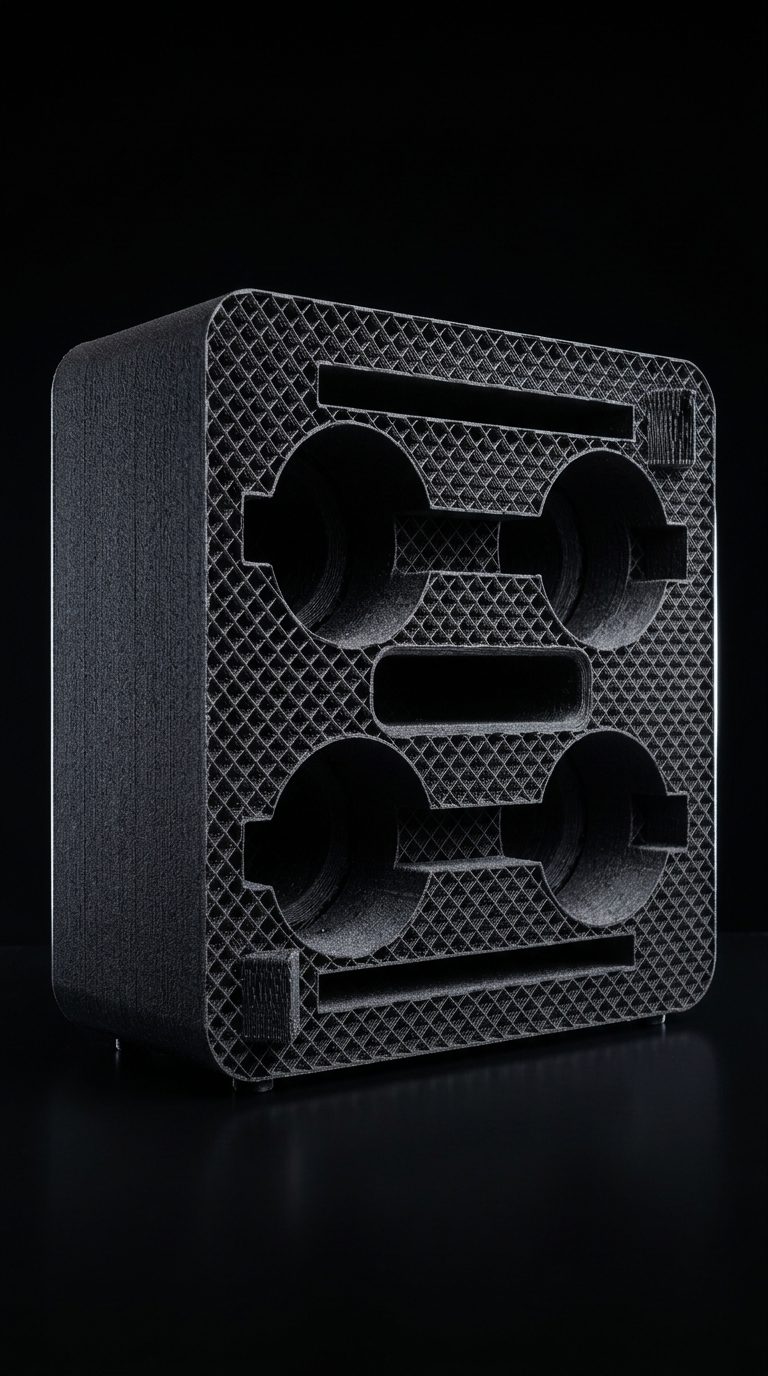
One of our valued vendors introduced me to Mosaic while 3D printing inserts. Immediately upon seeing what was being printed, I had a working premise for our Thermal Type A package.

Frequently Asked Questions About 3D Printed Foam
3D printed foam is a manufacturing process that produces foam components directly from digital files using additive manufacturing. Unlike traditional foam fabrication, it eliminates cutting, bonding, assembly, and tooling while enabling on-demand production of custom foam parts.
3D printed foam enables manufacturers to produce custom foam components without tooling, minimum order quantities, cutting, bonding, or assembly. It also supports complex geometries, tunable performance characteristics, reduced material waste, and localized production.
3D printed foam is commonly used for custom packaging, foam inserts, dunnage, WIP trays, shadow boards, cushioning, vibration dampening, protective equipment, and industrial organization solutions. It is particularly valuable when customization, low volumes, or rapid design changes are required.
Yes. Materials such as Mosaic Stitch are engineered as alternatives to traditional EVA, PE, and XLPE foams while enabling the added benefits of digital manufacturing, including on-demand production, tunable density, and greater design freedom.
Learn more about Mosaic Stitch
3D printed foam enables manufacturers to create custom packaging solutions without tooling costs, minimum order quantities, or supplier lead times. Complex geometries, custom-fit inserts, and rapid design updates can be produced directly from digital files.
Yes. 3D printed foam is well suited for custom case inserts used to protect tools, electronics, optics, medical devices, aerospace components, and other high-value products. Digital production enables precise fit, repeatability, and rapid iteration.
Dunnage is a protective material used to secure and protect products during manufacturing, storage, and transportation. 3D printed dunnage can be customized to specific products and workflows while eliminating tooling requirements and reducing inventory.
Yes. Unlike traditional foam fabrication, which often requires tooling and minimum order quantities, 3D printed foam can be produced economically in quantities ranging from a single unit to production-scale volumes.
Yes. Foam components are produced directly to their final geometry, eliminating many of the cutting, skiving, trimming, and offcut waste associated with traditional foam fabrication processes.
Yes. Density, compression characteristics, cushioning performance, energy absorption, and geometry can be tuned to meet specific application requirements while maintaining a single manufacturing workflow.
On-demand foam production helps reduce inventory requirements, eliminate excess stock, shorten lead times, and improve responsiveness to changing product designs and production needs.
Yes. Because foam components are produced directly from digital files, manufacturers can produce parts closer to the point of use, reducing dependence on external suppliers, overseas sourcing, and long logistics chains.
Traditional foam fabrication often relies on cutting, layering, bonding, and assembly. 3D printed foam enables monolithic parts with integrated features, complex internal structures, and application-specific geometries without additional manufacturing steps.
No. While additive manufacturing is often associated with prototyping, automated production platforms can manufacture repeatable foam components for end-use packaging, material handling, organization, cushioning, and industrial applications.
3D printed foam is used across manufacturing, packaging, aerospace, defense, healthcare, industrial automation, logistics, consumer products, and other industries where custom foam solutions, rapid iteration, and on-demand production provide value.
3D printed foam is often most cost-effective for custom, low-volume, high-value applications where tooling costs, supplier lead times, inventory requirements, or design complexity make traditional foam fabrication less practical.
Our Latest Resources


Start Scaling with Automated 3D Printing
Enhance productivity, print with more materials, and scale effortlessly with cutting-edge automation.