
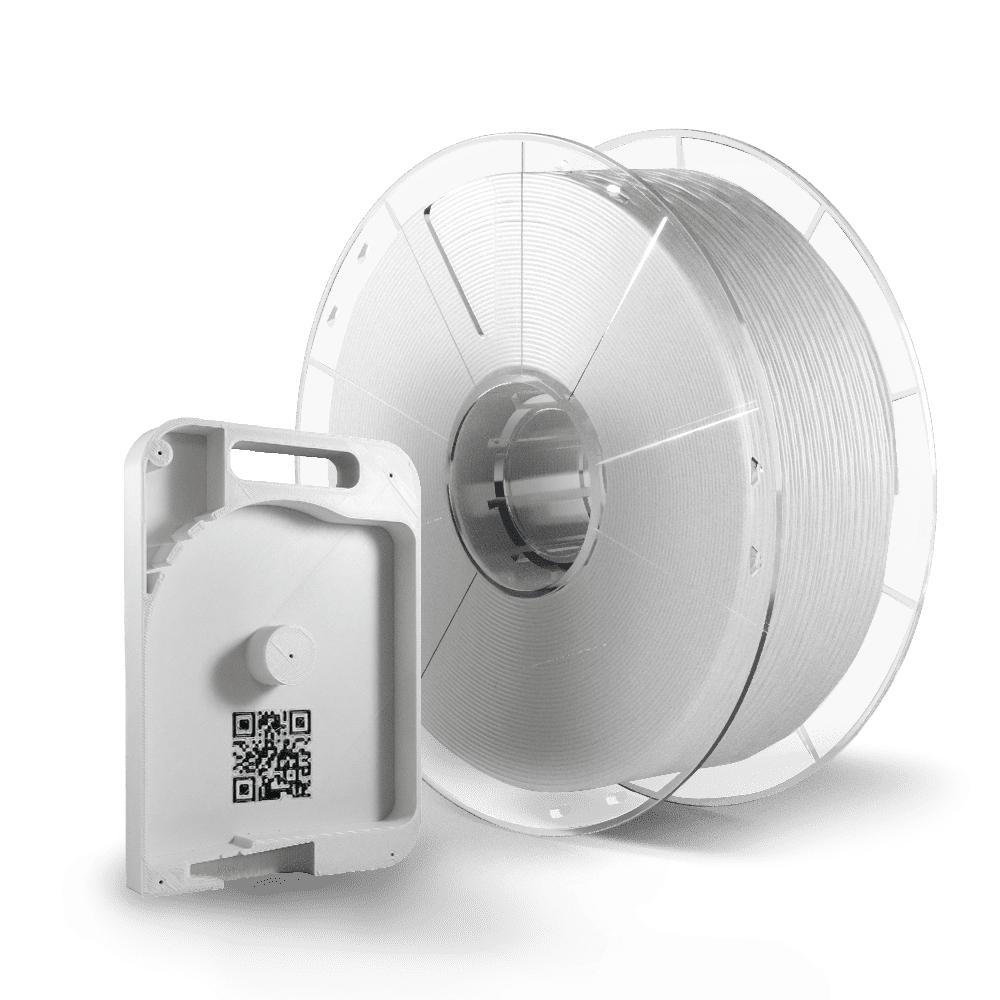
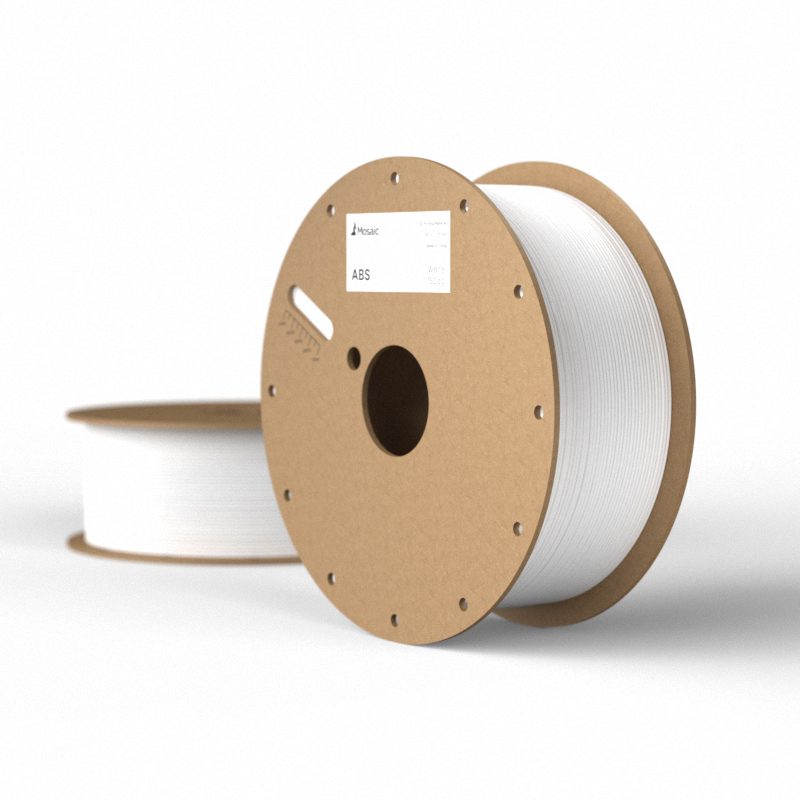
Mosaic ABS is a durable, tough thermoplastic widely used for functional prototypes, fixtures, and enclosures. It offers strong mechanical performance and a smooth surface finish.
What is ABS?
Durable and easy to use. Explore ABS’s material specifications and key properties below.
Mechanical Properties
Mosaic ABS balances strength and toughness, with a tensile strength of 38.24 MPa and a modulus of 2213 MPa. Its impact resistance and dimensional stability make it ideal for functional parts exposed to daily wear, drops, and mechanical loads.
Thermal Properties
With an HDT of 97.9 °C, Mosaic ABS performs reliably in elevated temperatures, supporting automotive, tooling, and enclosure applications where heat exposure is common.
Chemical Properties
ABS resists common chemicals and delivers excellent surface quality while maintaining durability in indoor or controlled environments. Its lightweight, easy-to-process nature makes it a reliable choice for high-use functional parts.
ABS Material Specifications
Durable and easy to use. Explore ABS’s material specifications and key properties below.
DOWNLOAD DATA SHEET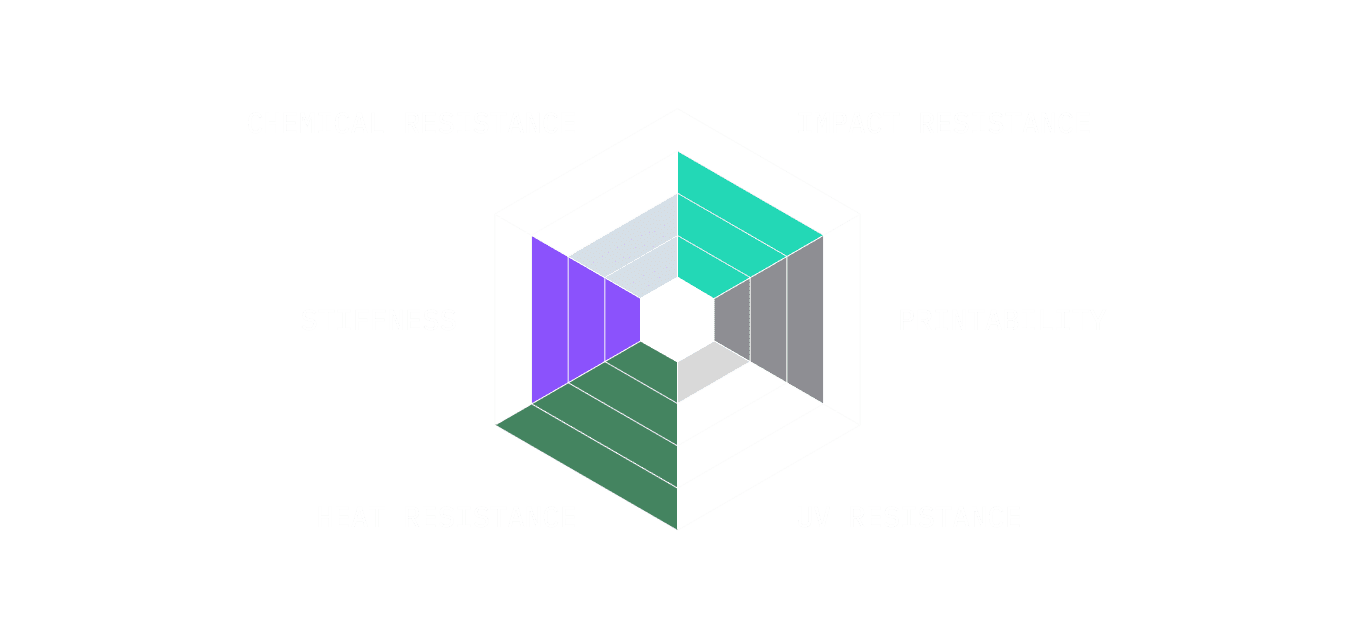
Available Colours
Black
White
Green
Filament Specifications
| Parameter | Value |
| Diameter | 1.75 mm |
| Tolerance | ± 0.05 mm |
Printing Guidelines
| Slicer Profile | Available on canvas3d.io |
| Nozzle Temperature | 275°C |
| HEATED CHAMBER | Recommended for larger geometries |
| Build surface | Element Bed Type I, with glue stick |
| Special considerations | N/A |
Storage/Handling Considerations
| Hygroscopicity | High |
| Drying Temperature | 70°C |
| Drying Time | 6 Hours |
Start Printing with Mosaic ABS
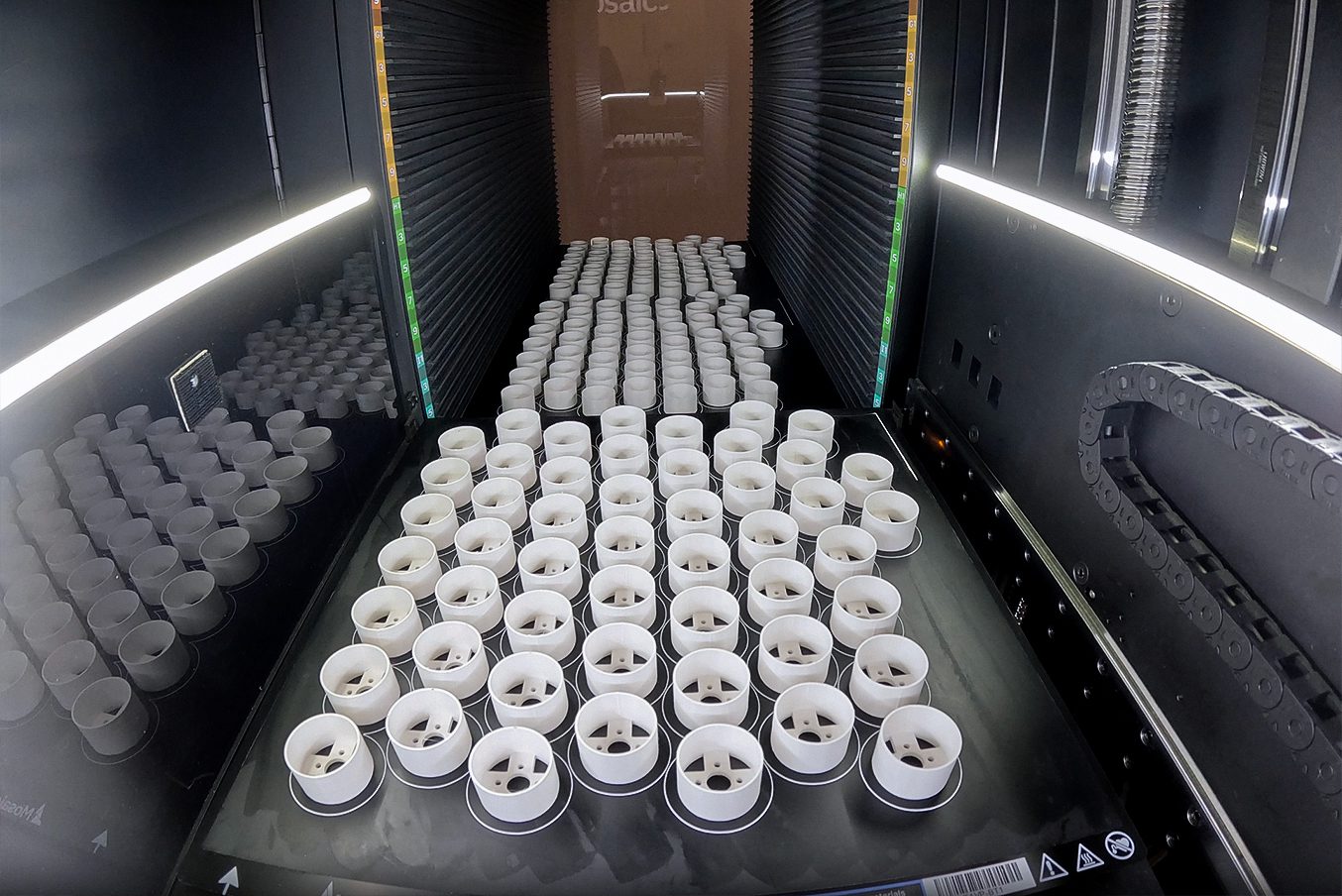
ABS in Action: Durable, Reliable, and Ready to Print

Materials Engineered for Performance
Explore Mosaic’s Line of High-Performance 3D Printing Materials.
Professional
Professional
High-performance 3D printing materials in bold colors for dependable, all-purpose use.
- Mosaic PLA
- Mosaic ASA
- Mosaic ABS
Flexible
Quickly iterate product designs using high-speed, multi-material printing that delivers functional, testable prototypes with minimal turnaround time.
Quickly iterate product designs using high-speed, multi-material printing that delivers functional, testable prototypes with minimal turnaround time.
- Validate designs faster with true-to-function parts
- Combine flexible and rigid materials in one print
- Reduce outsourcing and accelerate time to market
Light Industrial
Quickly iterate product designs using high-speed, multi-material printing that delivers functional, testable prototypes with minimal turnaround time.
- Validate designs faster with true-to-function parts
- Combine flexible and rigid materials in one print
- Reduce outsourcing and accelerate time to market
Industrial
Quickly iterate product designs using high-speed, multi-material printing that delivers functional, testable prototypes with minimal turnaround time.
- Validate designs faster with true-to-function parts
- Combine flexible and rigid materials in one print
- Reduce outsourcing and accelerate time to market




Array really automates 3D printing by making it a hands off procedure, I can send a print from my computer at home and not have to come into the office at 9pm – the parts are just sitting there ready for me the next day.

Connor Reddington, Avid (a Lubrizol Company)
Students at all levels of education should have access to an Array. It is essential if we’re encouraging STEM education, design engineering thinking, prototyping, iteration – students should have a reliable 3D printer to make parts in the volumes they need.

Cody Soska, Technical Specialist at IDeATe
The ability to develop and produce custom plastic parts at scale, on our factory floor, is great for our business and new client acquisition.

James McColl, Senior Program Manager Microart Services Inc.
Everything You Need to Know
ABS generally prints best in an enclosed or heated chamber to help reduce warping, especially on larger parts. Follow the manufacturer’s recommended settings for temperatures and bed preparation to ensure consistent extrusion and good first-layer adhesion. Since ABS is hygroscopic, drying before use and storing in a sealed container is recommended.
Download the spec sheet for detailed print settings and material properties.
ABS can be printed indoors when proper ventilation or air filtration is used to help reduce fumes and airborne particles. Using a printer with an enclosed chamber can further help contain emissions and improve comfort during longer print jobs.
ABS is commonly used for jigs and fixtures, enclosures, housings, and functional prototypes where strength, toughness, and durability are important. Its mechanical performance makes it well suited for everyday industrial and functional applications.
Download the spec sheet for detailed mechanical properties and performance data.