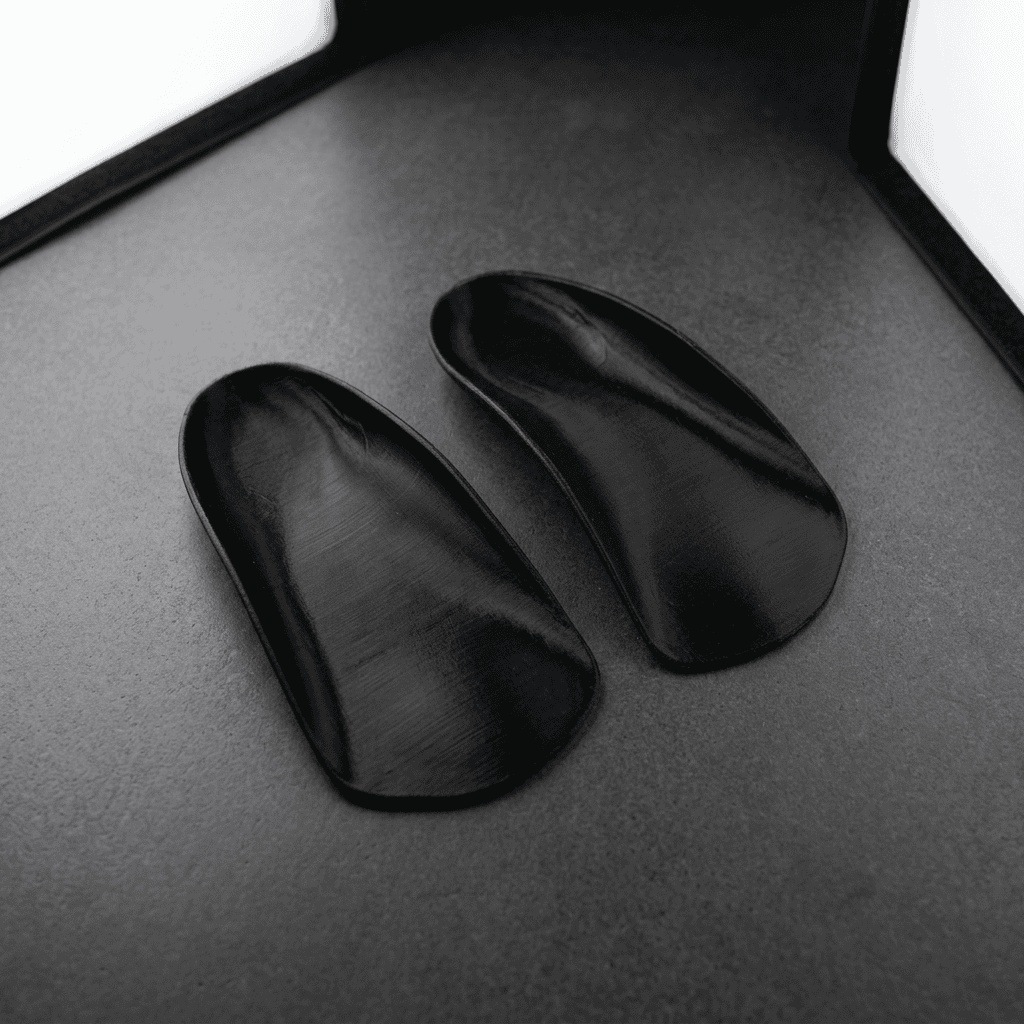
Material trust is the first question every orthotics lab asks about 3D printed custom devices. Not throughput. Not cost per pair. Materials.
For good reason. EVA foam and polypropylene are the clinical benchmarks orthotics labs have built their practices around. They are known quantities: predictable in feel, predictable in performance, and predictable in how patients respond to them. Any new production technology entering the orthotics market has to answer directly to that standard, not in marketing language, but in clinical and mechanical terms.
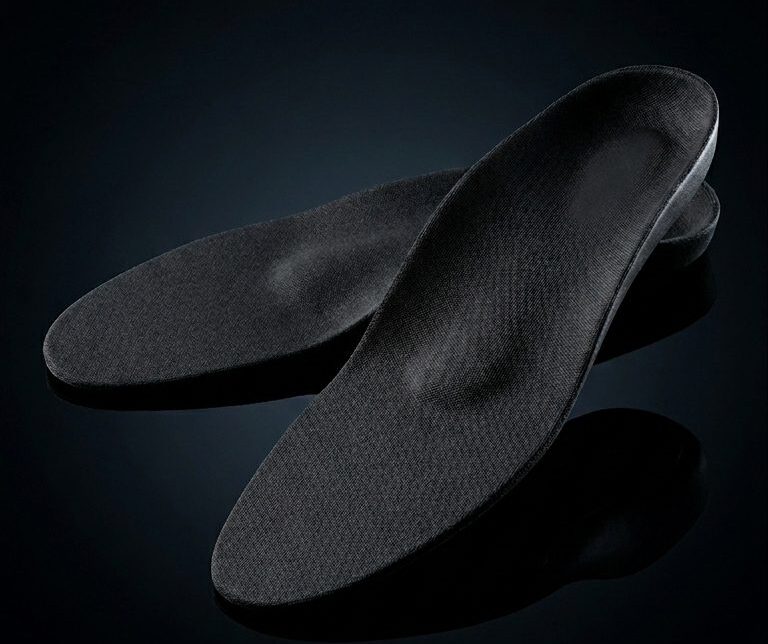
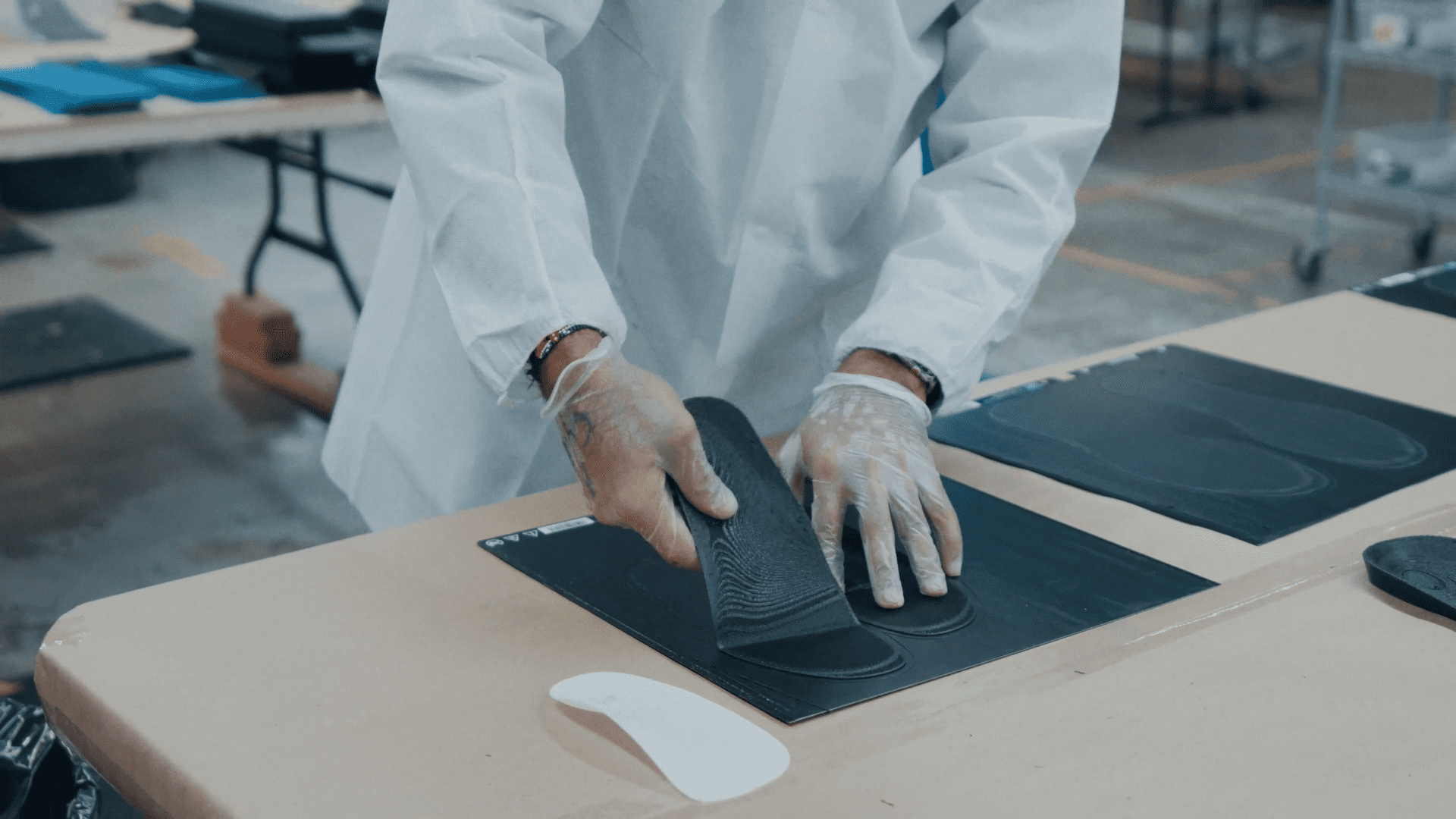
Orion’s material platform, Aero for soft accommodative orthotics and Align for rigid corrective devices, was developed specifically to meet that standard. Neither is a general-purpose filament adapted for insole use. Both are proprietary thermoplastic materials engineered from the ground up for clinical orthotic production, validated through extended fatigue testing, and designed to produce finished devices directly off the belt without intensive post-processing or material handling.
This post covers what labs need to know.
Do Orion’s materials perform like EVA and polypropylene?
Orion’s two materials are designed to perform within the same clinical envelope as EVA and polypropylene, comparable feel, function, and structural behavior, while eliminating the material waste, manual finishing, and inconsistency that traditional production introduces.
Aero – the EVA equivalent for 3D printed custom orthotics
Aero is Mosaic’s proprietary soft orthotic material, engineered for EVA-like feel and performance in an automated, 3D printed accommodative device.
- EVA-like feel with a smooth, uniform surface and clean edges directly off the belt
- Engineered for comfort, resilience, and long-term wear
- Consistent material behavior across every automated build — no batch-to-batch variation
- ISO 10993-5 cytotoxicity-certified for skin-safe clinical use
- Variable density control through Stryde Design for patient-specific softness profiles
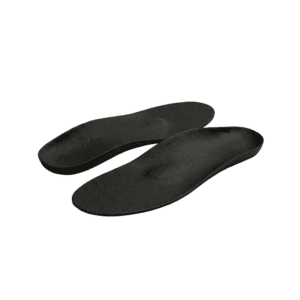
Align – the polypropylene equivalent for 3D printed rigid orthotics
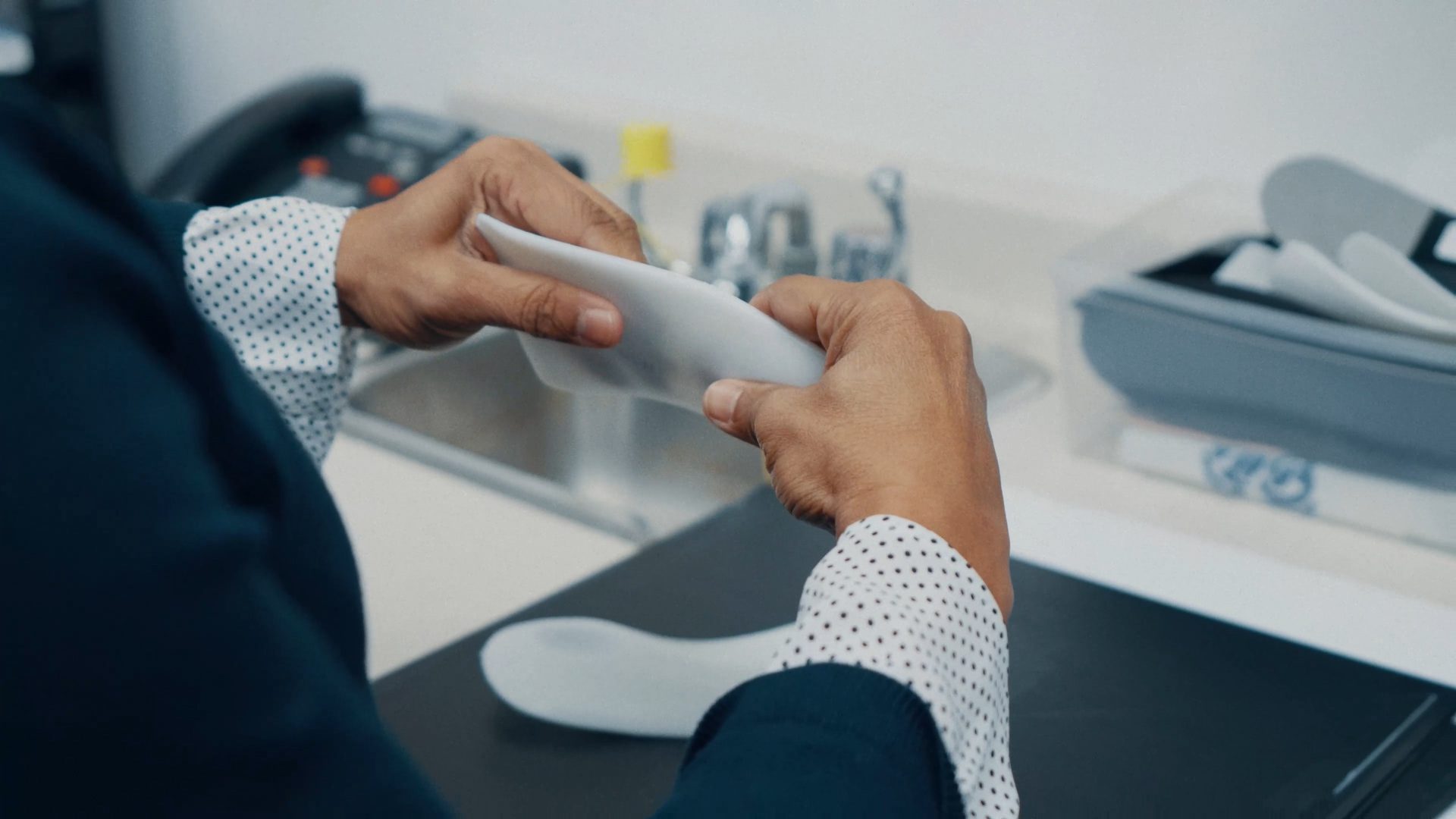
Align is Mosaic’s proprietary rigid orthotic material, engineered for polypropylene-class structural performance in corrective and high-support applications.
- Polypropylene-class stiffness, maintains biomechanical alignment over extended wear
- Consistent structural performance across every build — no variability from temperature, technique, or handling
- No deformation or compliance failure under sustained clinical load
Together, Aero and Align let Orion cover the full spectrum of custom orthotic production, soft and rigid, from one continuously running platform, with no workflow changes or separate material handling.
→ Related: SLS vs. Orion’s Belt-Based 3D Printing: What’s the Difference?
How is material consistency maintained across orthotic production runs?
In traditional EVA and polypropylene production, consistency depends on technician skill, how material is compressed, heat-pressed, or ground. Two devices from the same technician on different days can feel different. Orion’s automated process removes that variability at the source.
Digitally locked specifications
Every build executes against a Stryde Design file, material composition, layer structure, density zones, and geometry reproduced exactly, with no technician judgment applied at production.
Consistent extrusion
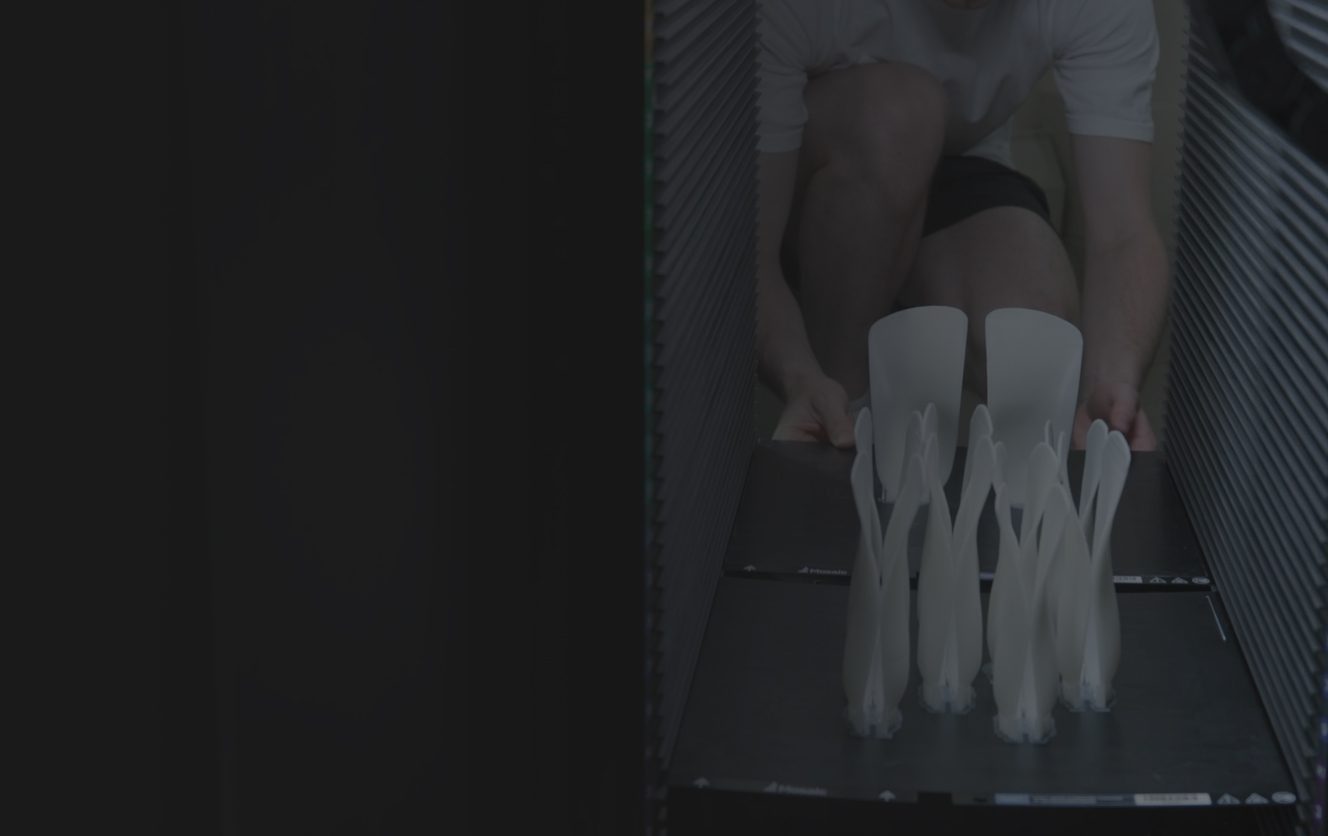
Orion’s continuous, belt-based FFF process holds stable extrusion temperature, speed, and layer adhesion from device one to device three hundred.
No manual-handling variation
Unlike EVA heat-pressing or polypropylene thermoforming, Orion’s automated extrusion removes manual variables entirely.
Production-scale validation
Aero and Align are fatigue-tested past 3 million cycles, confirming performance holds from month one to month twelve, not just at first production.
→ Related: From Scan to Finished Device: The Orion + Stryde Workflow Explained
What does variable density mean for soft orthotic device performance?
Variable density is one of the most clinically significant capabilities additive manufacturing brings to soft orthotics, one traditional EVA workflows can’t replicate without heavy manual work. Conventional EVA density control means selecting a foam blank by Shore hardness and grinding it, with regional differences (softer forefoot, firmer heel) requiring layered materials or hand modification.
Orion’s automated process works differently: technicians define density zones like heel, arch, metatarsal, forefoot, directly in Stryde Design, and each device prints as a single integrated structure with density variation built in, not layered or applied after the fact.
Clinically, this means patient-specific pressure relief and support profiles, targeted zone specification without manual layering, and consistent density performance on repeat orders months later, with prescription intent preserved from design to finished device.
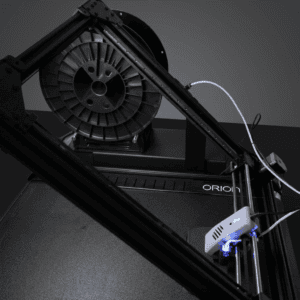
How is Orion’s material durability validated for clinical use?
Clinical credibility comes from validated testing, not claimed equivalency. Mosaic’s validation program for Aero and Align reflects that standard.
3 million fatigue cycles
ISO 10993-5 biocompatibility
Production consistency as validation
Because Orion’s automated, digitally controlled extrusion reproduces the exact specification of validated test articles, fatigue and biocompatibility results apply to every production device, not just lab samples.
See Orion’s Materials in Practice
Mosaic Manufacturing builds the full production ecosystem for O&P: Orion, a belt-based 3D printer engineered for continuous, automated orthotics manufacturing, and Stryde, the software suite connecting every step from scan to finished device.
If your lab wants to evaluate Aero and Align device samples against your current EVA and polypropylene standards, or discuss how Orion’s material platform fits your clinical case mix, contact our team directly.
Contact us at sales@mosaicmfg.com | mosaicmfg.com