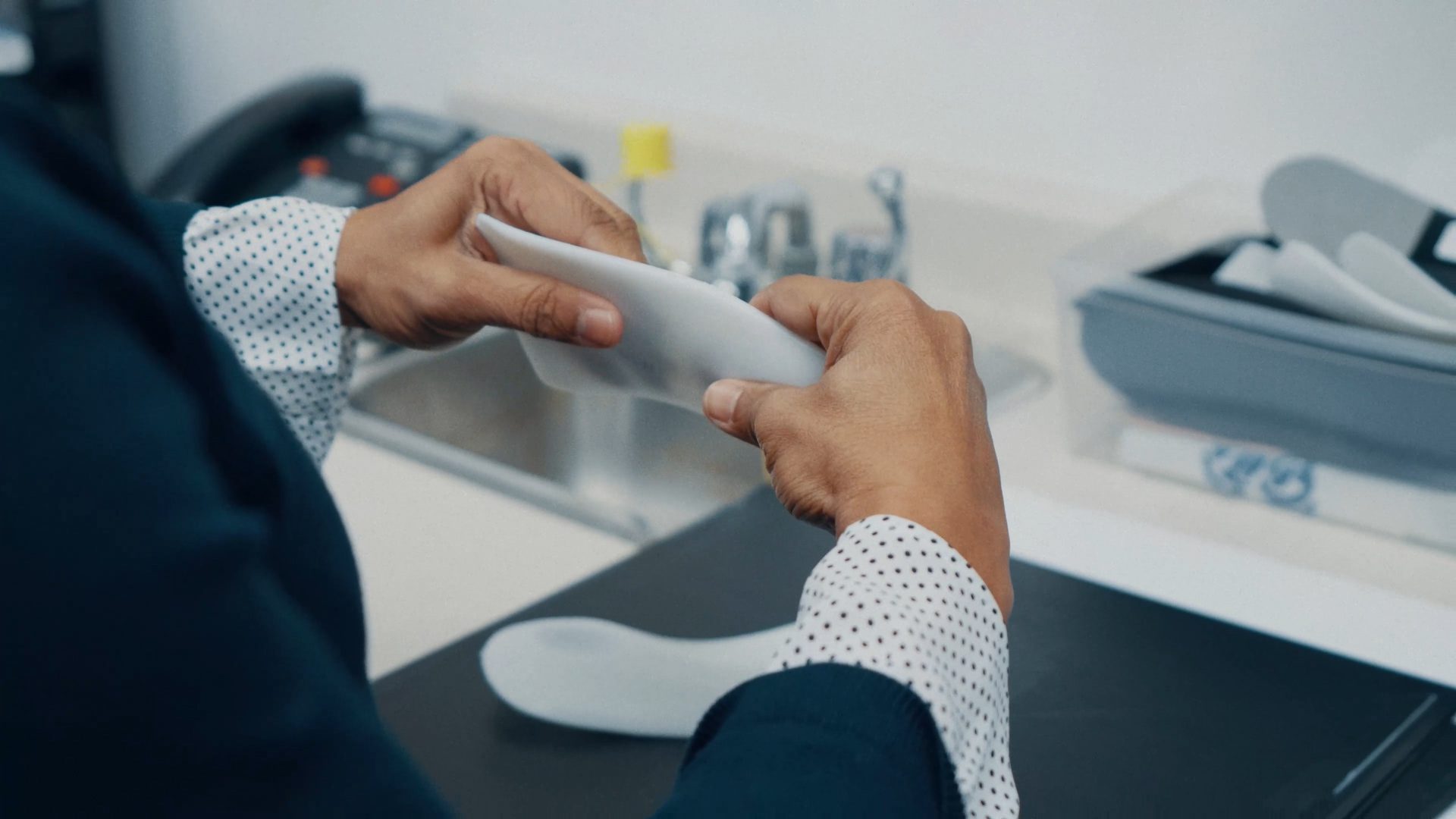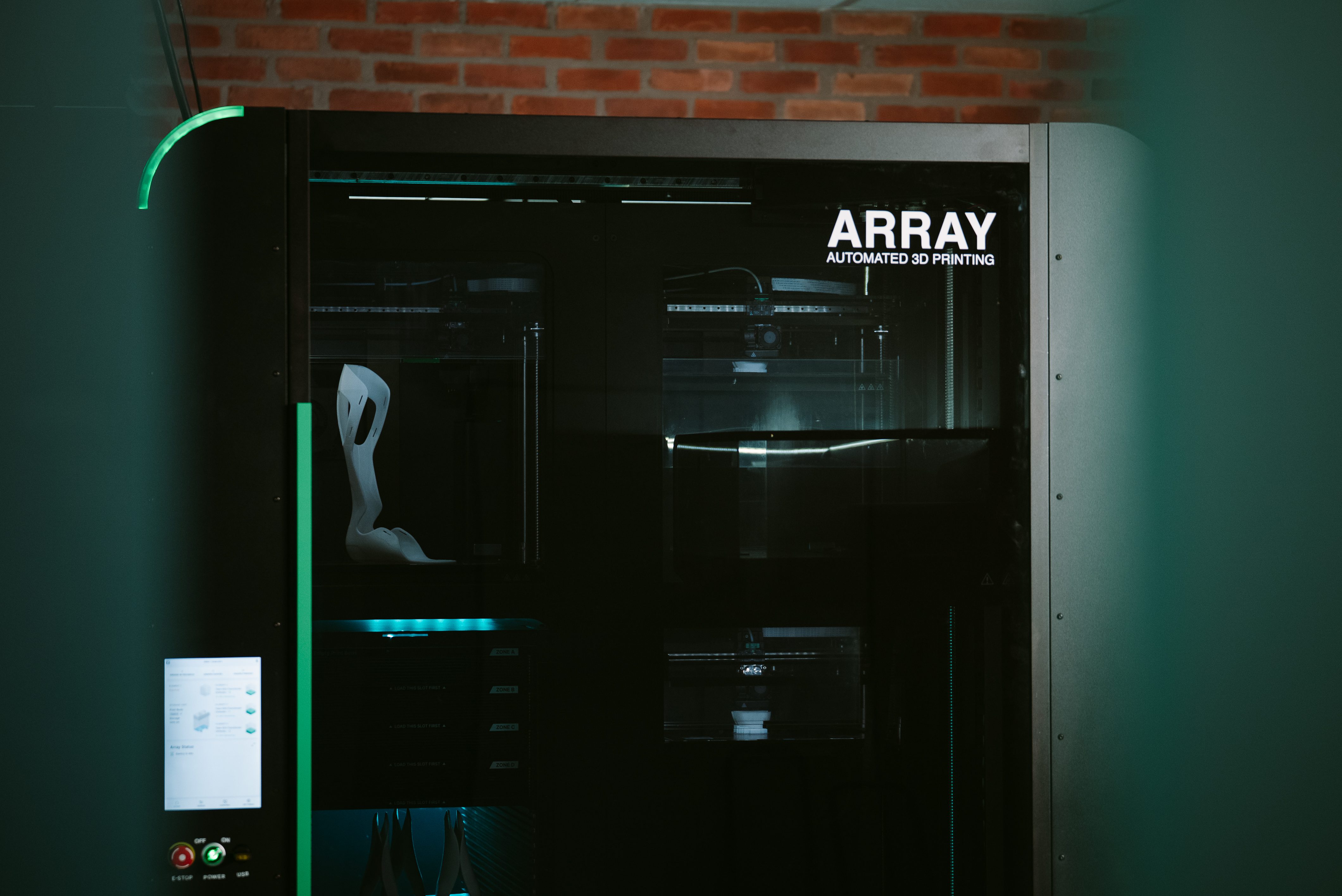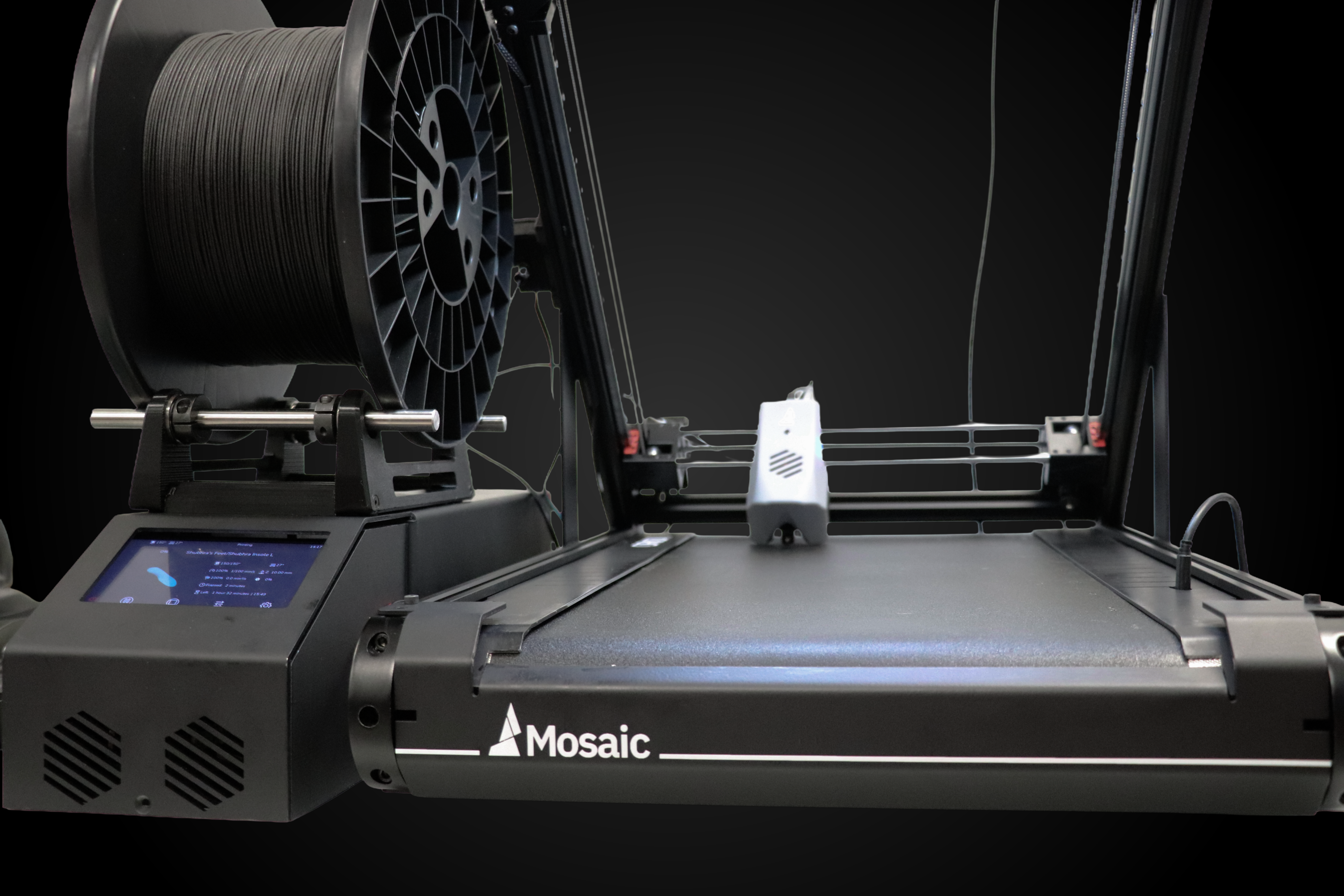
Most digital orthotics workflows are not end-to-end. They are a sequence of disconnected tools, a 3D scanner, a CAD package, a practice management system, a slicing application, a 3D printer, connected by manual file exports, format conversions, and the institutional knowledge of whoever happens to manage the handoffs between them. Each tool performs its individual function. None of them are designed to work together.
The cost of that fragmentation accumulates at every boundary: prescription data re-entered incorrectly, design files that don’t import cleanly, production jobs that can’t be tracked back to the originating prescription, repeat orders that require starting from scratch because prior design data lives in a format the current tool can’t open.
Orion and the Stryde Software Suite are built as a single connected system, not a collection of compatible tools, but a platform where data flows from capture through production without manual intervention at any step. Prescription intent established at the point of care is the prescription intent the finished device is built to. Every time.
What does the Orion + Stryde scan-to-device workflow look like?
The complete workflow runs across five connected stages, each feeding the next with no manual transfer, conversion, or re-entry:
- Stryde Scan: digital 3D foot geometry and prescription captured at point of care on iPhone or iPad
- Stryde Design: scan data used directly to create a parametric, prescription-driven design with variable density control
- Stryde Manage: case, patient history, and design file stored centrally for production and repeat orders
- Stryde Print: automated slicing, orientation, and queue scheduling sent directly to Orion
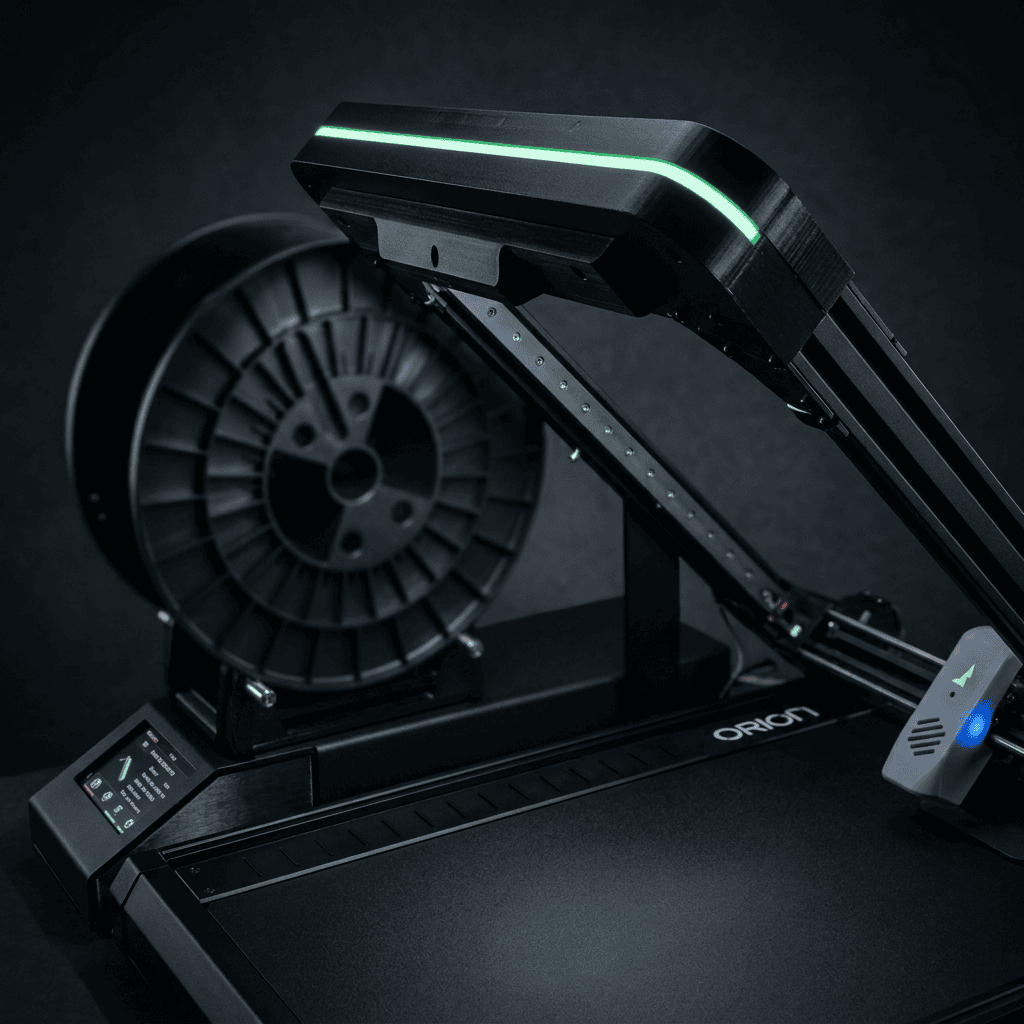
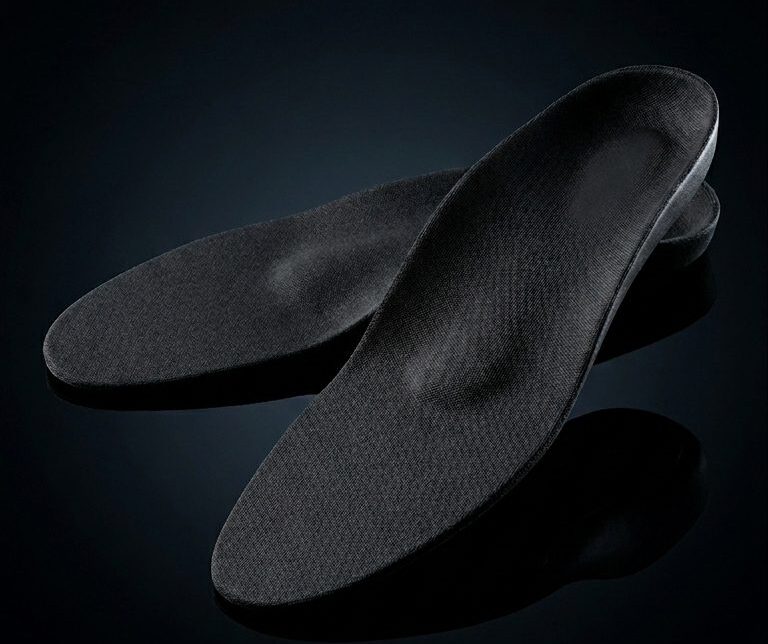
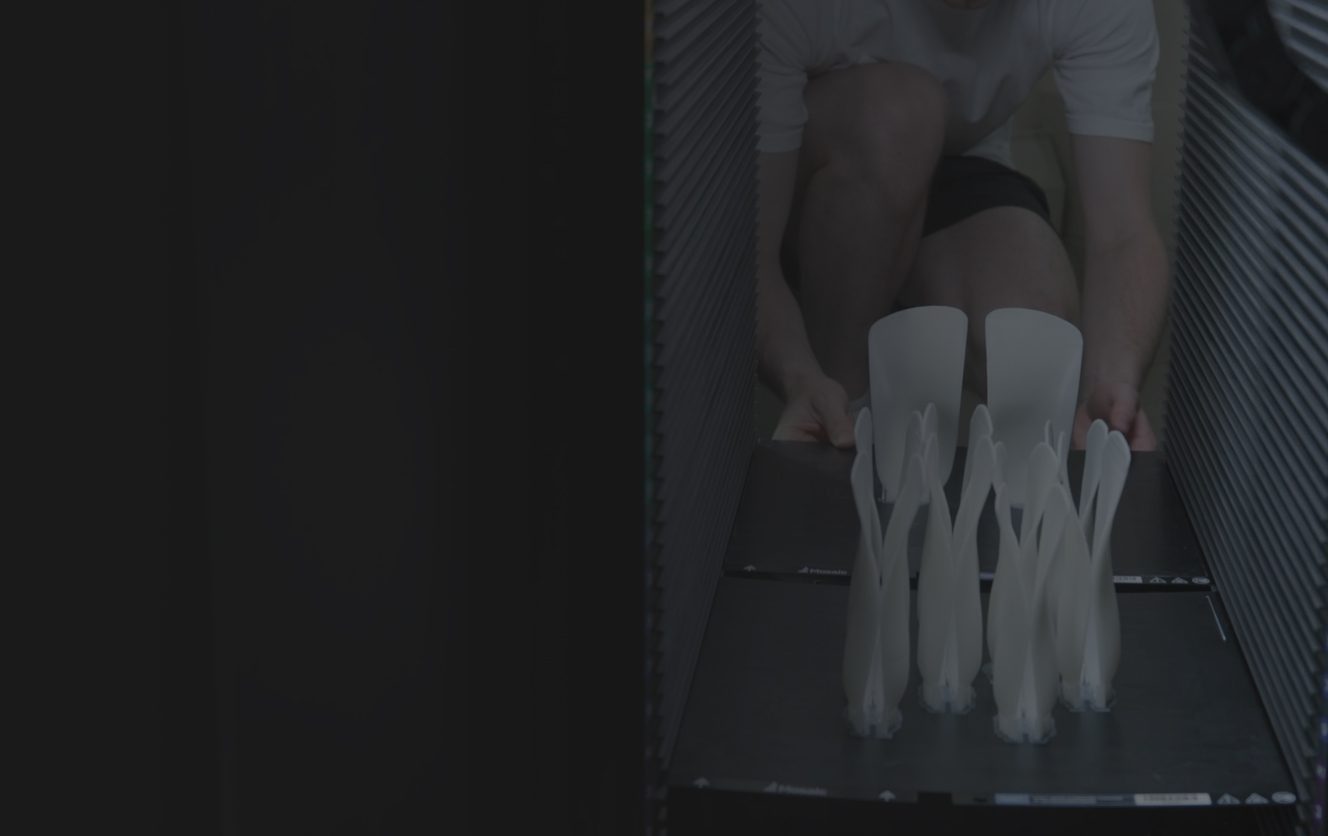
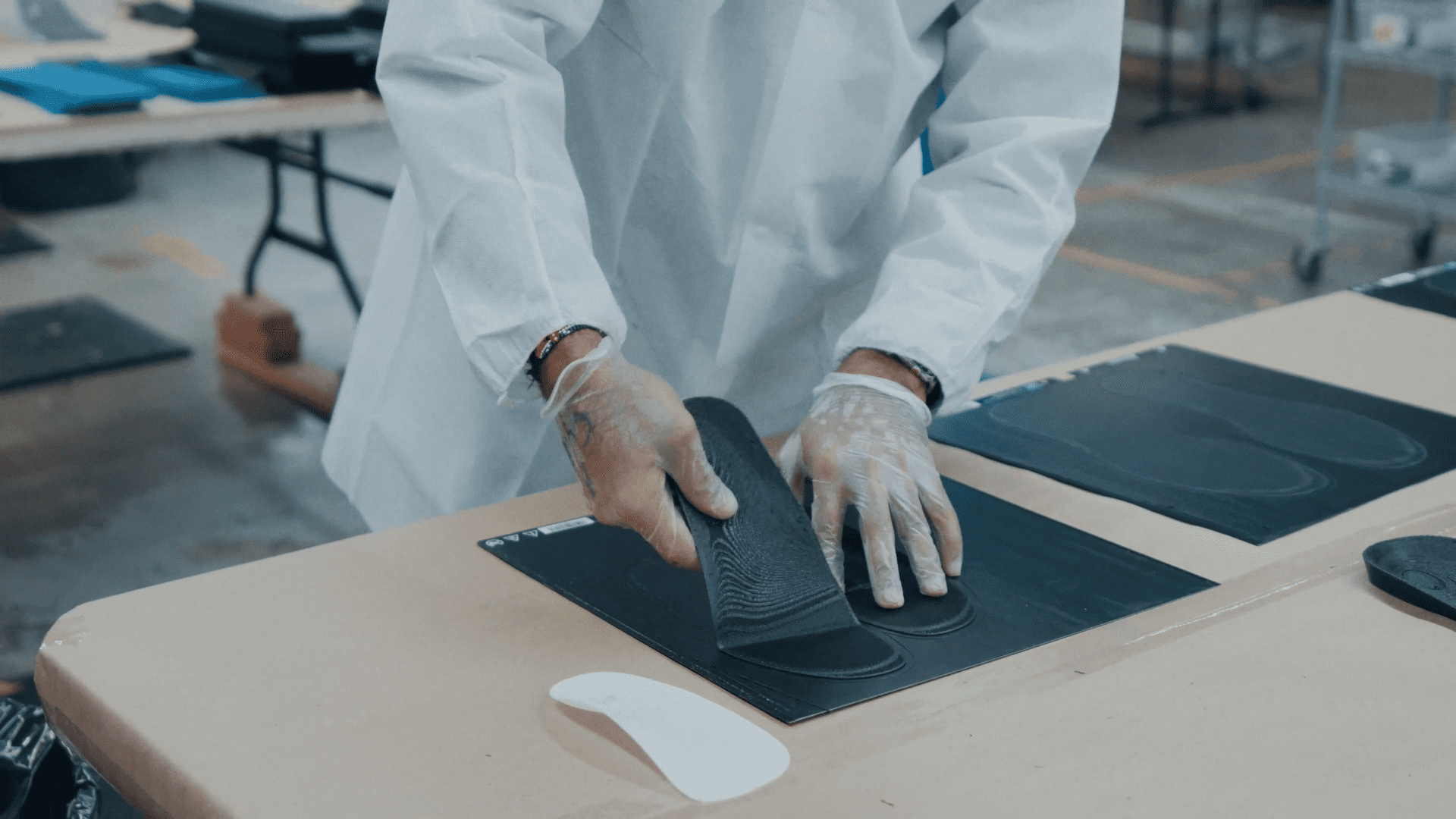
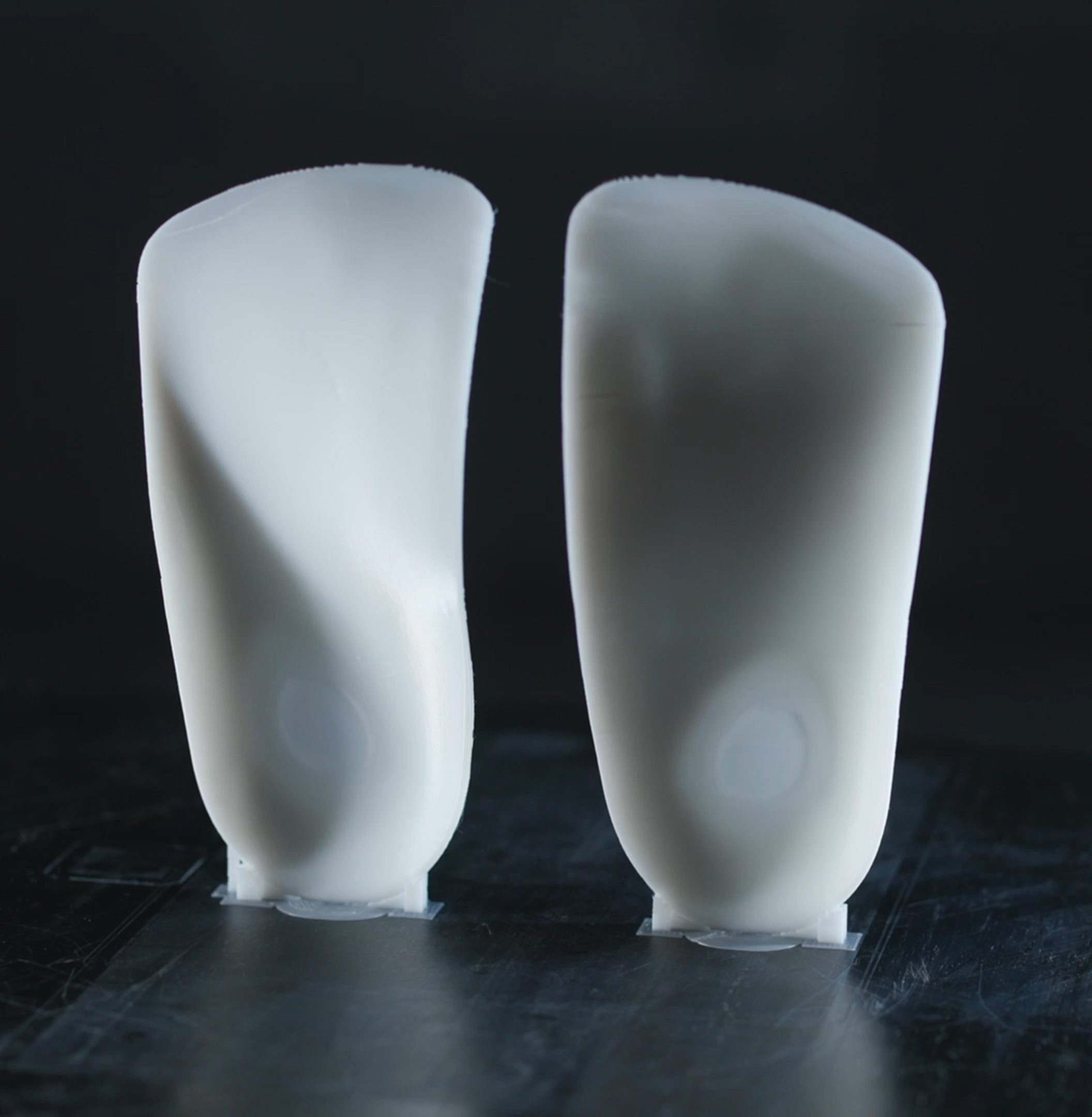
- Orion: continuous, automated belt-based production; finished device ejects off the belt, ready to dispense
No step needs manual intervention, re-entry, or file conversion, the workflow is governed by the platform, not by whoever’s coordinating between tools.
→ Learn more about Orion | Stryde Software Suite
How does Stryde Scan replace casting and manual measurement?
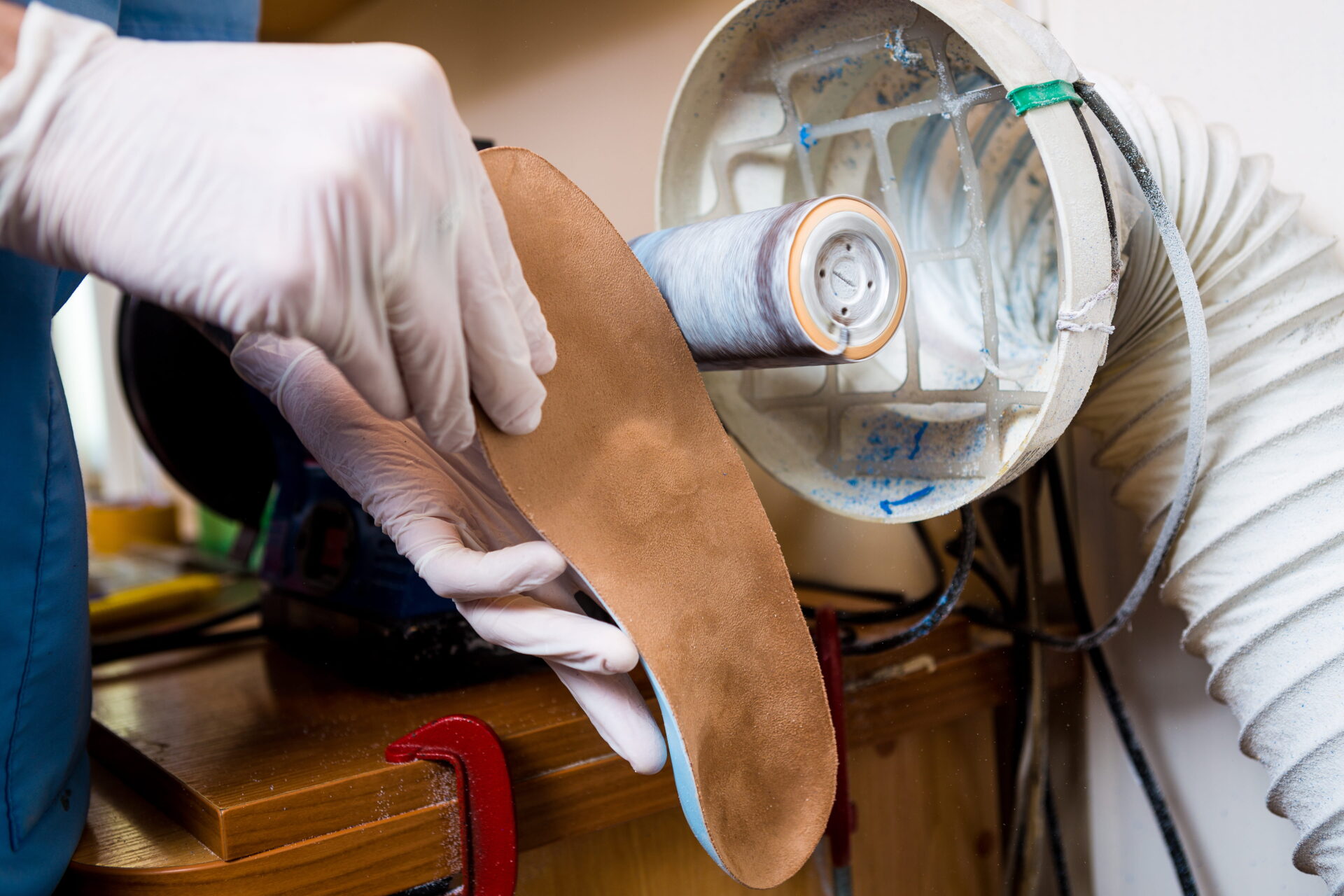
Traditional capture, foam box, plaster casting, weight-bearing measurement, produces a physical impression that must be shipped and manually translated into a design starting point, introducing variability at every step.
Stryde Scan replaces that chain with direct digital capture: a standard iPhone or iPad captures a full 3D foot model in minutes, with real-time guided feedback flagging incomplete coverage, while prescription details are entered in the same step.
Eliminated vs. Traditional casting
Preserved and improved
How is a custom orthotic designed from scan data in Stryde Design?
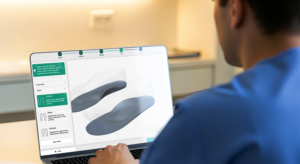
Stryde Design is Mosaic’s parametric orthotic design environment, purpose-built for orthotics, not adapted general CAD, using scan data directly with no export or conversion.
- Prescription-driven parametric design: arch height, heel cup depth, posting angle, and forefoot accommodation are controlled through clinical parameters, not freeform modeling — reducing the translation layer between prescription and design.
- Anatomical templates: consistent, clinically appropriate starting points per device type, customizable to a lab’s or clinician’s conventions.
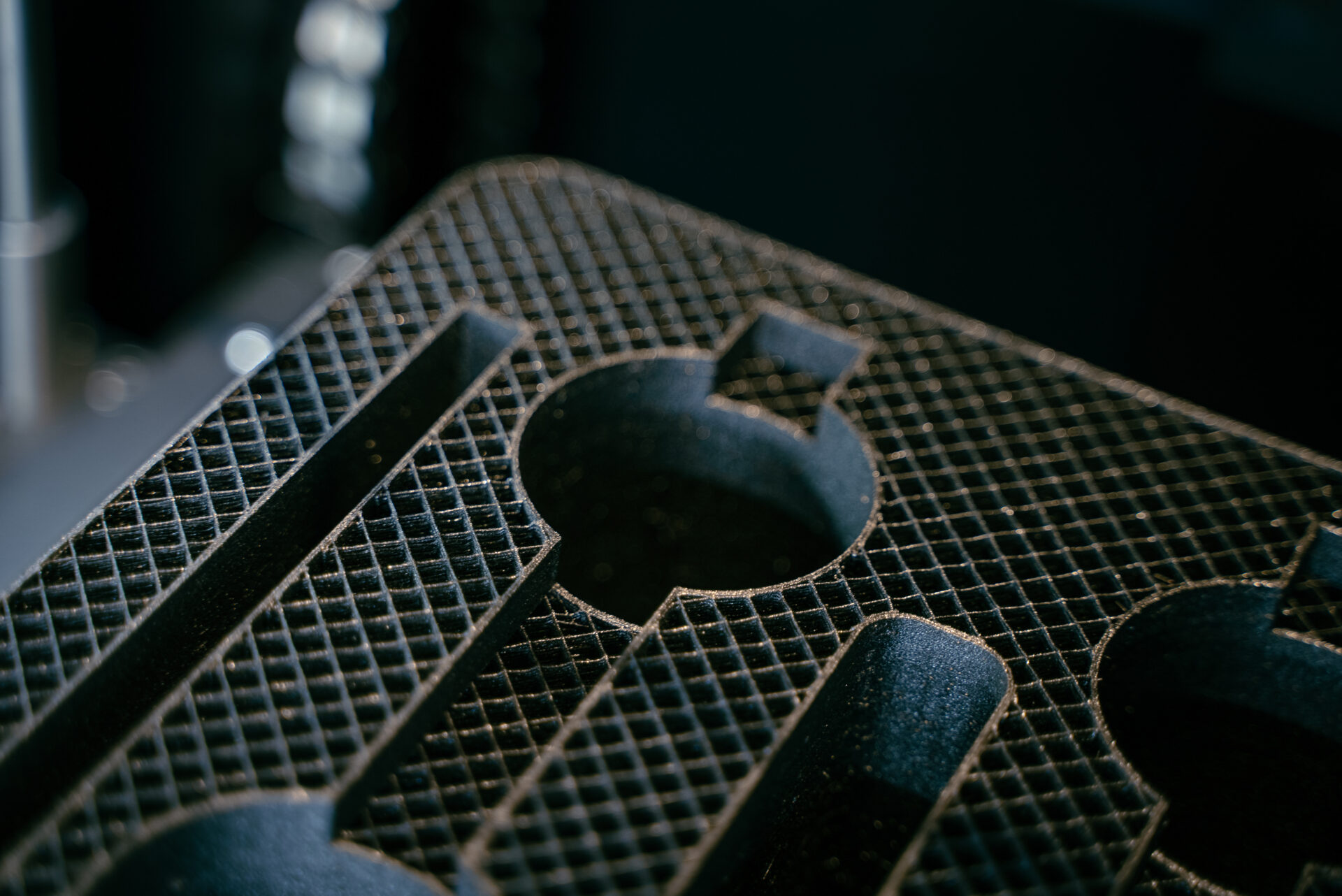
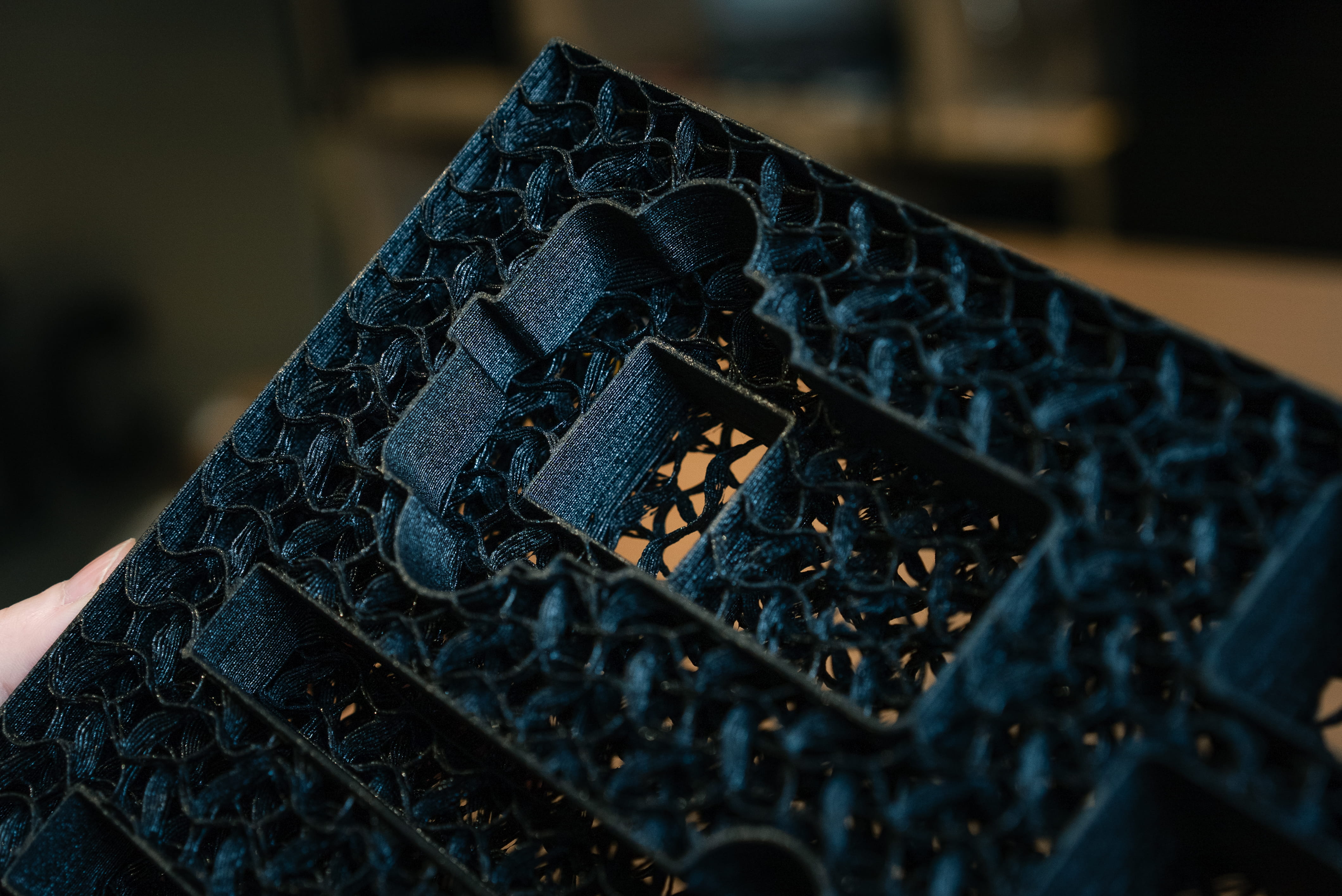
- Variable density control: independent heel, arch, metatarsal, and forefoot density values are built into the print spec and reproduced exactly in Aero, support profiles manual EVA layering can’t match at scale.
- Prescription intent locked pre-production: every parameter passes to Stryde Print and Orion with no manual modification in between.
- Fast iteration: returning patients or prescription changes pull prior design files from Stryde Manage for rapid revision rather than starting from a new scan.
How does Stryde Print queue and manage Orion production?
Stryde Print connects finished designs to Orion’s manufacturing, handling slicing, orientation, queue scheduling, and transmission automatically.
- Automated slicing tuned to Aero/Align and orthotic geometry, no manual slicer configuration, no separate software.
- Optimized build orientation for surface quality and efficiency, without technician judgment calls.
- Queue management across single or multiple Orion units, prioritizing and scheduling automatically as labs scale.
- Direct connection to Orion, jobs queue automatically with no file export or manual transfer.
- Production visibility, job status across the queue, and across every site for multi-location operations, all through one platform.
What changes for labs and clinics adopting the Orion + Stryde workflow?
This is a production system change, not just a tech addition.
For orthotics labs
For clinician-led practices
The main change is geometry capture, Stryde Scan on a standard iPhone or iPad replaces foam box or plaster casting, completing in minutes with guided feedback, while prescription parameters and clinical judgment stay exactly the same. Turnaround shrinks, since eliminating physical shipping and running continuous, automated production compresses the timeline that once required 2–2.5-week buffers for batch scheduling and shipping. Continuity of care also improves, since Stryde Manage stores every patient’s history for faster, more accurate repeat orders
→ Related: Why Multi-Site Orthotics Labs Struggle with Standardization
See the Orion + Stryde Workflow in Practice
Mosaic Manufacturing builds the full production ecosystem for O&P: Orion, a belt-based 3D printer for continuous, automated custom orthotics manufacturing, and Stryde, the software suite connecting scan to finished device.
To see the complete scan-to-device workflow in practice, or to discuss how Orion and Stryde fit your lab’s or clinic’s current production setup, contact our team directly.
Contact us at sales@mosaicmfg.com | mosaicmfg.com