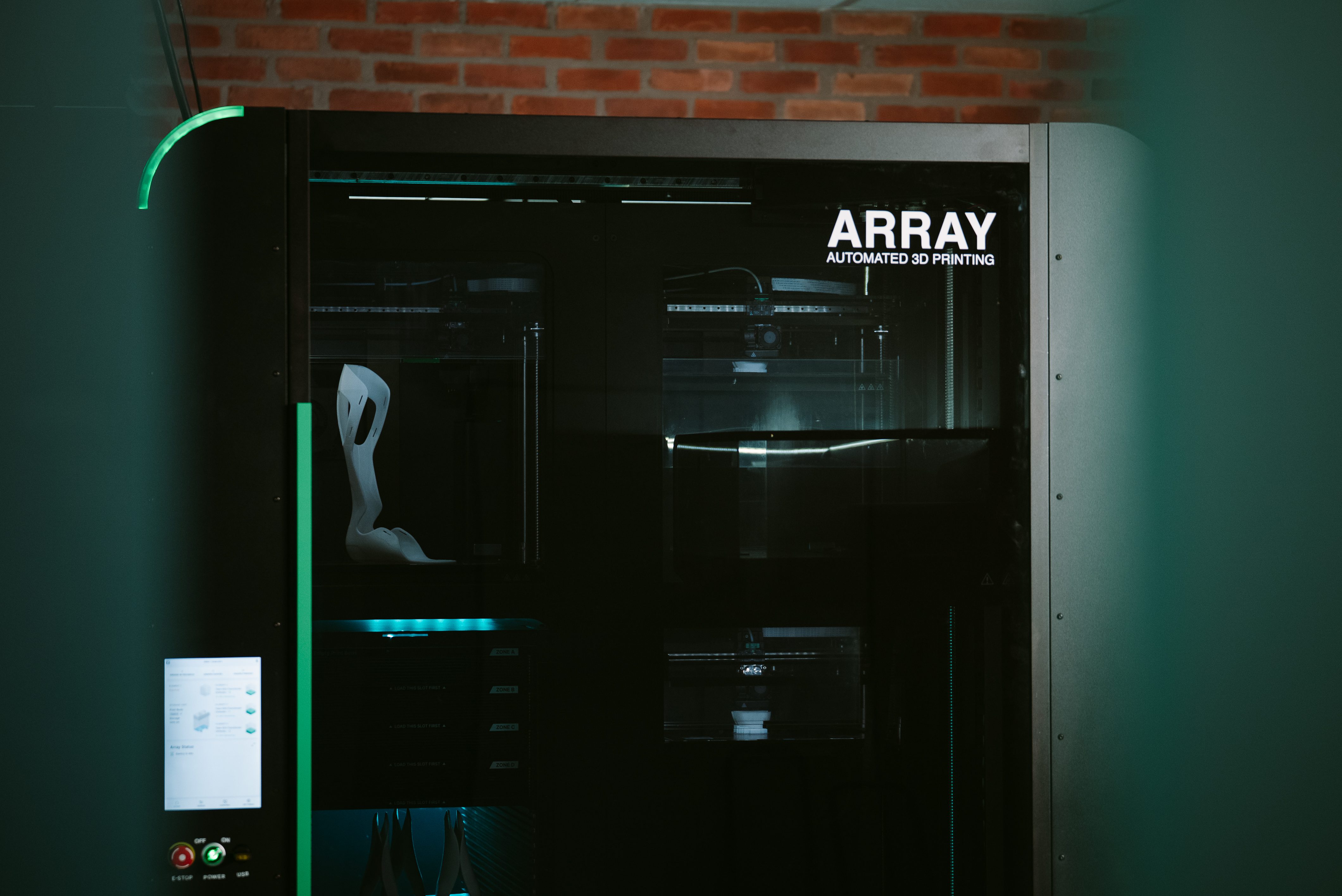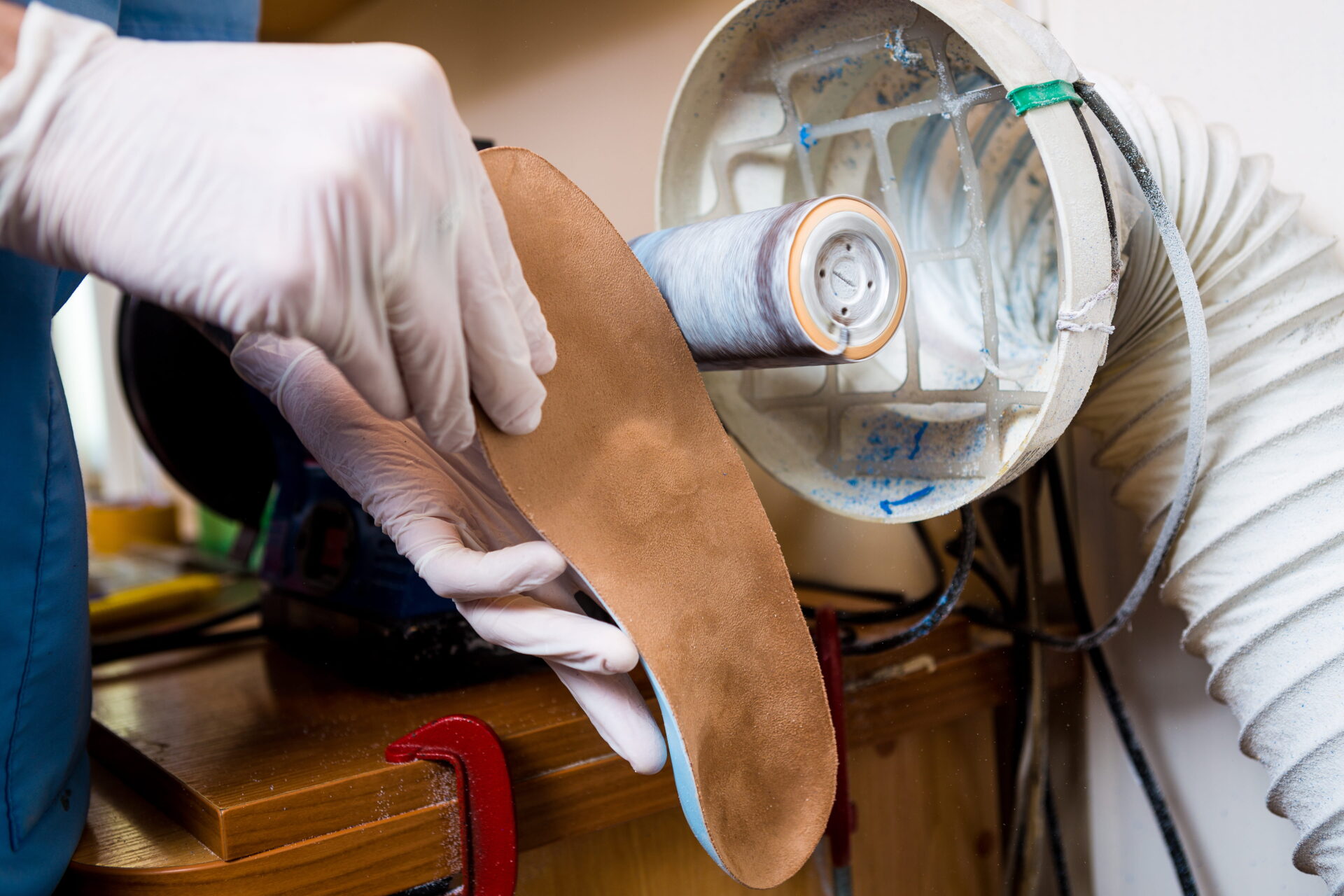
Custom orthotics production still relies heavily on hands-on fabrication and finishing. For labs, central fabrication operations, and clinics considering in-house production, those manual steps can affect production capacity, consistency, turnaround, and how easily volume can grow.
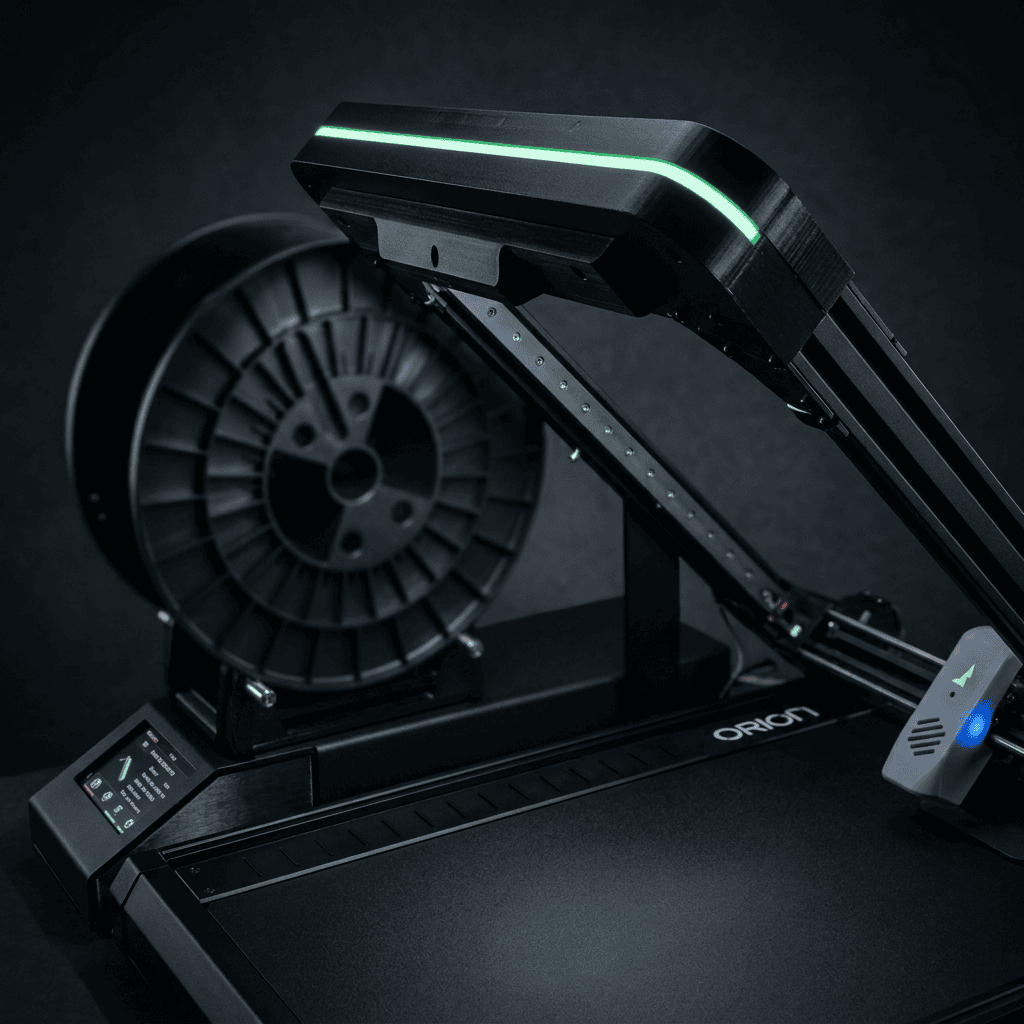
As custom orthotics volumes grow, the limitations of manual production become harder to absorb. Technician availability, labour costs, and variability can make it increasingly difficult for labs to increase output without adding complexity or headcount. Orion, Mosaic Manufacturing’s belt-based 3D printer for automated orthotics production, was designed to address those production constraints.
Here’s what labs need to know.
What’s the real cost of manual grinding and finishing in an orthotics lab?
The cost of manual finishing extends well past labour hours. The cost of manual finishing extends well beyond labour hours. It can affect material usage, production capacity, quality control, margins, and the ability to grow efficiently.
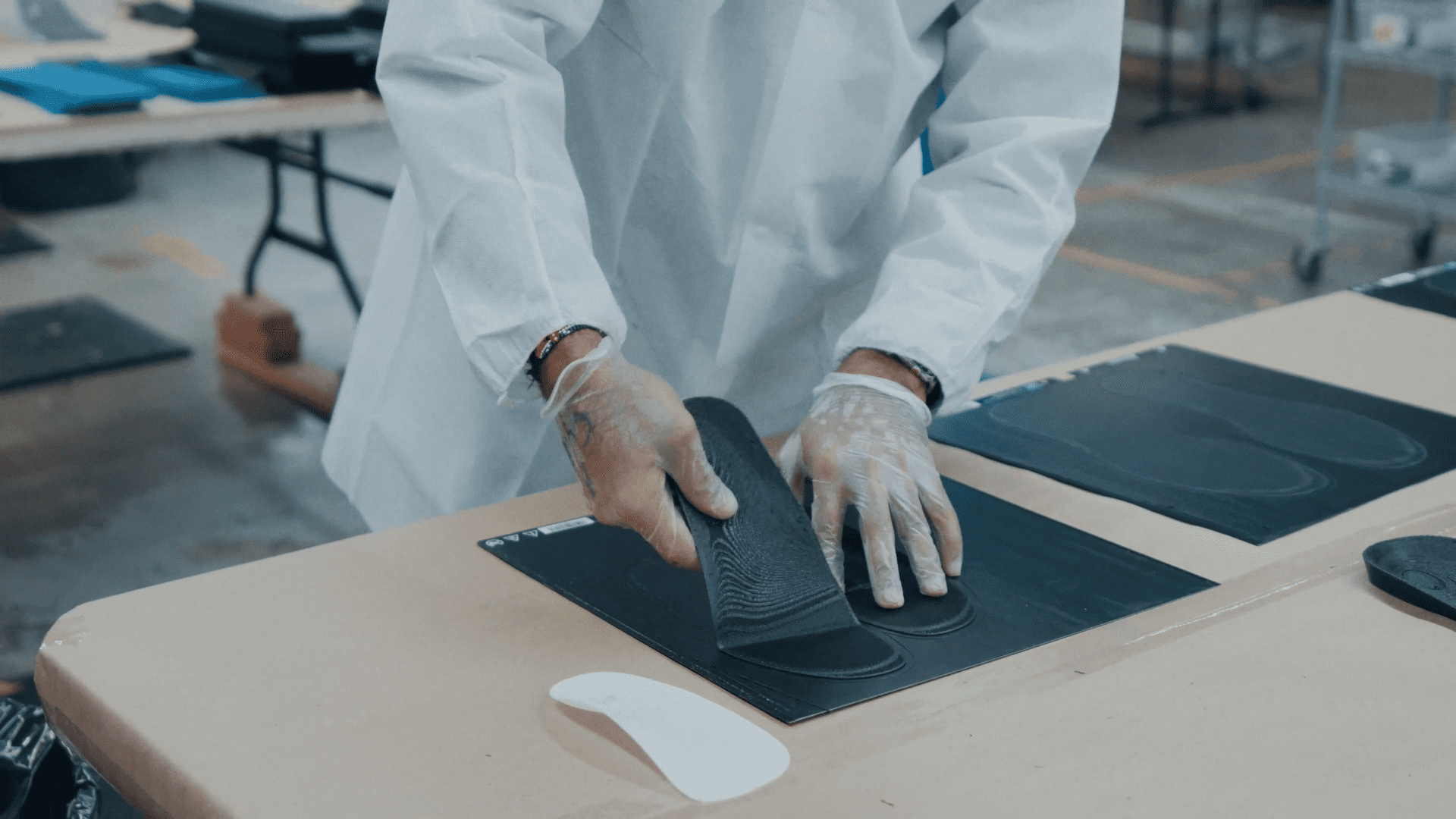
- Material waste. CNC milling and manual grinding are subtractive processes, a meaningful share of every EVA foam or polypropylene blank is ground away and discarded. That waste is structural, not incidental, and scales with every device produced.
- Rework and remakes. Manual fabrication and finishing can introduce variation between the intended design and the finished device. When adjustments or remakes are required, labs absorb additional material, labour, and turnaround time.
- Labour requirements increase with volume. Manual fabrication requires technician time for each device, so increasing production typically requires additional labour, overtime, or workflow improvements.
- Quality control overhead. When final device quality depends heavily on individual technician technique, labs may require additional inspection, training, and oversight to maintain consistent output across operators.
→ Related: The Economics of Scaling Orthotics Production With Orion
Why do small and mid-sized orthotics labs struggle with staffing and turnover?
Small and mid-sized production operations often face staffing constraints as case volume grows, particularly when key production steps depend on experienced technicians.
- Manual fabrication is physically demanding. Grinding, buffing, and finishing require repetitive hands-on work. At higher volumes, managing technician workload and maintaining sustainable production capacity can become increasingly challenging.
- Skilled technicians can be difficult to hire and harder to replace. Producing custom orthotics consistently requires experience and training. When experienced technicians leave, labs must absorb the impact of recruitment, onboarding, and ramp-up time.
- The candidate pool is constrained. O&P production roles require knowledge and skills that are not always easy to source, particularly for smaller labs or operations outside major markets.
The result is a production model in which available technician capacity directly influences daily throughput. When staffing changes or demand increases, maintaining predictable output can become more difficult.
→ Related: Why Multi-Site Orthotics Labs Struggle with Standardization
How does manual finishing affect orthotics output consistency?
In a manual orthotic workflow, the finished device is influenced by technician skill, technique, and judgement. Even highly experienced teams can introduce small variations across devices, operators, and production runs.
- Device-to-device variation can occur during finishing. Two devices from identical prescriptions, finished by different technicians (or the same technician on different days), can vary in edge finish, surface smoothness, thickness, and density feel.
- The finished device may differ slightly from the digital design. Manual adjustments to areas such as arch profiles, heel cups, posting, or overall thickness can introduce variation between the original design intent and the final device.
- Remake rates are the measurable downstream cost: When a device requires adjustment or reproduction, labs absorb additional material, labour, turnaround time, and administrative work.
- Staffing changes can affect repeatability. New technicians require time to develop the same production consistency as experienced team members, making standardized processes particularly important as teams grow.
Digital production can reduce the number of manufacturing steps in which individual operator technique influences the final result.
→ Related: Do Orion’s Materials Perform Like EVA and Polypropylene?
What happens to orthotics lab production during peak season?
Orthotics production volume is rarely evenly distributed across the year. Peak periods, seasonal patient demand, insurance renewal cycles, and concentrated referral patterns create predictable production stress that manual workflows can struggle to absorb.
- Backlogs can build quickly. Automated systems can extend production hours without requiring equivalent increases in staffed production hours.
- Turnaround times may increase. Higher production demand can extend lead times when labs do not have enough available capacity to absorb the additional workload.
- Senior staff may be pulled into production. Owners, managers, or experienced technicians may need to spend more time on the production floor, reducing the time available for training, customer relationships, and business growth.
- Injury and burnout risk spikes as extended grinder hours under deadline pressure, with less rotation available, raise repetitive strain injury probability at the worst possible time.
The underlying challenge is that manual production capacity remains closely tied to the number of people available to perform the work. As demand grows, labs need either more technician hours or a different production model.
How does Orion reduce dependence on manual grinding and finishing?
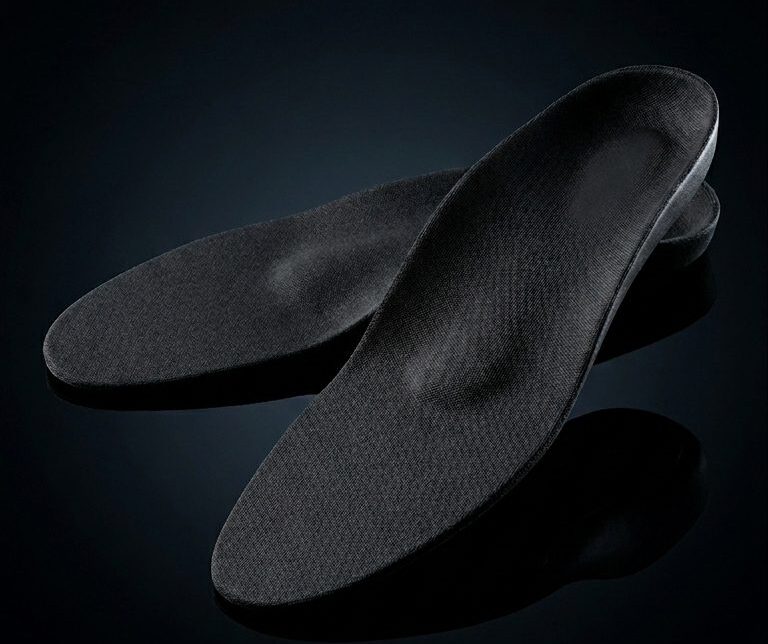
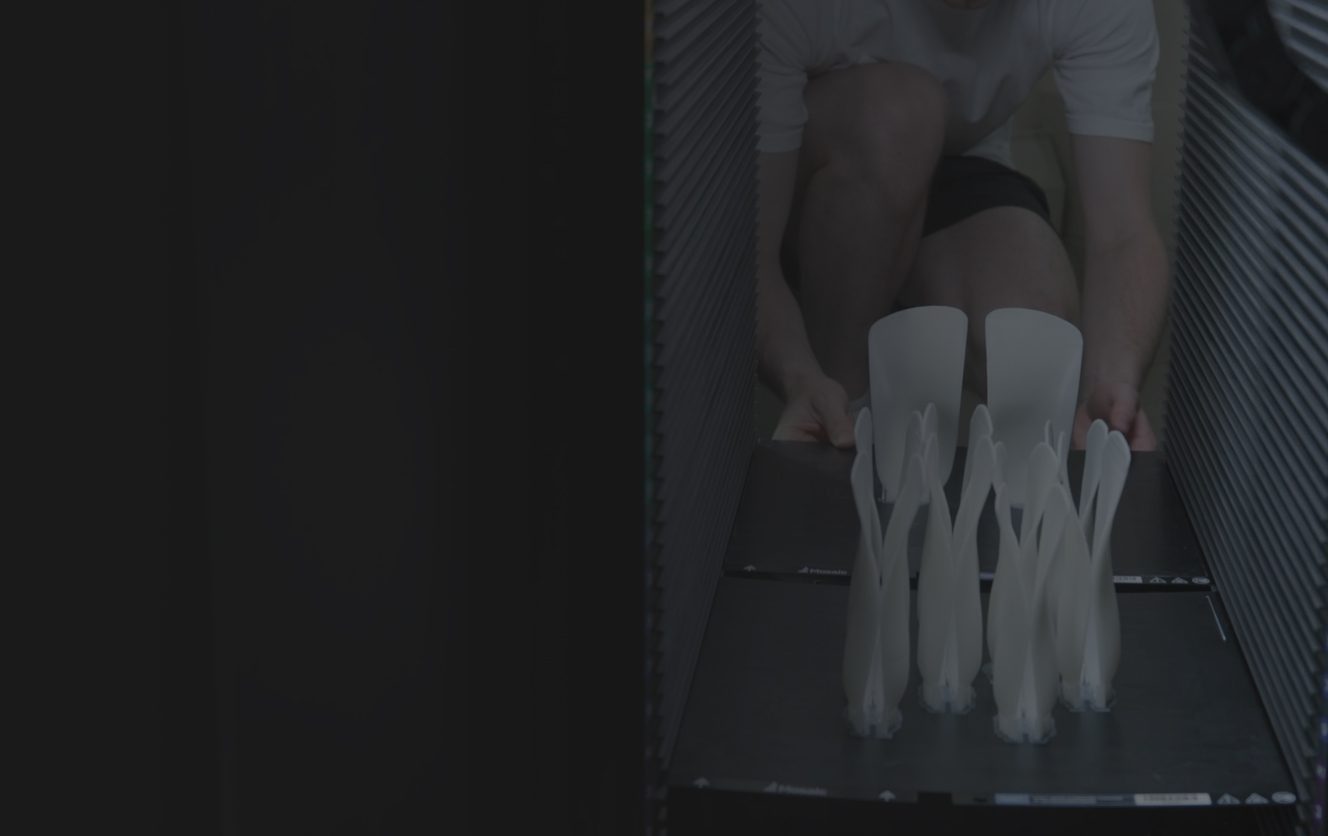
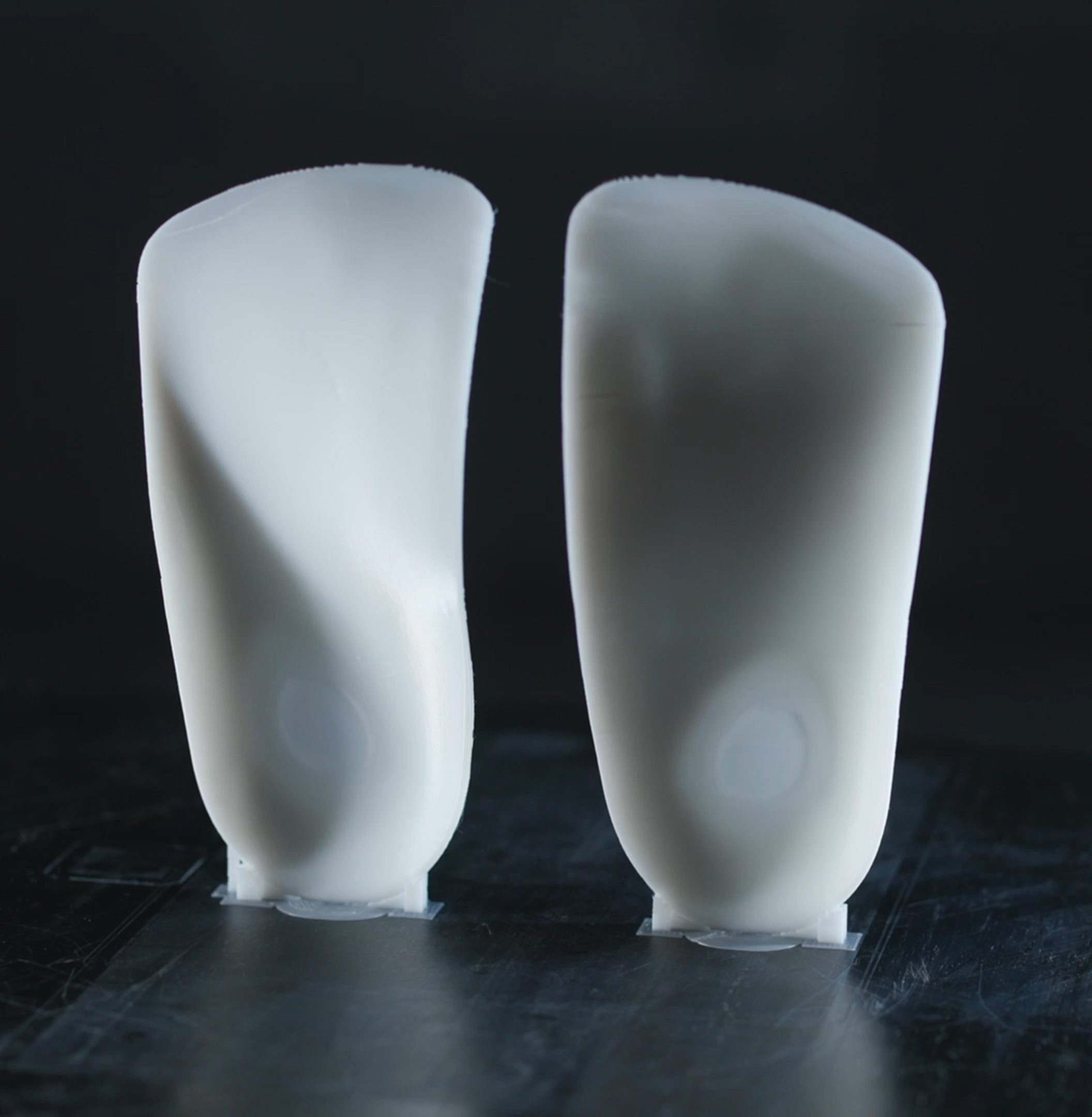
Orion is a purpose-built belt 3D printer for custom orthotics production. Designed specifically for O&P workflows, Orion combines continuous printing with the Stryde Software Suite to reduce manual production steps and create a more repeatable digital workflow from design through production.
The belt is the core mechanism
Finished devices directly off the belt
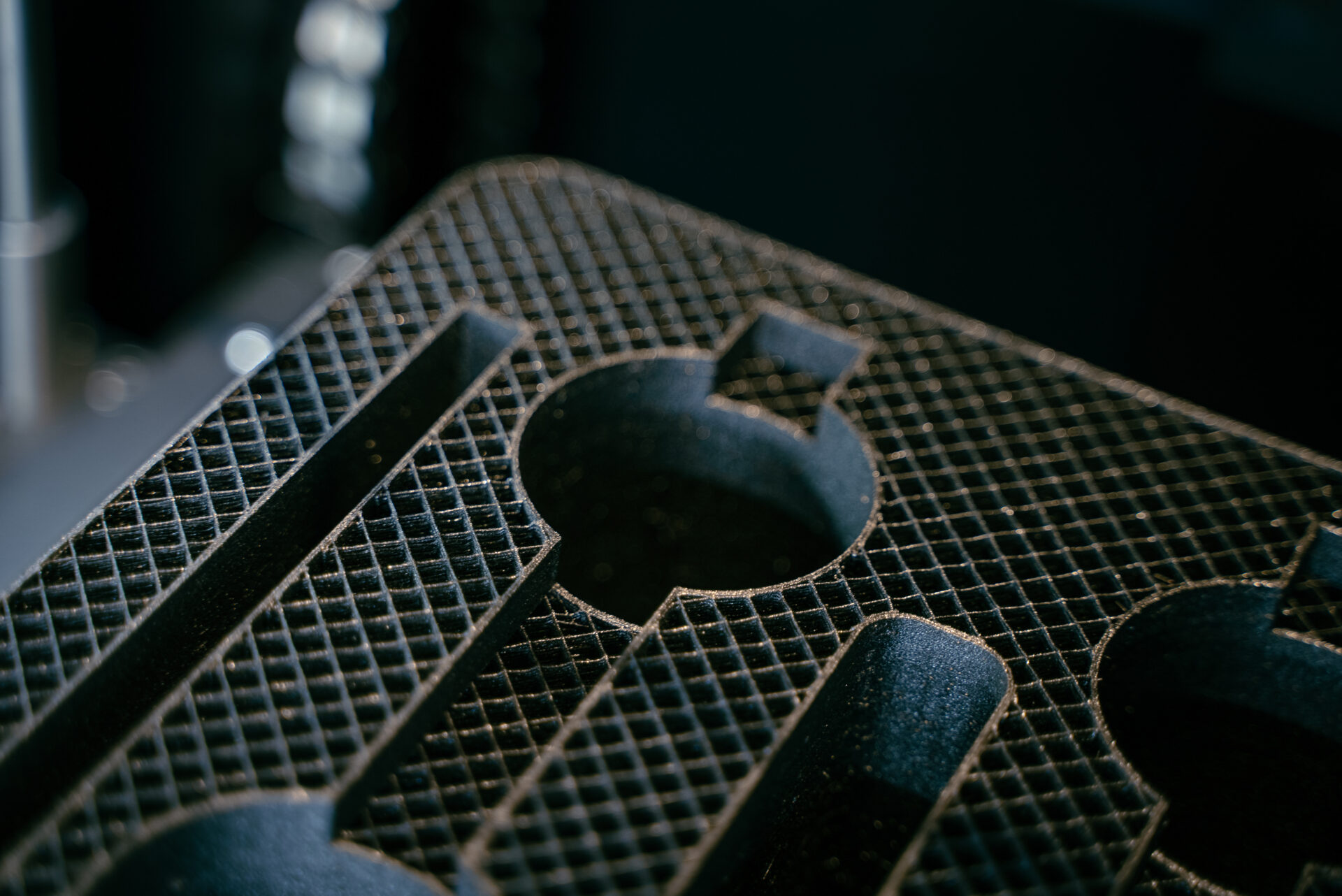
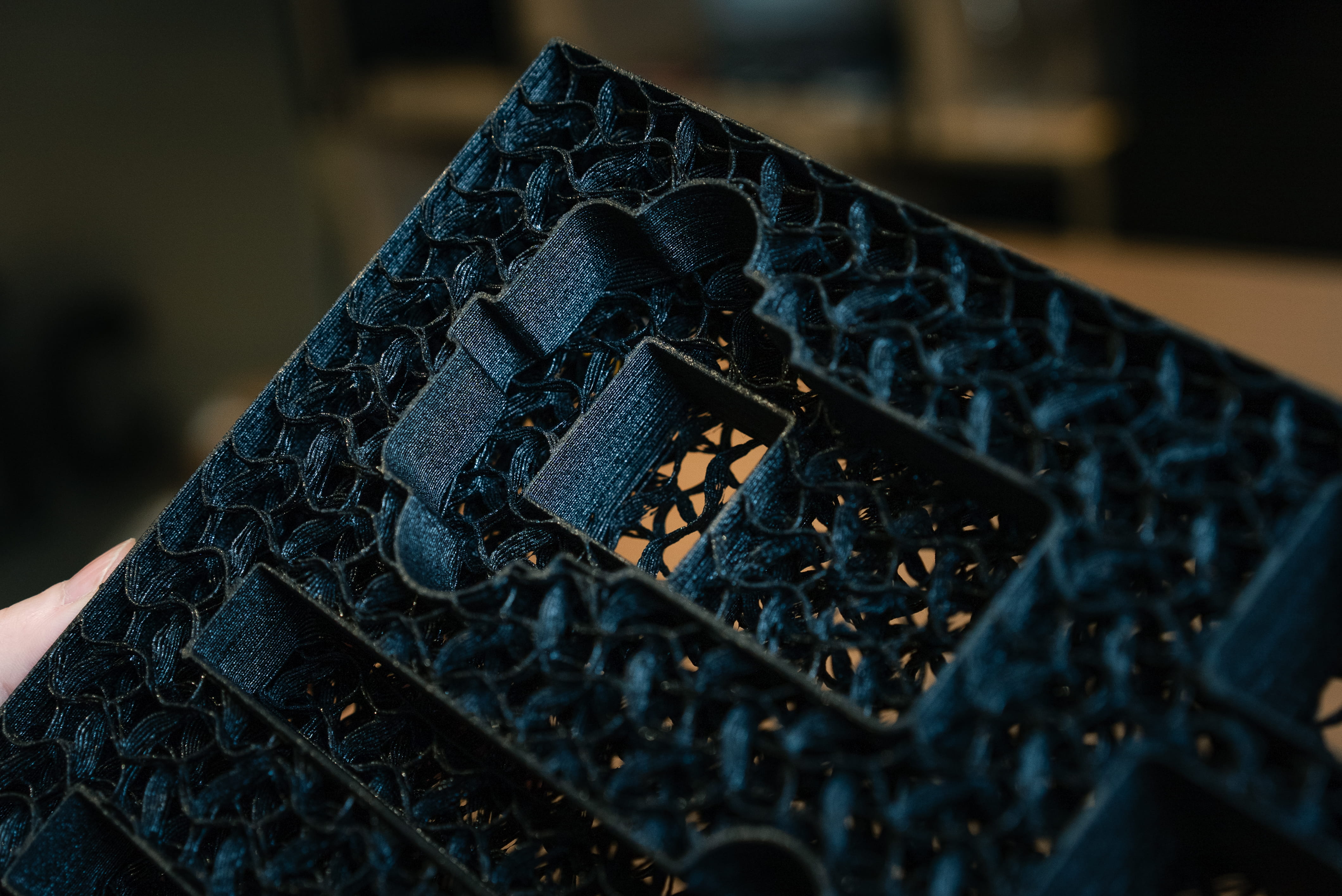
Variable density built into the digital design
Consistent output regardless of operator experience
Orion produces devices from digitally defined specifications, reducing the degree to which final device quality depends on individual finishing technique. Because production parameters are controlled digitally, labs can create a more standardized manufacturing process across technicians, locations, and staffing changes. This can help reduce variation between operators while simplifying the training required for production staff.
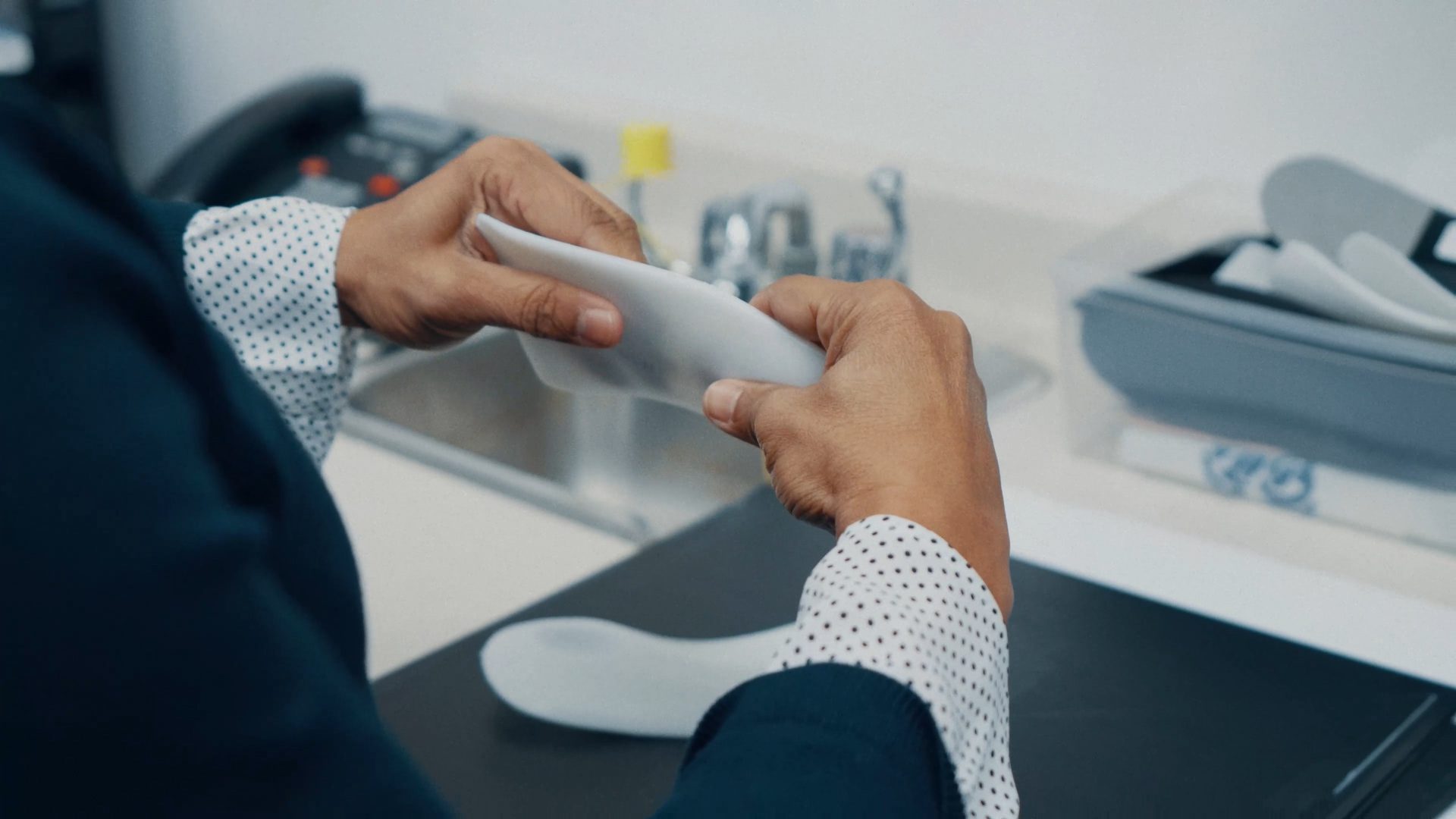
Two materials. One platform. Full spectrum of care
Throughput that doesn’t scale with headcount
→ Related: From Scan to Finished Device: The Orion + Stryde Workflow Explained | How Belt-Based 3D Printing Is Changing Orthotics Production
See Orion in Your Lab
Mosaic builds complete manufacturing ecosystems for the O&P industry. Orion is Mosaic’s purpose-built belt-based 3D printer for custom foot orthotics production, paired with the Stryde Software Suite for an end-to-end digital workflow from scan to finished device.
If your lab is facing staffing constraints, consistency challenges, or throughput ceilings tied to manual finishing, and you want to understand what automated, continuous orthotic production looks like in practice, contact our team to request sample devices or discuss your production goals.
*Soft device (Aero) stats based on women’s US size 7, shore 25A