The language around 3D printing in industrial manufacturing often swings toward extremes: entire supply chains replaced overnight, traditional manufacturing rendered obsolete. The reality is more practical and far more useful than that.
3D printing is a tool. A good one, for the right applications. For industrial packaging and foam insert production specifically, it solves a narrow but important set of problems that traditional manufacturing handles poorly: low-volume custom work, fast iteration, multi-site consistency, and on-demand production without supplier dependency.
This guide is for procurement managers, operations leads, and plant teams evaluating whether 3D printed packaging solutions belong in their supply chain, not as a wholesale replacement for existing methods, but as a deliberate addition to the toolkit.
What 3D printed packaging actually means
When industrial teams talk about 3D printed packaging, they are typically referring to one of two things:
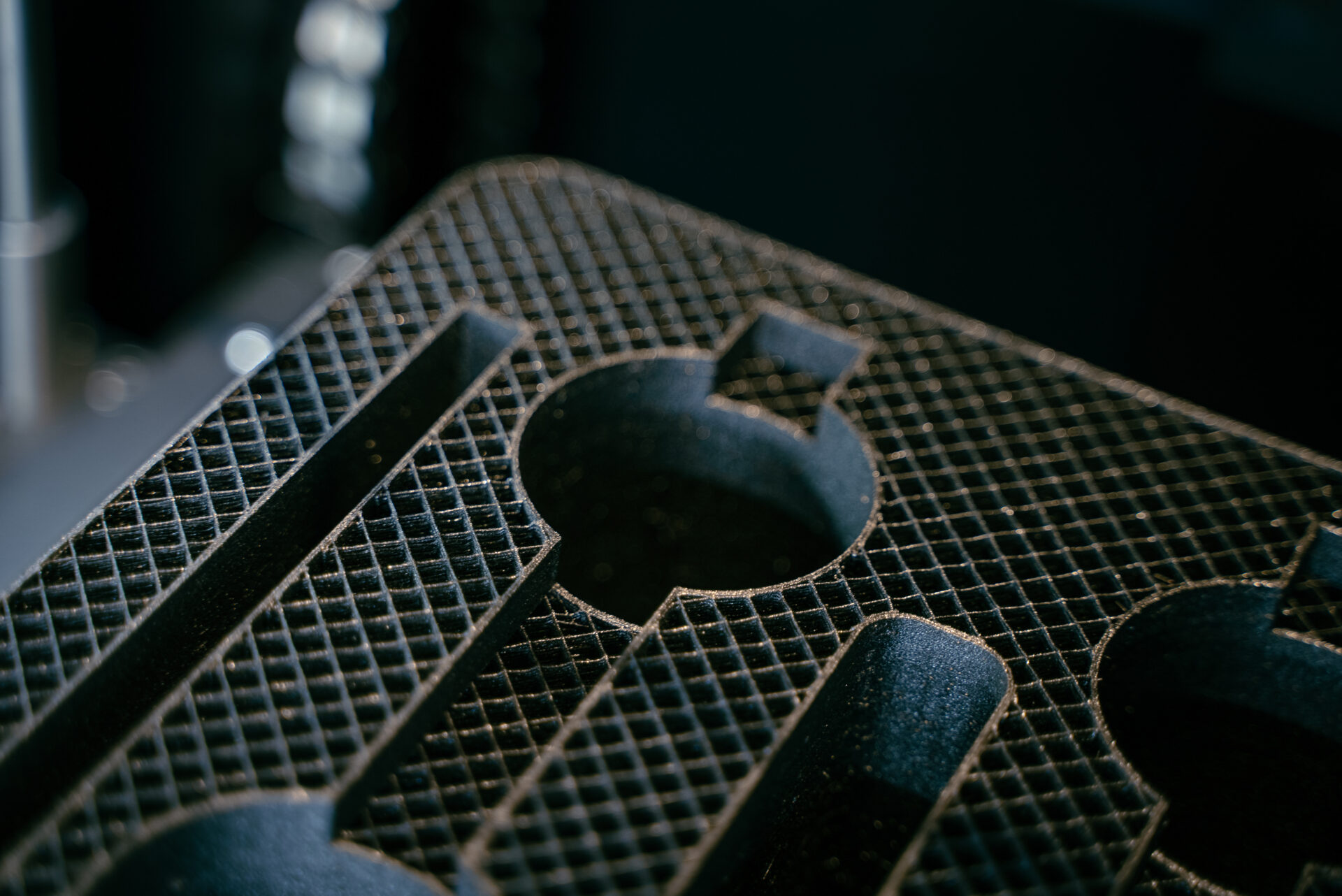
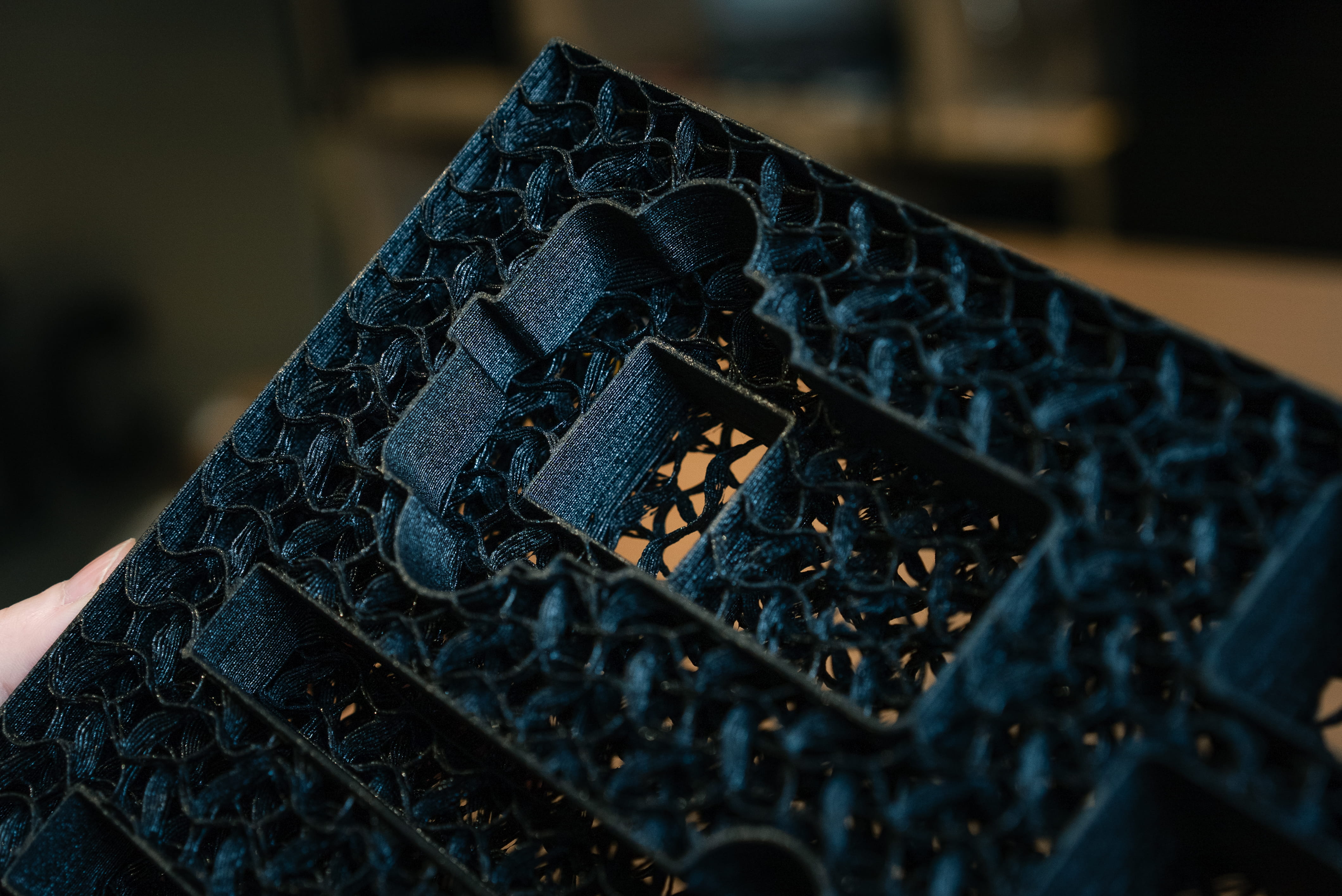
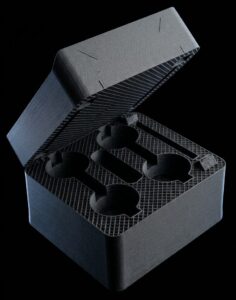
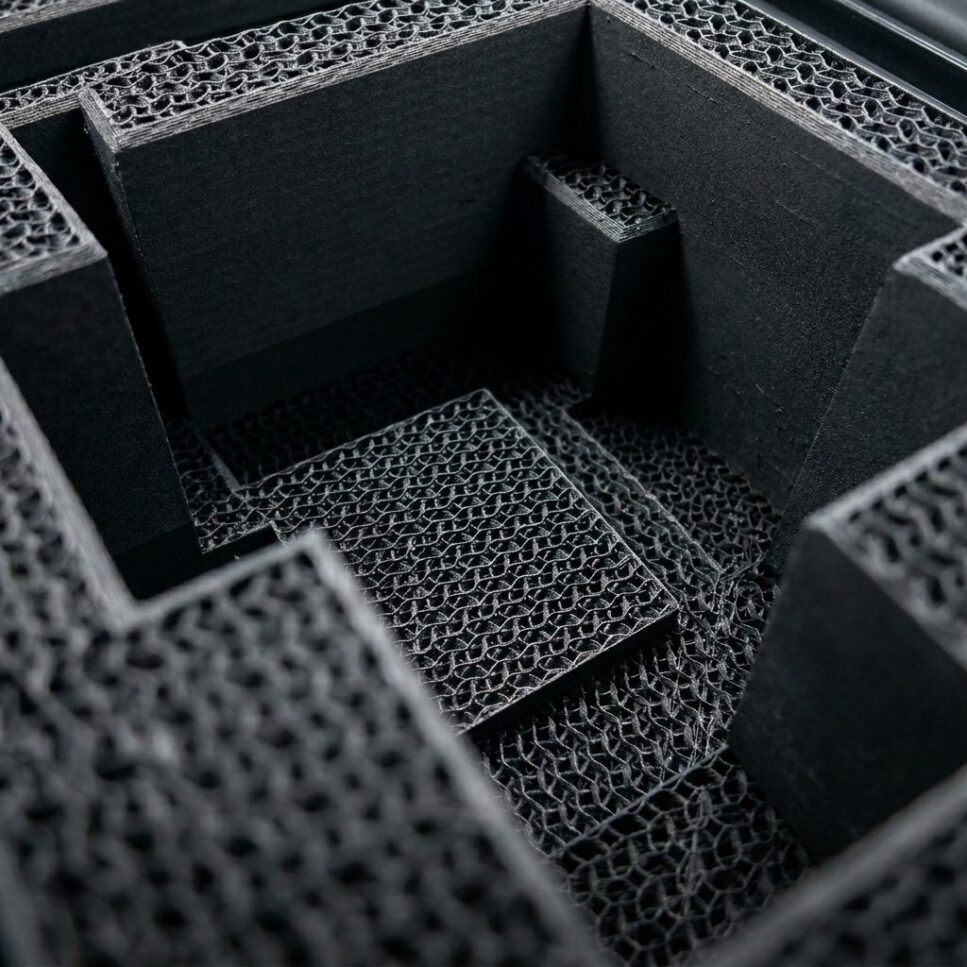
- Custom foam inserts: case liners, packaging trays, protective inserts, and dunnage produced by 3D printing foamed elastomeric filament (materials like Mosaic Stitch, engineered as a replacement for PE, XLPE, and EVA foam)
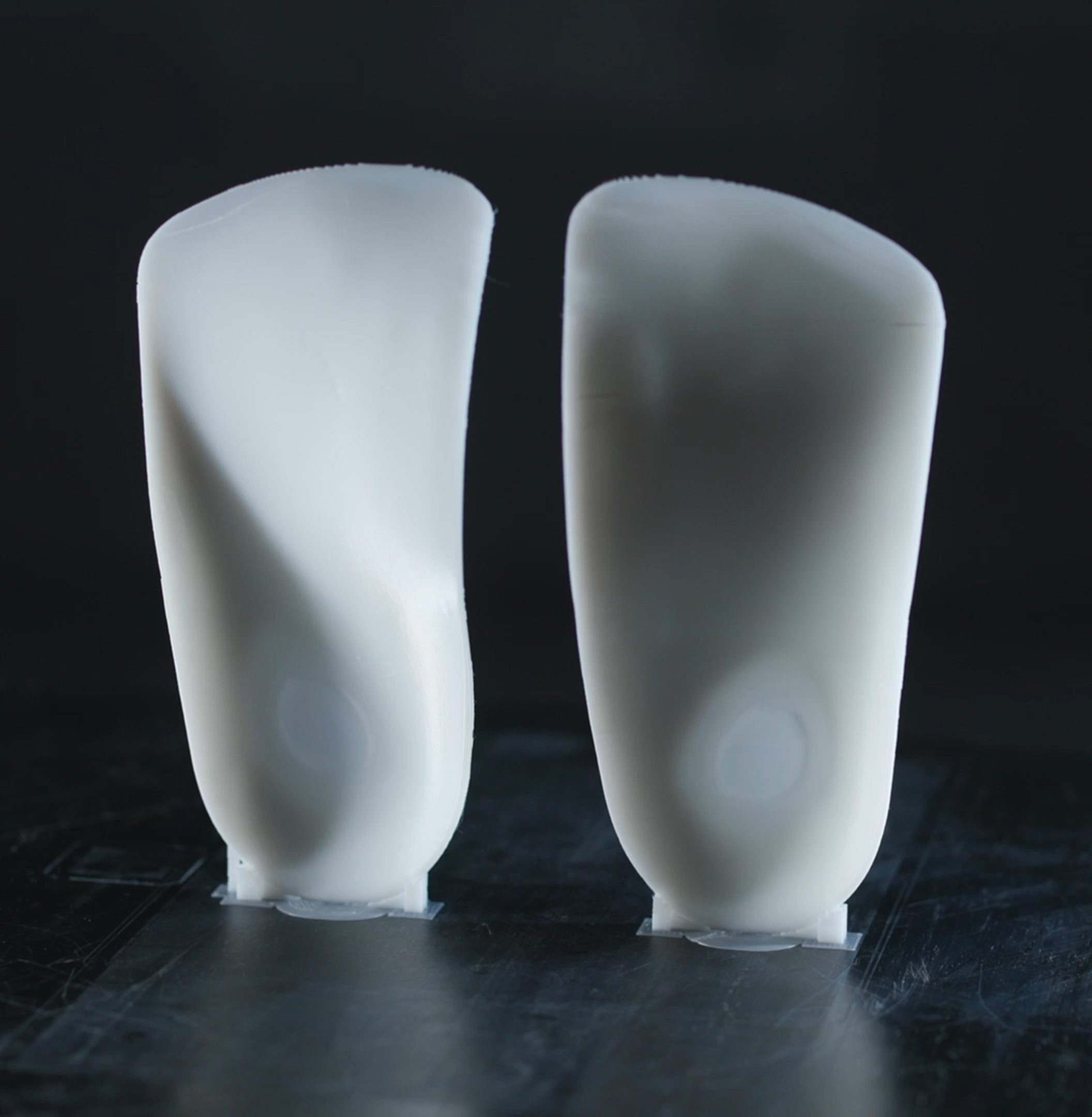
- Structural packaging components: rigid brackets, clips, spacers, and protective housings produced in plastic filament
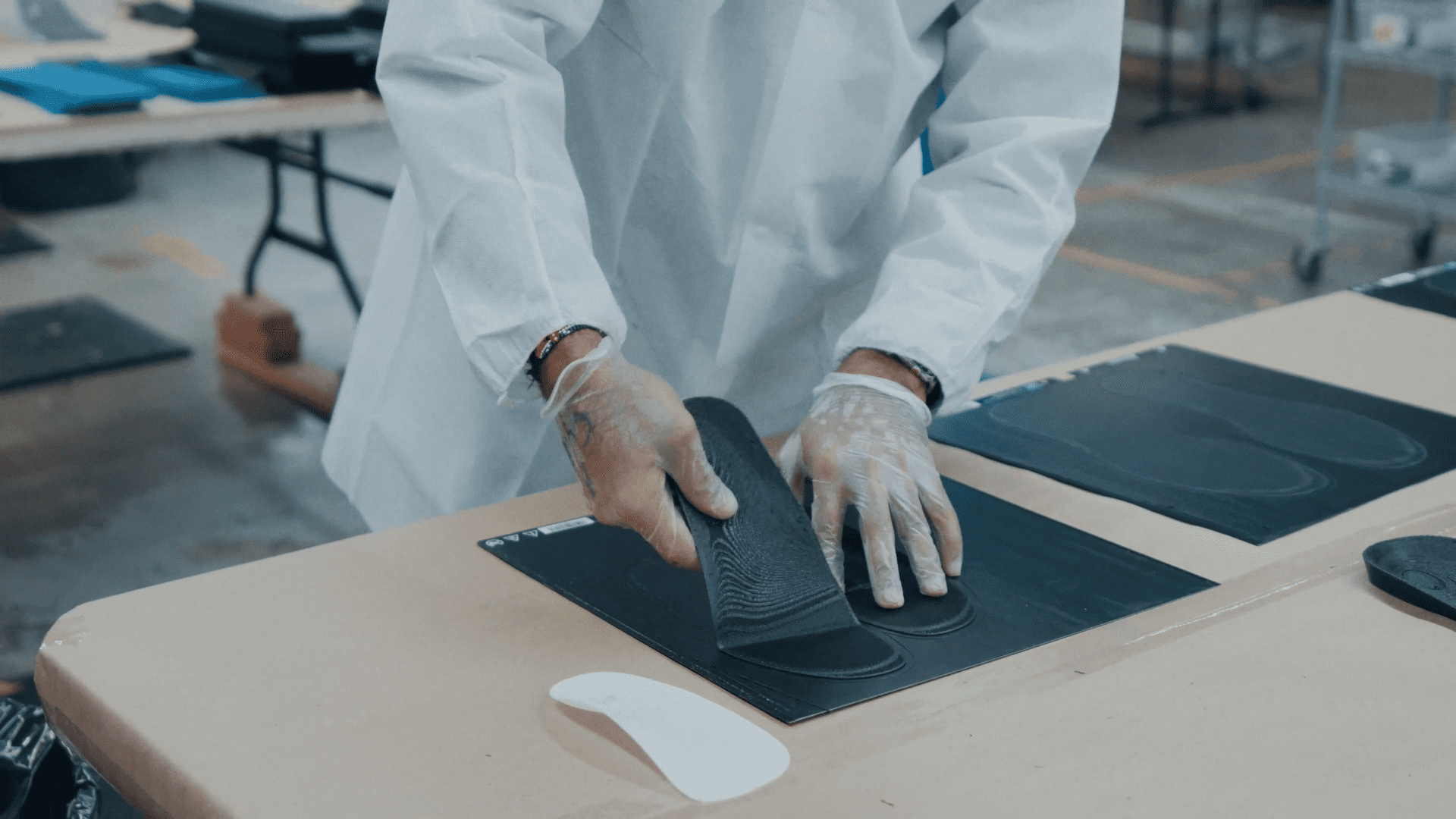
The core workflow difference is straightforward. Traditional foam packaging follows a multi-step path: design, fabrication (cutting, shaping), bonding or lamination, finishing, then use. 3D printed foam consolidates this: design, print, use. No cutting. No layering. No assembly.
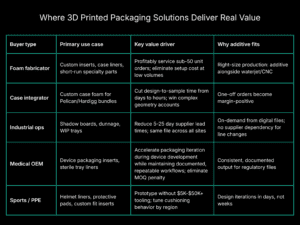
Where 3D printed packaging solutions deliver real value
Custom foam packaging inserts
This is the primary application. Custom inserts for protective cases, product packaging, and precision equipment transport are exactly the kind of work where traditional foam fabrication is expensive and slow at low volumes.
Die-cut tooling requires 500 to 1,000+ unit minimum runs to amortize setup cost. CNC and waterjet avoid tooling costs but require multi-step lamination for any part with variable depth or three-dimensional features. Design approval loops add days to weeks per revision cycle.
3D printed foam eliminates all three constraints simultaneously. No tooling, no setup cost, no lamination, no physical sample required for design iteration.
Shadow boards and WIP trays
For manufacturing operations running 5S and lean programs, shadow boards and work-in-progress trays are recurring foam needs that are surprisingly expensive to source on short notice.
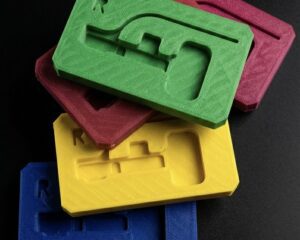
Commercial CNC suppliers run lead times of 5 to 25 business days for custom shadow boards, a timeline that does not work when a product line changes and a 5S audit is scheduled next week. 3D printing produces accurate shadow board foam from a digital file in hours, not days.
The same logic applies to WIP trays and dunnage: consistent output from a digital file, produced on demand, with the same geometry across every production site running from the same file.
Industrial dunnage and production support
Dunnage, the foam padding, supports, and separators used to protect parts in transit between production operations, is high-volume, low-unit-cost, and often custom to the part geometry.
When part designs change, dunnage needs to change with them. On-demand production removes the lag between part design change and dunnage availability.
Total cost of ownership: beyond the per-part price
The most common mistake in evaluating 3D printed packaging is comparing unit costs in isolation. The per-part cost of a 3D printed foam insert is often higher than a high-volume die-cut equivalent. That comparison misses most of the cost.
A complete total cost of ownership analysis for custom foam packaging should include:
Setup and tooling costs
Design iteration cost
Inventory carrying cost
The cost of jobs declined
The right-tool-for-the-right-job framework
Evaluating 3D printed packaging solutions requires being honest about which applications it fits and which it does not. Here is a practical decision framework:
Use additive when:
- Order volumes are under 100–200 units per SKU
- Geometry is complex, variable depth, undercuts, multi-cavity, anatomic shapes
- Design is in active iteration or expected to change frequently
- On-demand or just-in-time production is operationally important
- Multi-site consistency from a single digital file is a requirement
- Speed from design to approved sample is a competitive differentiator
Stick with traditional methods when:
- Volume is high and geometry is simple, die-cutting is more cost-effective at 500+ units for flat profiles
- The application is commodity foam packaging with no customization requirement
- The supplier relationship and lead time are already well-managed
The most effective packaging operations use both. Additive handles the custom, low-volume, fast-iteration work. Traditional methods handle the commodity volume. Each tool does what it does well.
About Mosaic Stitch
Mosaic Stitch is Mosaic’s foamed elastomeric material developed for 3D printed packaging, protective inserts, dunnage, and industrial foam applications. It is designed as a production-grade replacement for PE, XLPE, and EVA foam, not just a prototyping material.
Key specifications:
- Tunable cushioning behavior and compression characteristics through geometry and print parameters
- High elasticity with a smooth surface finish suitable for presentation and protective applications
- Abrasion and chemical resistance for demanding industrial environments
- Multiple color options for visual management and 5S workflows
- Compatible with FFF printers using existing slicer profiles
- No tooling or minimum order quantities
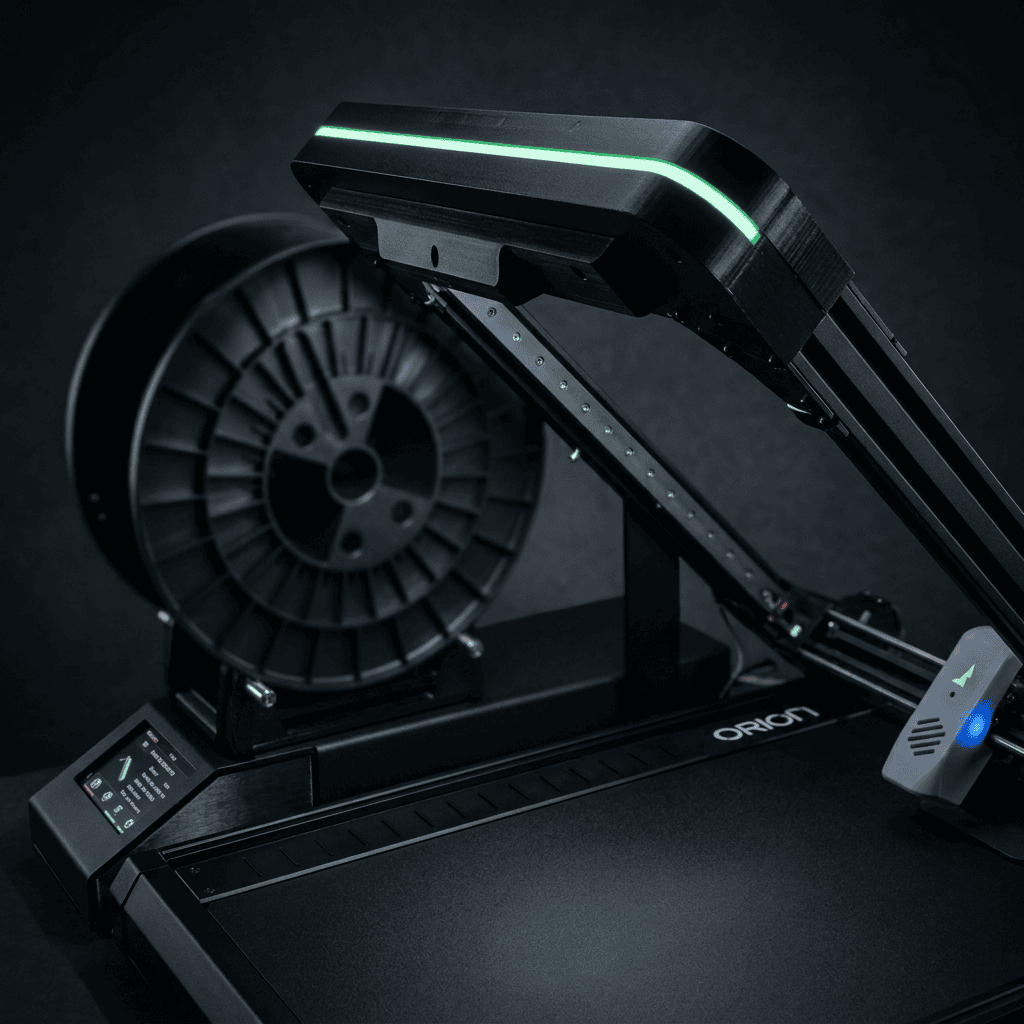
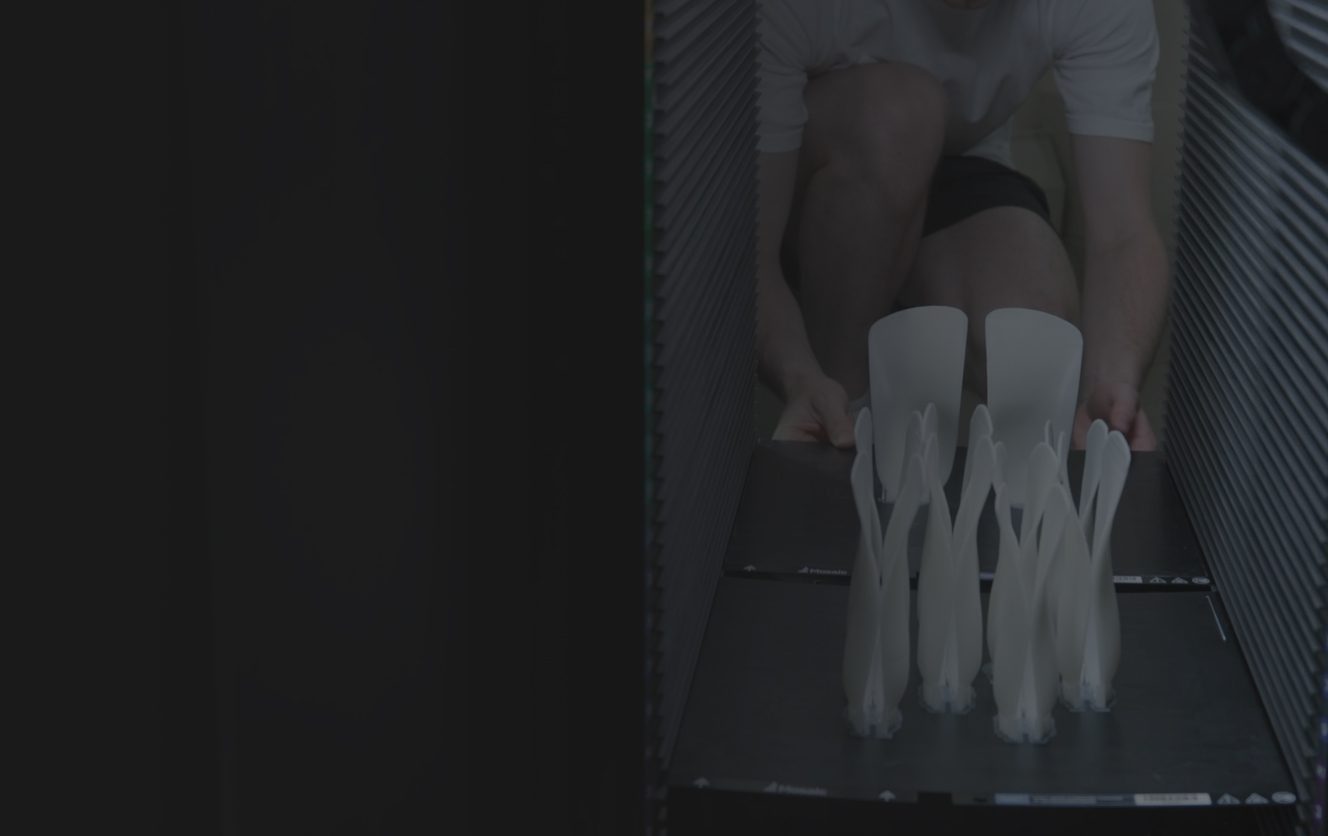
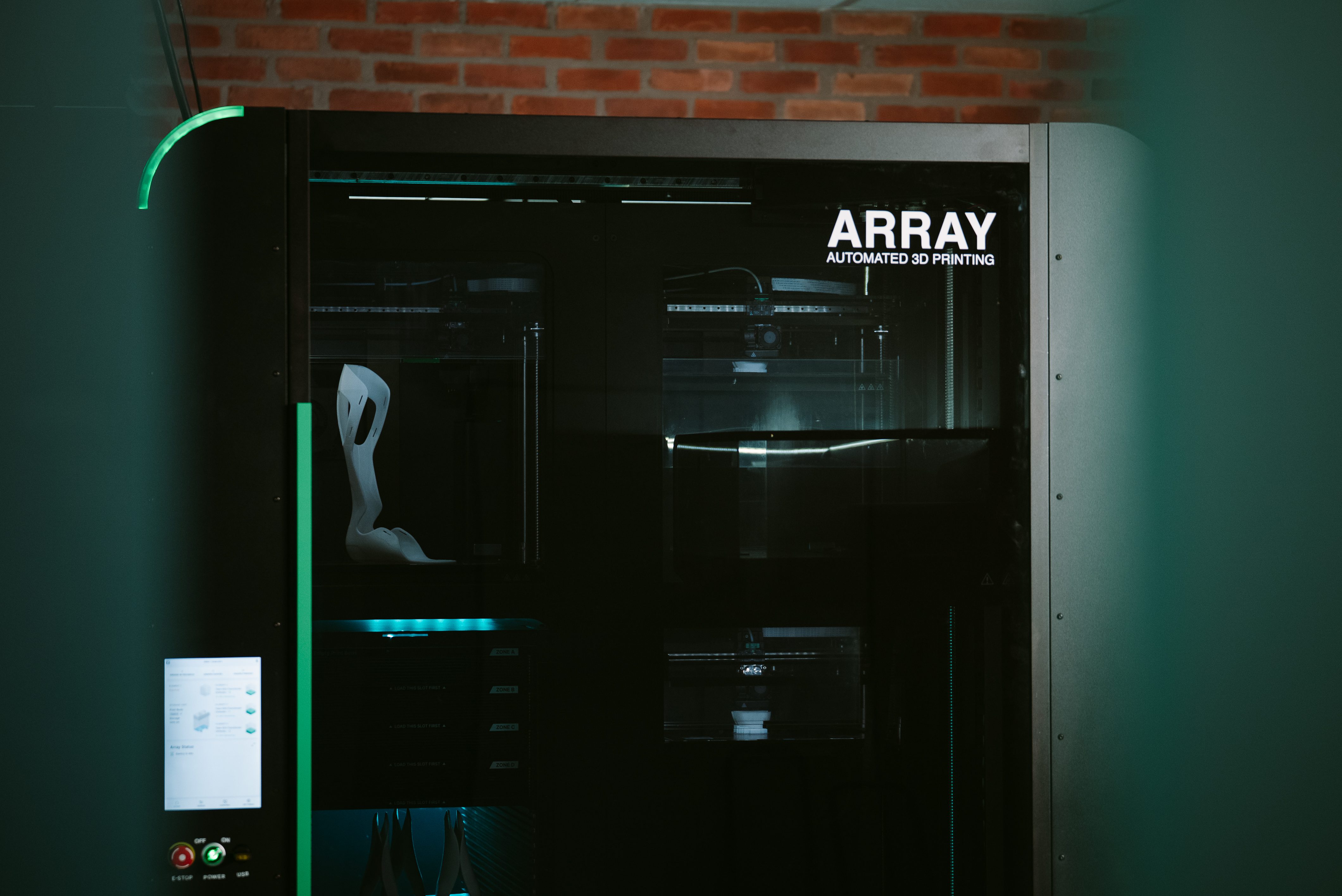
Mosaic’s additive manufacturing platforms bring foam production into a controlled, scalable environment: automated hands-free operation, parallelized throughput for production volumes, and centralized software control across sites.
Ready to evaluate whether 3D printed foam belongs in your supply chain?
The right-tool-for-the-right-job answer looks different for every operation. Mosaic Stitch is built for the applications where traditional methods struggle, low volumes, complex geometry, fast iteration, and multi-site consistency.
Request a sample to run a side-by-side evaluation against your current supplier, or book a demo to work through a TCO comparison against a real application from your operation.
Want to go deeper on a specific application? The Complete Guide to 3D Printed Foam covers custom packaging inserts, shadow boards, dunnage, and WIP trays, with material specs, workflow comparisons, and segment-specific ROI framing.