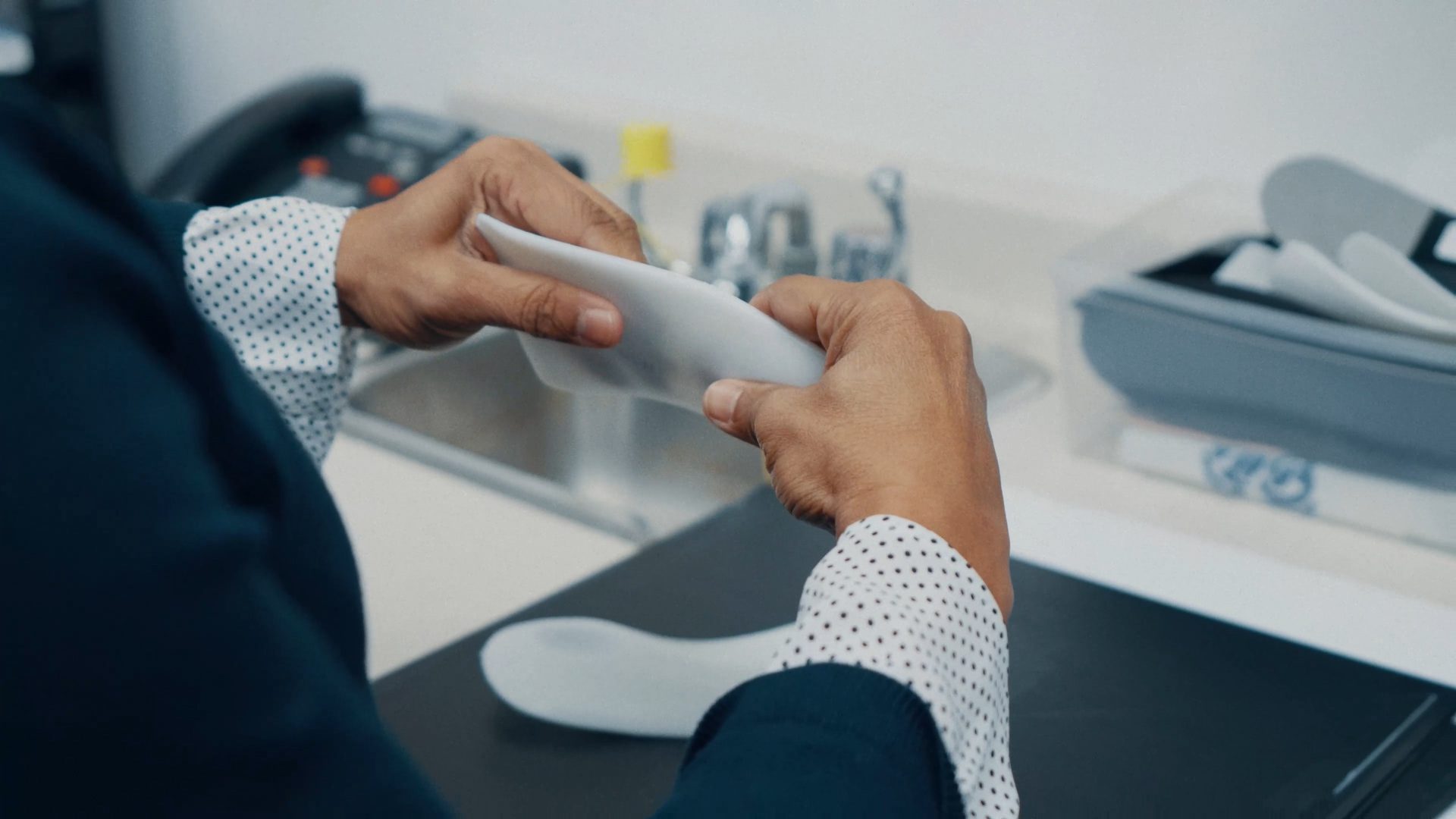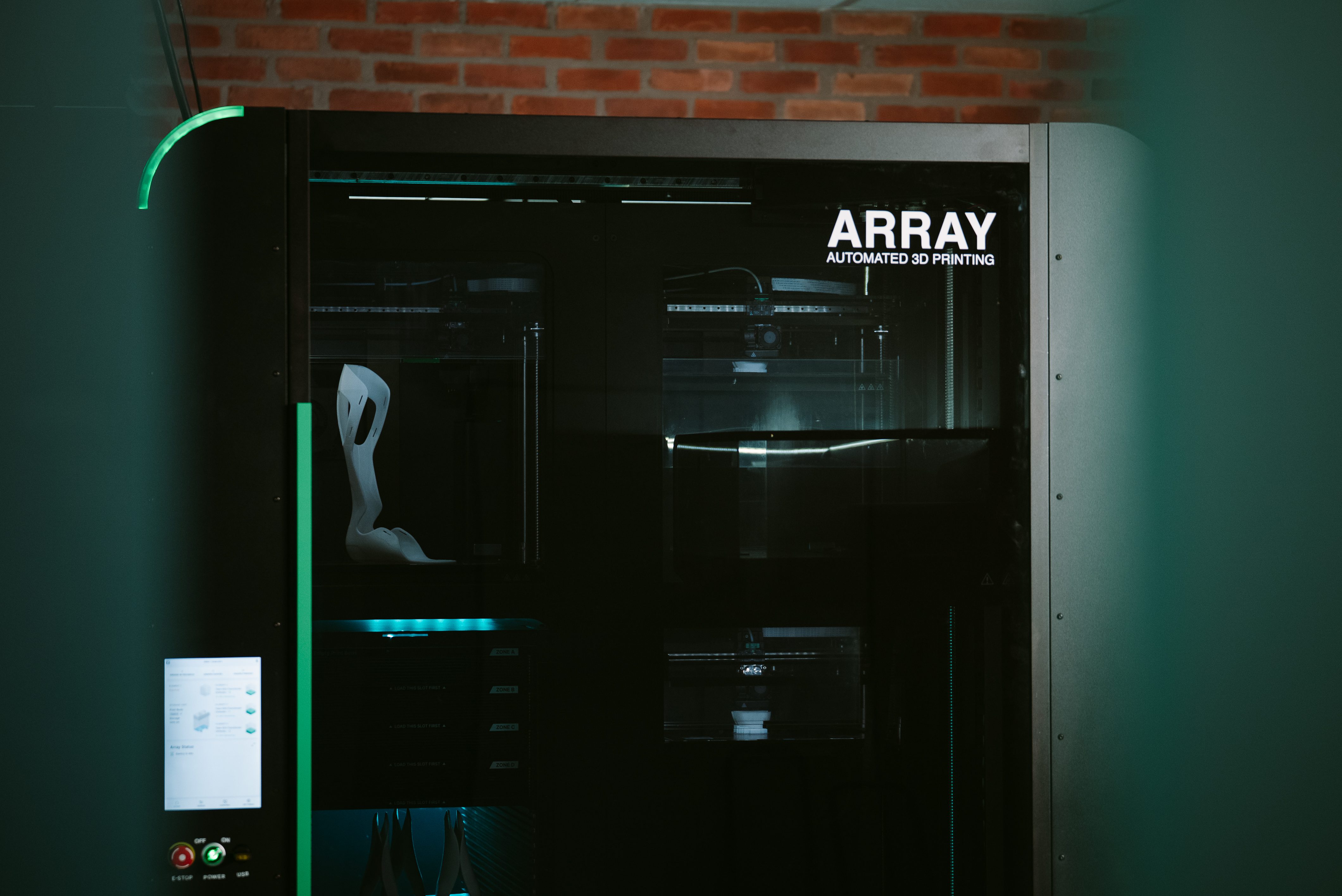
Custom orthotics production often involves a combination of physical impressions, manual fabrication, fixed-batch manufacturing, and handoffs between clinics and production teams. These methods can produce effective patient-specific devices, but they can also make consistency, turnaround, and production planning more difficult as an organization grows.
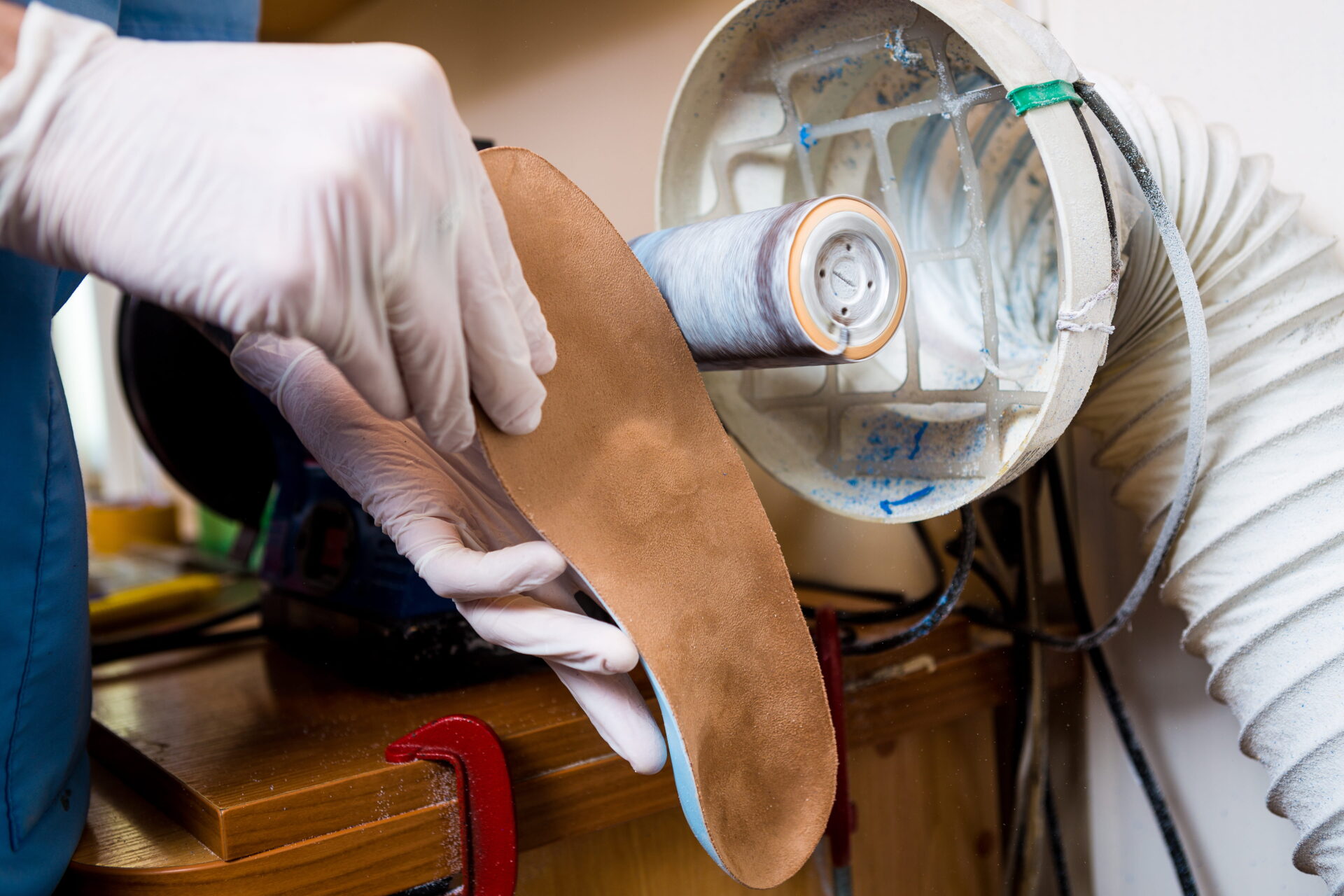
These workflows rely heavily on skilled technicians and hands-on production steps. As case volume grows, increasing output often requires more labour, while manual fabrication can make it harder to standardize production across people, shifts, or locations.
3D printing for orthotics has been available for years. But not all additive manufacturing technologies are suited for orthotic device production.SLS and MJF are established production methods for 3D-printed orthotics, particularly in centralized, higher-volume operations. These systems typically involve a larger equipment investment, powder-handling requirements, and batch-based post-processing, so their economics depend heavily on production volume and build utilization. Many general-purpose desktop FFF printers are not supplied with orthotics-specific materials, case-management tools, or print software designed around patient-specific device production.
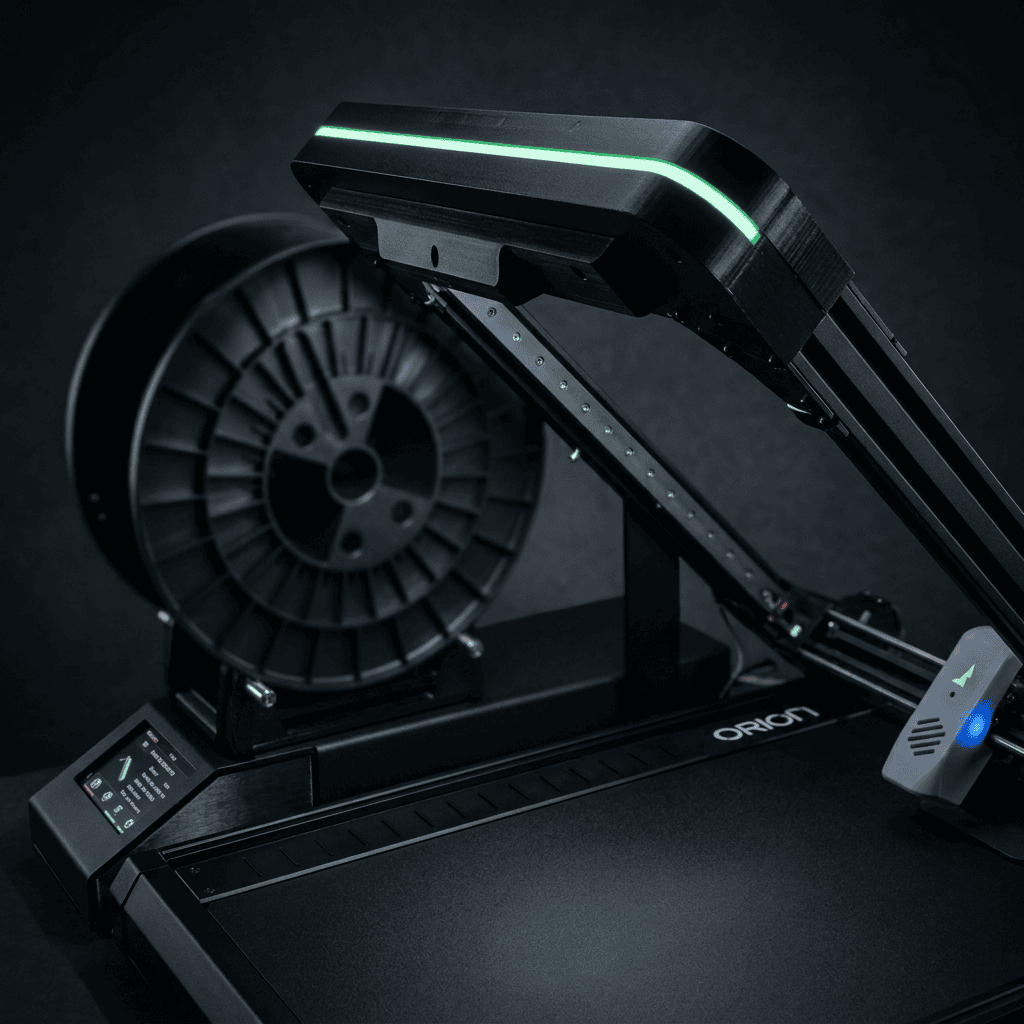
Belt-based 3D printing occupies a different position: purpose-built for automated, continuous orthotic manufacturing at accessible economics. This is the technology behind Mosaic’s Orion, and it’s changing how orthotics labs, multi-site O&P clinic networks, and clinician-led practices think about custom device production.
What is belt-based 3D printing?
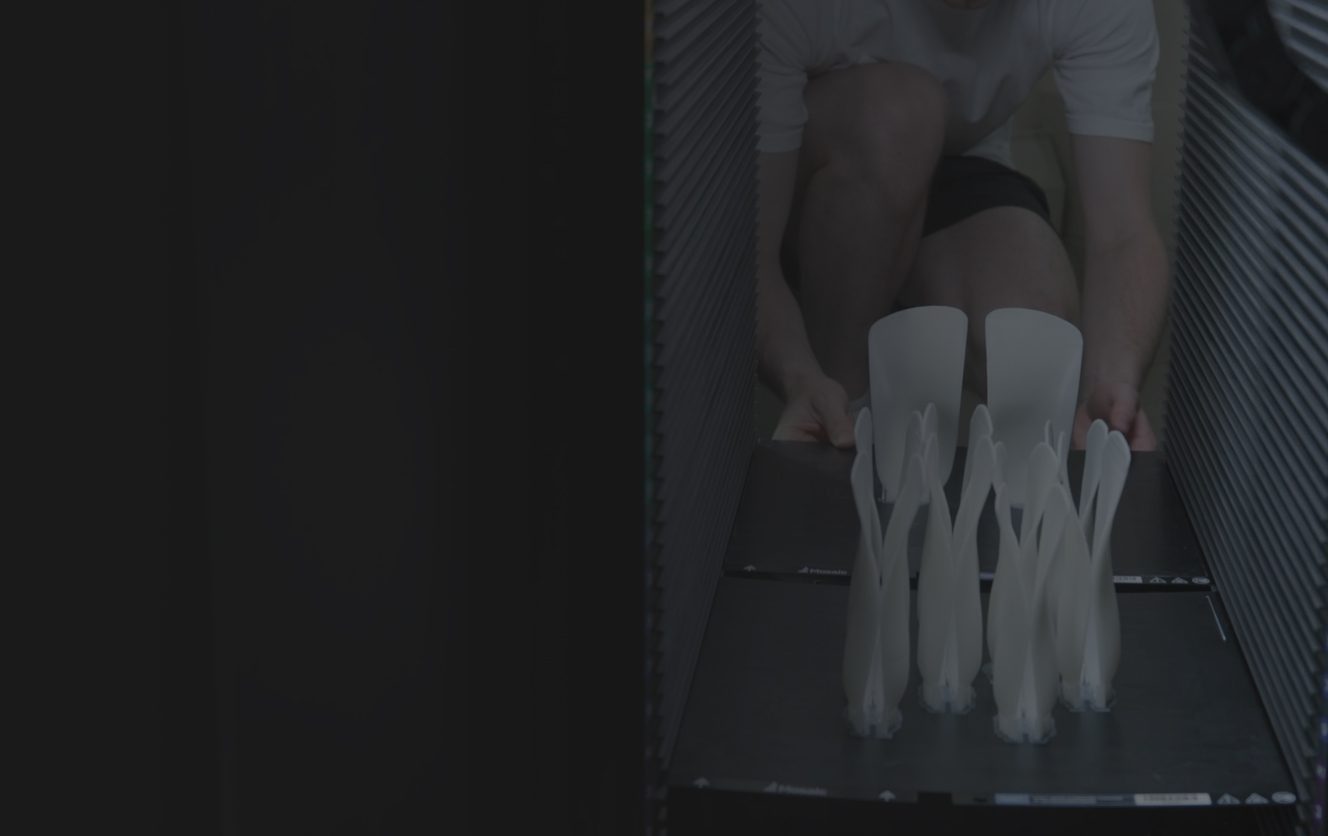
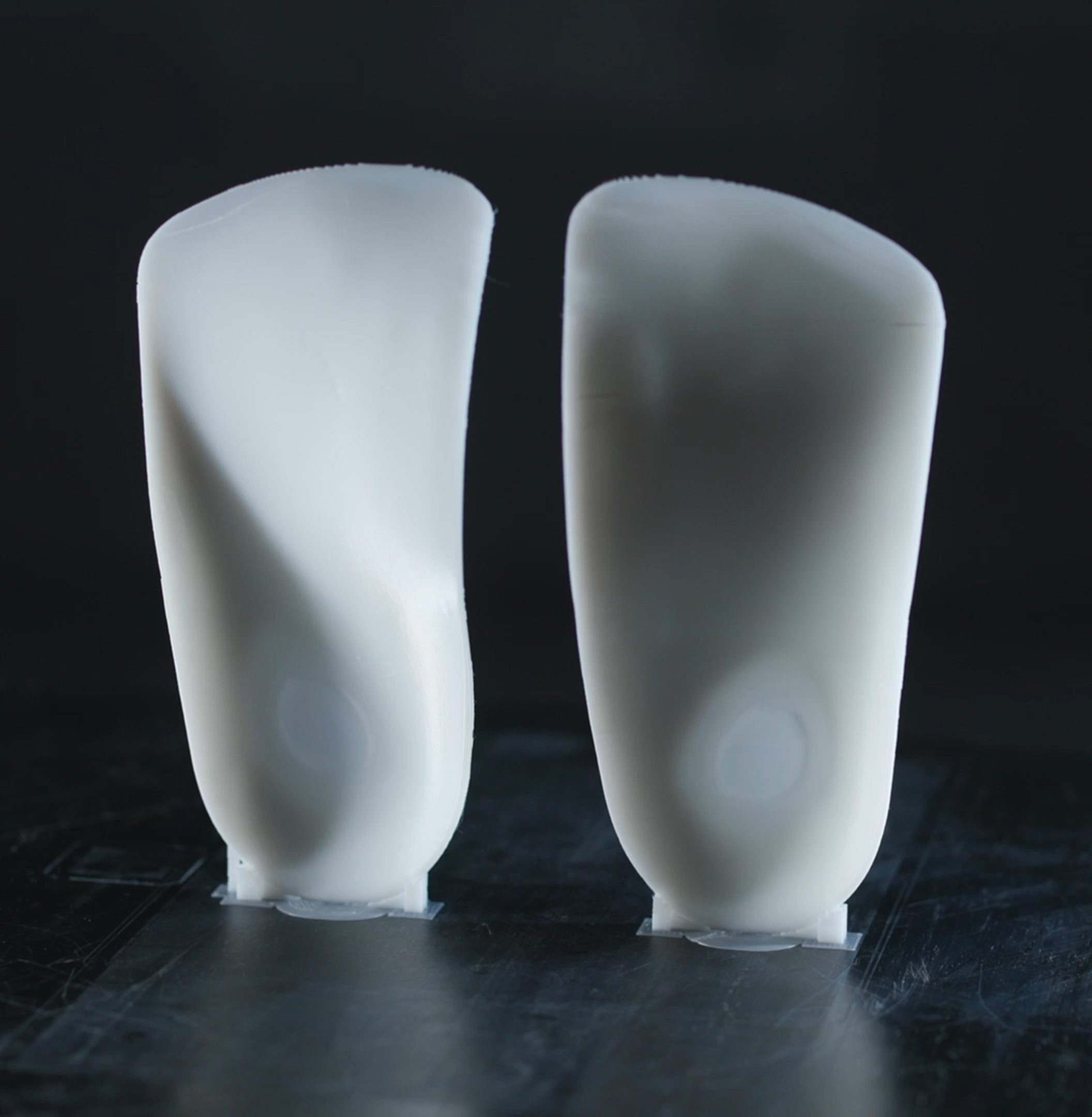
Belt-based 3D printing is a continuous additive manufacturing process in which parts are printed on an angled conveyor belt rather than a flat build plate. As each layer is deposited and solidified, the belt advances forward, ejecting the finished part automatically, and allowing the next part to begin printing immediately. There is no fixed tray to fill, no batch to complete, and no manual unloading between cycles.
Once a person has prepared and queued the cases in print software, a belt-based system can continue producing them overnight or through the weekend without manual unloading between devices. For orthotics labs producing custom devices at volume, this changes the throughput equation fundamentally.
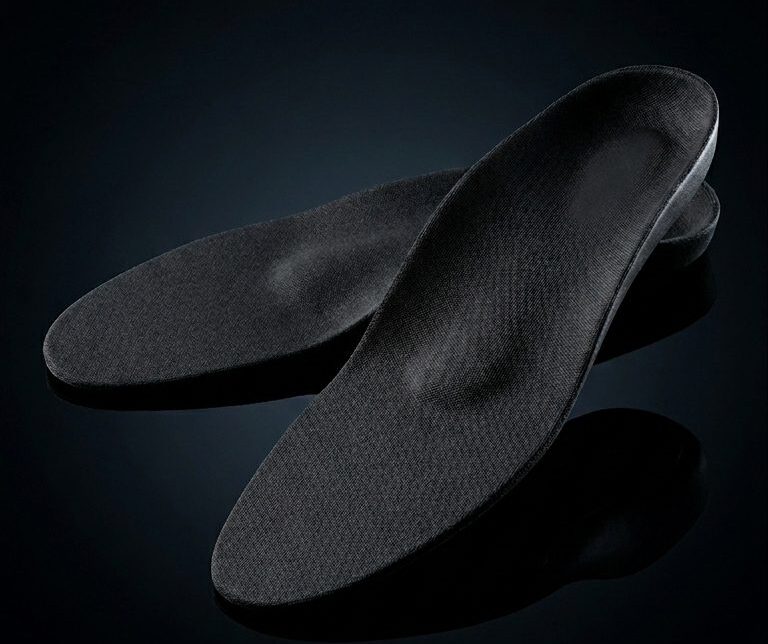
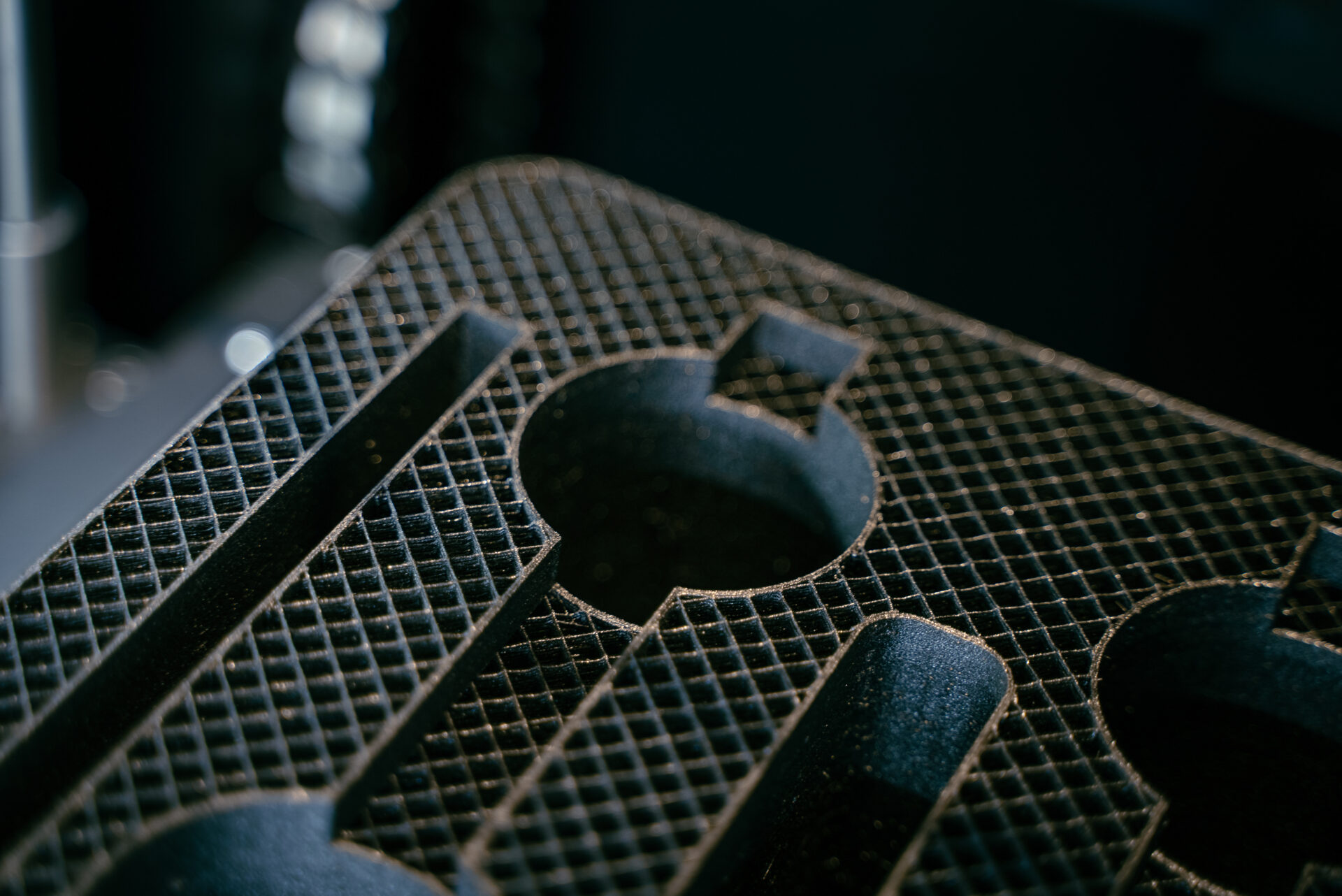
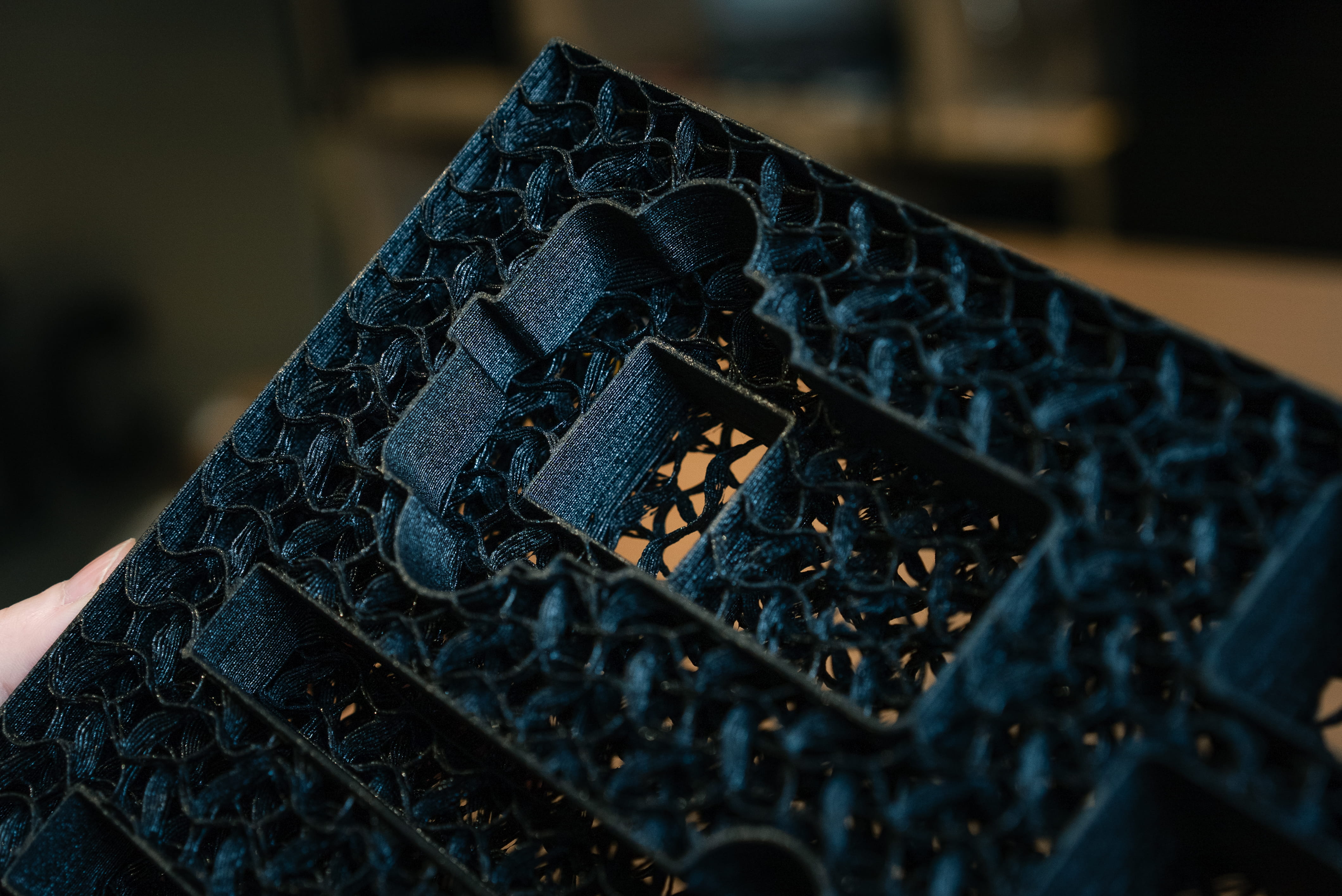
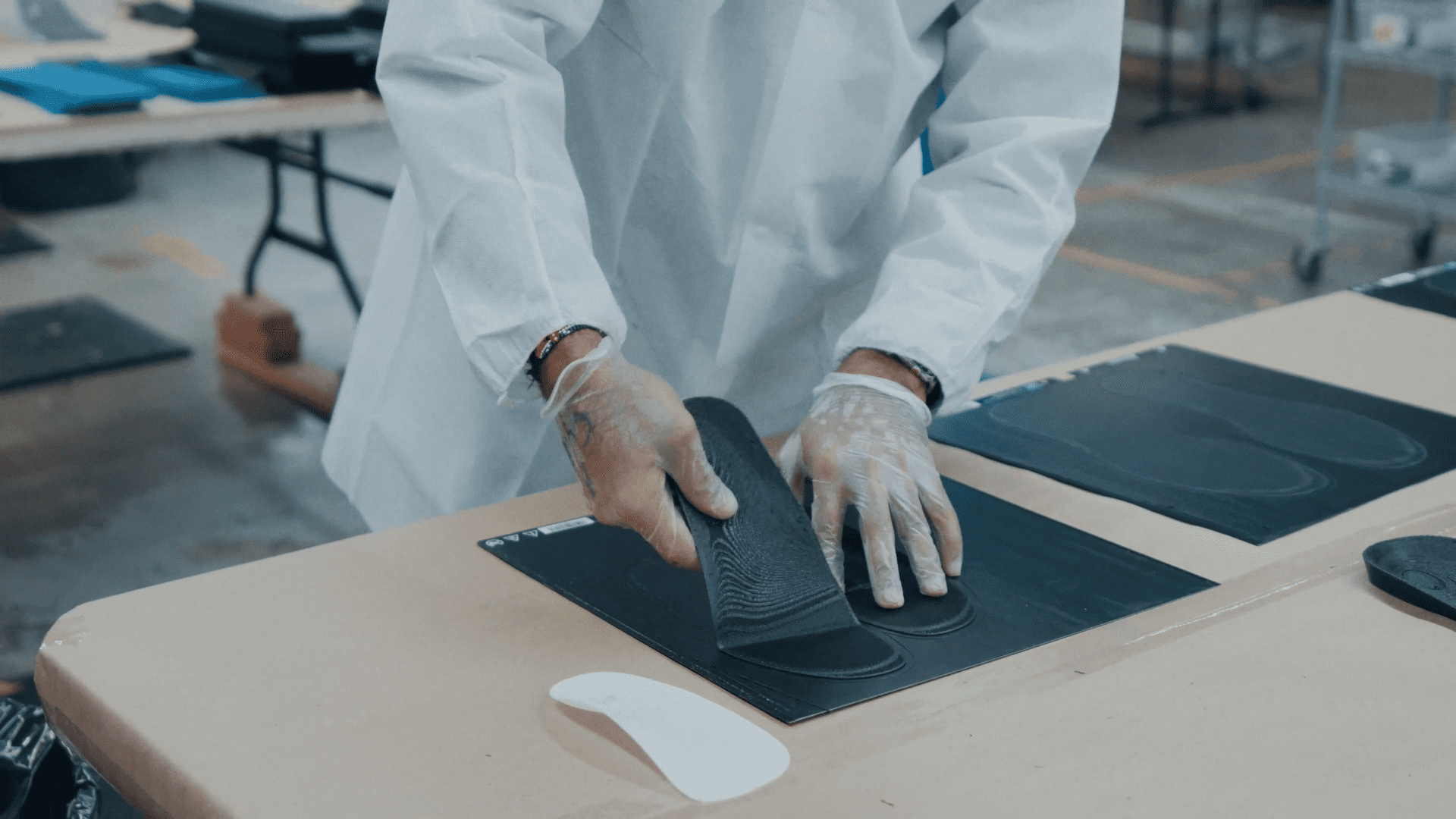
Unlike conventional desktop 3D printers, which are limited by a fixed build plate and require manual intervention between prints, belt-based systems are designed for uninterrupted production. And unlike powder-based systems (SLS, MJF), they don’t require post-processing steps like powder removal, chemical washing, or bead blasting, devices come off the belt in a finished state.
Orion: Belt-Based 3D Printing, Purpose-Built for Custom Orthotics
Orion is Mosaic’s purpose-built belt 3D printer for custom orthotics. It was developed around the production requirements of labs, central fabrication operations, and clinics, rather than adapting a general-purpose FFF printer to orthotic devices.
→ Learn more about Orion
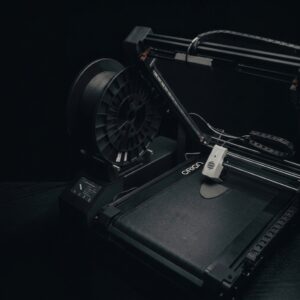
Stryde is a modular orthotics software suite. Organizations can use all four modules as a connected workflow or adopt individual modules alongside compatible tools already in use.:Here’s what a full production workflow looks like with Orion and the Stryde Software Suite:




→ Learn more about Stryde Software Suite
How does belt 3D printing differ from traditional FFF printers?
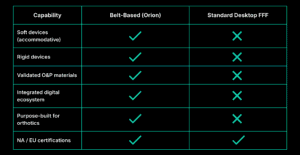
Standard FFF (Fused Filament Fabrication) desktop printers use a flat, stationary build plate. Each print job occupies the full plate. When the job is done, a technician must manually remove the parts before the next job can begin.
For hobbyist or low-volume prototyping use, this is fine. For orthotics production, common limitations include:
- Manual part removal between build cycles
- A fixed build area that encourages batch planning
- Materials that were not developed or validated specifically for orthotic applications
- Separate software for design, slicing, case management, and print scheduling
- Limited O&P-specific implementation and workflow support
With a general-purpose printer, organizations may need to connect separate tools for design, slicing, case management, and production planning. Stryde provides orthotics-specific modules that can work together as a connected workflow or be adopted alongside compatible tools already in use.
Belt-based printing solves the core constraint: the continuous belt mechanism enables uninterrupted, automated production. Orion takes this further by integrating directly with Stryde, so the entire workflow from scan to finished device runs through a single connected platform.
How does belt 3D printing compare to SLS and powder-based systems?
Powder-based technologies, primarily SLS (Selective Laser Sintering) and HP’s MJF (Multi Jet Fusion), have been the dominant 3D printing approach in orthotics for larger labs. They produce dimensionally accurate, rigid parts in nylon-based materials. But they come with significant operational trade-offs that limit accessibility for most labs.
High Acquisition and Operating Costs
Industrial SLS and MJF systems typically require substantial capital investment, plus ongoing powder material costs and maintenance contracts. Achieving ROI generally requires high monthly volumes, making these platforms inaccessible for small and mid-sized labs.
Rigid Devices only
Common nylon-based SLS and MJF systems are primarily used for rigid or semi-rigid orthotic shells and generally do not manufacture accommodative devices. Labs that serve patients requiring both soft comfort devices and rigid corrective shells need a second production method, adding cost, complexity, and workflow fragmentation.
Labour-intensive Post-processing
Powder-based parts must be removed from the powder bed and cleaned of residual powder. Additional surface finishing may be used depending on the system, material, and required finish.
Batch-based Production
Most powder systems are optimized for batch production, filling a build volume before running. As a result, producing a single urgent case is often less efficient than adding another case to a sequential production queue.
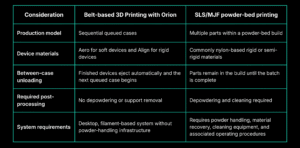
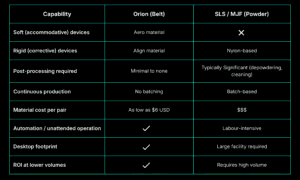
For organizations already using SLS or MJF, Orion may complement rather than replace the existing system. It can add a sequential production option for both functional and accommodative devices, while the organization continues using powder-based equipment where it best fits its material and production requirements.
For labs evaluating 3D printing for the first time, Orion offers a more accessible entry point: lower upfront commitment, lower operating cost, and a complete ecosystem rather than a standalone machine.
Why are orthotics labs exploring belt-based production?
The interest is driven by practical production requirements, including consistency, turnaround, labour availability, and the need to support a broader range of patient-specific devices.
Small and Mid-sized labs: The Labour Ceiling
Labs producing between 500 and 10,000 pairs annually often encounter the same constraints: grinding and finishing involve repetitive, physically demanding work that organizations may need to distribute across trained staff. Many labs report that finding and retaining skilled technicians can be challenging. Output quality may vary depending on technician experience and workload. During peak periods, backlogs can develop, making turnaround commitments more difficult to maintain.
These labs have typically framed the problem as a staffing issue, but the underlying cause is a production model that scales linearly with headcount. Orion changes that relationship. Once cases have been prepared and queued, Orion can continue printing overnight and through weekends, minimizing hands-on production labour at the printer and improving device consistency.
→ Read more: The Hidden Cost of Manual Grinding and Finishing in Orthotics Labs
Large labs and Clinic networks: The Standardization Problem
Organizations operating at higher volumes, or across multiple sites, face a different but related challenge. Manual fabrication can make it harder to reproduce the same production result consistently across technicians, shifts, and locations. Training new technicians takes time and creates a prolonged period of quality risk. Planning is difficult when capacity is tied to individual availability.
For these organizations, the goal isn’t just more output, it’s predictable, standardized output that can scale without proportional increases in management overhead. Orion’s integrated ecosystem, where Stryde Design locks in prescription intent and Stryde Print enforces consistent slicing and orientation, means output quality is built into the system, not dependent on individual judgment.
→ Read more: Why Multi-Site Orthotics Labs Struggle with Standardization
Clinics: Turnaround time and Patient experience
Clinician-led practices typically outsource manufacturing to labs. They don’t think in terms of production methods, they think in terms of turnaround times, remake rates, and patient satisfaction. Labs quote 2 to 2.5 week turnaround windows to buffer for batching and shipping uncertainty. Remakes and adjustments create follow-up visits and erode patient trust. And when a lab’s quality is inconsistent, it reflects on the clinic’s professional credibility.
Orion-connected labs can process prescriptions faster, with less batch delay, and deliver devices with digitally preserved prescription intent, reducing the variability that drives remakes. For clinics, this means shorter wait times, fewer follow-ups, and greater confidence in the devices they dispense.
What does this mean for Labs, Clinics, and Large networks?
The shift to belt-based production isn’t a single decision, it’s a different way of thinking about how orthotics manufacturing works. Here’s what it means in practice for each type of organization.
For Small and Mid-sized labs
Orion delivers higher custom orthotic throughput without adding headcount. A single unit produces approximately 300 pairs per month at as low as $6 per pair in material cost, economics that work at smaller volumes, without the high-volume requirement of SLS or MJF systems. Scale by adding Orion units; no facility overhaul, no new workflow, no switching costs.
→ Read more: The Economics of Scaling Orthotics Production With Orion
For Large labs and Clinic networks
Orion is an orthotic manufacturing platform, not a machine. Stryde enforces one consistent digital workflow across every technician, every shift, and every location. Capacity scales by adding units. Operational complexity does not scale with it.
→ Read more: Platform vs. Point Solutions: Why Orion Is Built as an Ecosystem
For Clinics
Orion has a desktop footprint, requires no specialist facility or environmental controls, and integrates with scanning tools clinicians already use. The workflow from digital foot scan to finished custom orthotic runs through Stryde, reducing training burden and clinical risk while enabling faster patient turnaround and greater control over device quality.
→ Read more: Digital Orthotics Workflows: What Clinicians Need to Know About Orion
See Orion in Action
Mosaic Manufacturing builds complete manufacturing ecosystems for the orthotics and prosthetics industry. Orion is Mosaic’s purpose-built belt-based 3D printer for automated orthotics production, paired with the Stryde Software Suite for end-to-end digital workflow from scan to finished device. To learn more or request sample devices, contact sales@mosaicmfg.com.