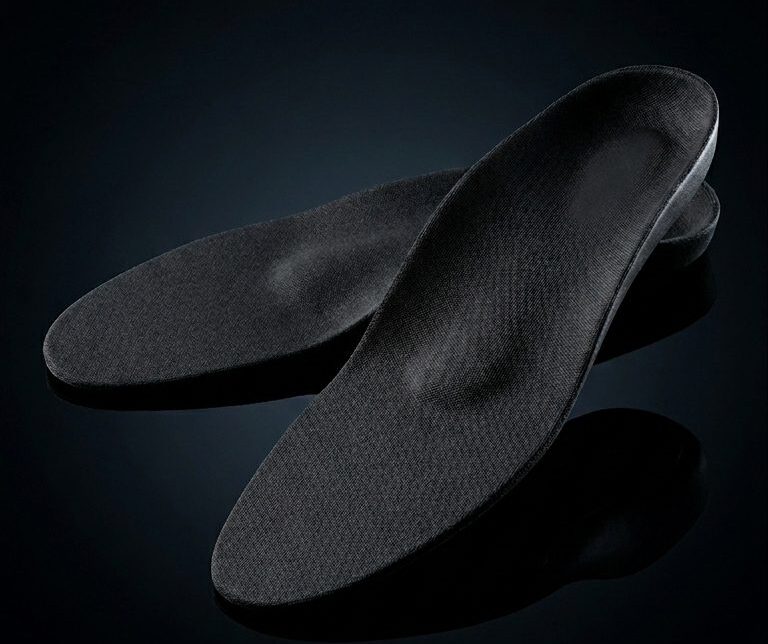
3D printed custom foot orthotics may be eligible for insurance reimbursement, but coverage depends on the patient’s plan, the condition being treated, the device provided and the insurer’s requirements for prescribing, dispensing and documentation.
For practices considering in-house production, the first step is to establish whether the patient’s benefits cover the proposed orthotic and what evidence the insurer requires. A patient-specific design and complete manufacturing records can support a claim, but do not establish coverage on their own.
Prescribe, Produce, Dispense: The Custom Orthotic Workflow
Every custom orthotic workflow can be viewed through three distinct phases:
- Prescribe: Assess the patient and specify the intended treatment and device requirements.
- Produce: Translate those requirements and the patient’s foot model into a manufactured orthotic.
- Dispense: Check the finished device against the prescription, assess its fit and provide instructions for use.
Who performs each step depends on the applicable professional standards and the practice’s workflow. Insurers may also specify which providers they recognize for reimbursement.
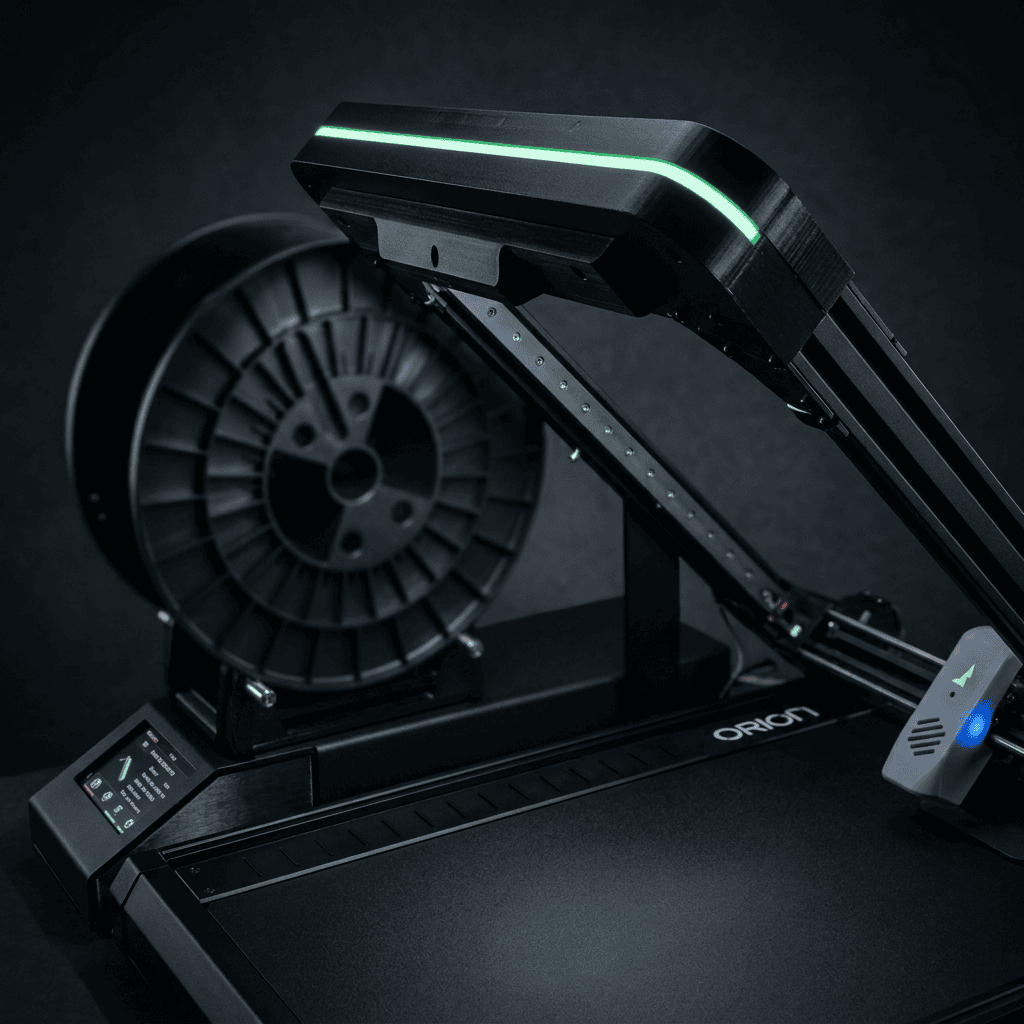
That’s where an in-house system such as Orion, powered by Stryde, can fit into the workflow. The clinician can manage the patient-facing and clinical decisions while production is handled as a dedicated technical process.
Who Can Prescribe, Produce, and Dispense Custom Orthotics?
The ability to prescribe, produce, and dispense custom orthotics depends on the clinician’s role and jurisdiction.
- Doctors of Podiatric Medicine (DPMs) in the US and select Canadian regions can prescribe, produce, and dispense custom orthotics, giving them the ability to manage the full workflow within their practice.
- Chiropodists (D.Ch.) in Ontario can prescribe, produce, and dispense custom foot orthotics.
- Certified Pedorthists (C.Ped / C.Ped(C)) in the US and Canada focus on biomechanics and orthotic manufacturing. They can produce and dispense devices based on prescriptions from authorized providers.
- Certified Orthotists (COs) can produce and dispense orthotic devices under physician prescription.
- Physical Therapists and Physiotherapists can dispense orthotics as part of rehabilitation, with in-house production possible when an authorized external prescription is obtained for insurance reimbursement.
- Chiropractors (DCs) have dispensing authority in many markets, while prescriptive authority for insurance reimbursement varies by region and carrier.
For practices that have the appropriate clinical authority, Orion and Stryde provide the production infrastructure needed to bring the fabrication phase into the practice rather than relying entirely on an external lab.
→ Related: From Scan to Finished Device: The Orion + Stryde Workflow Explained | Digital Orthotics Workflows: What Clinicians Need to Know About Orion
Is In-House 3D Printing Allowed?
One common misconception is that producing medical devices in-house automatically requires a commercial manufacturing licence.
Regulatory frameworks in both Canada and the US provide exemptions relevant to point-of-care clinical manufacturing.
Canada: Health Canada and the MDEL Exemption
In Canada, a Medical Device Establishment Licence (MDEL) is required for businesses that import or distribute medical devices for commercial resale. (Health Canada)
A clinical practice producing custom devices for its own patients can qualify for MDEL exemptions under Health Canada’s framework. The dispenser exemption applies to registered healthcare practitioners who manufacture or adapt custom devices according to written directions for their own patients.
The healthcare facility exemption also applies to certain facilities manufacturing Class I custom devices for their own end-user patients rather than wholesaling devices to third-party clinics. For a practice using Orion to produce custom orthotics for its own patients, the distinction between point-of-care production and commercial distribution is therefore important.
US: FDA Class I and 510(k) Exemption
In the US, custom foot orthotics are regulated as low-risk Class I medical devices. Custom-fabricated orthotic inserts made from an individual patient’s anatomical 3D scan are exempt from 510(k) premarket notification requirements. (FDA Gov)
That makes patient-specific digital fabrication a relevant production model for practices using a system such as Orion and Stryde.
→ Related: Learn more about Orion | Stryde Software Suite
Can Non-Clinical Staff Operate Orion?
The clinician does not need to personally operate the 3D printer.
Technical activities such as operating Stryde Print, loading filament, preparing Orion, and performing post-processing are fabrication duties rather than clinical acts.
The licensed practitioner remains responsible for the clinical portions of the workflow, including:
- Performing the biomechanical examination
- Capturing the patient’s 3D scan
- Ordering prescription parameters such as shell rigidity and heel cup depth
- Completing the final fitting
The production process can therefore be assigned to trained technical staff while the clinician retains responsibility for clinical decisions and patient care.
This separation is central to the in-house production model. Stryde manages the digital production workflow, while Orion handles the physical fabrication of the custom device.
What Documentation Is Required for Insurance Reimbursement?
Documentation requirements depend on the insurer and benefit plan. Before fabrication, confirm the required prescription, clinical evidence, manufacturing information and receipt details.
For in-house production, ask specifically what manufacturing documentation the insurer accepts when the practice also fabricates the device. Keep records connecting the patient’s assessment and prescription with the foot model, finished design and manufacturing process.
This is where a connected digital workflow can help.
A process built around Stryde Scan, Stryde Design, and Stryde Print can connect the patient’s digital anatomy and prescribed design to the production process on Orion.
Canada: Proof of Manufacturing
Canadian benefit plans may request evidence of custom manufacture, the patient-specific foot model and the clinical basis for treatment. The following categories can help organize that documentation, but the patient’s plan determines the actual claim requirements.
- Proof of manufacturing
When a practice produces an orthotic in-house, its manufacturing invoice should identify:
- The specific raw 3D printing materials used
- The additive fabrication process
- Material and production costs
For example, the documentation can identify a device as custom fabricated through 3D additive manufacturing based on a 3D volumetric scan. With Orion and Stryde, the manufacturing process becomes part of the practice’s own production workflow rather than an external lab process. (CLHIA)
→ Related: Orthotics materials
- 3D volumetric casting documentation
The documentation should confirm that the device was generated from a direct 3D volumetric optical scan. The framework specifically excludes 2D pressure mats or force plates as a substitute for volumetric anatomical information.
That makes the digital connection between patient scan → digital design → Orion production an important part of the in-house workflow.
- Clinical and prescription notes
The patient’s records should include the biomechanical examination, diagnosis, and prescription details from the authorized prescriber.
US: CMS and HCPCS L3000
In the US, custom foot orthotics are primarily billed under HCPCS L3000, defined as a removable foot insert molded to the patient’s foot and custom fabricated. (APMA)
CMS recognizes 3D digital volumetric scanning and additive manufacturing as compliant custom fabrication methods for L3000. Practices billing directly must maintain active DMEPOS supplier status, and charting should include medical necessity, ICD-10 diagnosis codes, capture of the patient’s 3D anatomical model, and patient fitting attestation.
For an in-house practice, Orion and Stryde can form the production side of that workflow, connecting patient-specific digital information to additive manufacturing.
How Orion and Stryde Support an In-House Workflow
Bringing production in-house requires more than adding a 3D printer to the practice. It requires a workflow that connects the clinical prescription to a patient-specific manufactured device.
That’s where Orion and Stryde work together.
Stryde supports the digital workflow. Patient-specific 3D volumetric information can move into the digital design and production process, creating the foundation for a custom device.
Orion handles fabrication. The printer turns the patient-specific digital design into a physical orthotic through additive manufacturing.
Together, the workflow can be represented as:
Patient assessment → Prescription → 3D scan → Digital design → Orion production → Fitting
This separation allows clinical and technical responsibilities to remain distinct while keeping production within the practice.
→ Related: Do Orion’s Materials Perform Like EVA and Polypropylene?
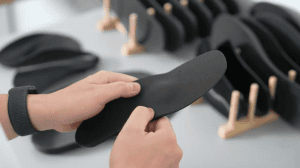
What Does In-House Production Change?
In-house production changes where the fabrication phases happen.
Instead of sending a patient-specific prescription and digital information to an external fabrication lab, a qualified practice can manage production within its own facility, subject to the applicable regulatory, clinical, and insurance requirements.
Orion provides the production hardware. Stryde provides a digital workflow that connects patient-specific information to that production process. For practices with the appropriate prescribing and dispensing authority, this creates an opportunity to bring more of the custom orthotic workflow under their own control
The Bottom Line
3D printed custom orthotics are reimbursable. What determines a successful claim isn’t the fabrication technology, it’s whether the device was genuinely built for that individual patient from their own volumetric scan, and whether the practice can document it. A digital workflow doesn’t just satisfy those requirements; it generally makes them easier to meet than a manual process does, because the scan, the design file, and the production record already exist as digital artifacts.
If you’re evaluating bringing orthotic production in-house and want to talk through how Orion and Stryde fit your documentation and workflow requirements, our team is happy to walk through it.
Contact us at sales@mosaicmfg.com | mosaicmfg.com